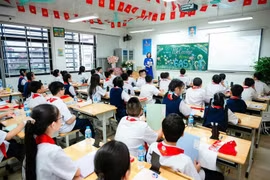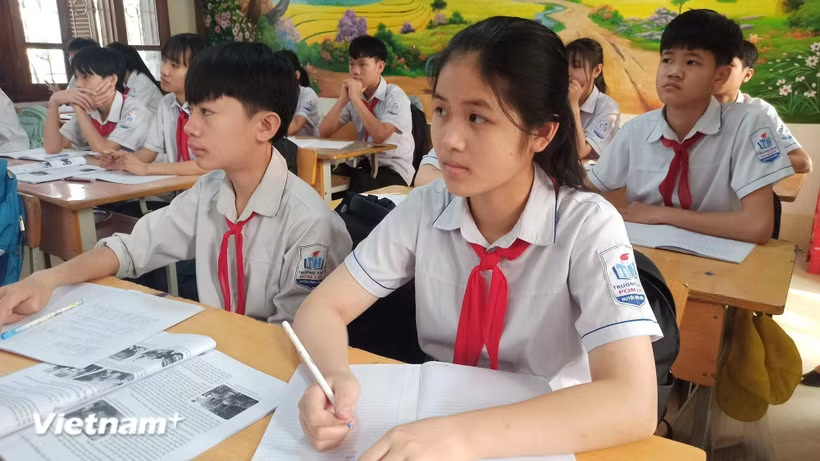
Hanoi (VNA) - As Vietnam ushers in the 2025–2026 academic year, Minister of Education and Training Nguyen Kim Son underlined that the education sector is facing a historic window of opportunity - one marked by bold policy shifts and strategic political backing.
Defining moment for education
According to Son, never before has education and training received such strong attention and high expectations from both the Party and the State. The recent adoption of Resolution 71-NQ/TW by the Politburo marks a turning point, serving as a powerful political foundation to accelerate the deep-rooted, comprehensive reform initiated by Resolution 29 (2013) and reaffirmed in Conclusion 91 (2024).
He emphasised that Resolution 71 reflects a visionary and strategic approach to national education in the face of global transformations—particularly the growing influence of digital technologies and artificial intelligence, which are redefining education worldwide.
The resolution outlines transformative objectives and action plans designed to elevate Vietnam’s education system to new heights. In response, the Ministry is rapidly developing an Action Programme to implement Resolution 71 at both government and ministerial levels, with concrete plans ready to roll out from the start of the academic year.
In addition, a national target programme for education and training development is in the pipeline. Four key education laws— the Law on Teachers, Law on Education, Law on Higher Education, and amended Law on Vocational Education— have been implemented and are scheduled for enactment in 2025. These will lay the legal groundwork for a modern, integrated and efficient educational system.
Digital transformation, AI integration, and STEM education are also enhancing educational quality and achieving long-term innovation.
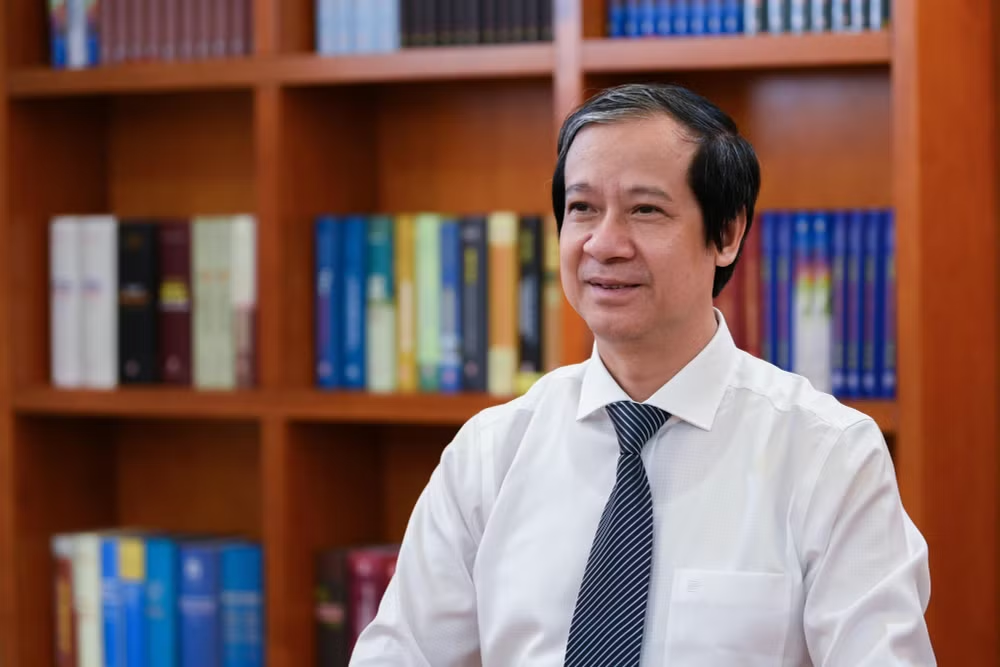
However, the minister acknowledged that the sector faces significant challenges. The transition to a two-tier local government model, especially at the commune level, demands improved administrative capacity and organisational adaptability. Meanwhile, longstanding issues such as education equity, the prevalence of private tutoring, teacher recruitment and rotation, and genuine universal education must be tackled with renewed urgency. Ensuring the effective absorption and utilisation of major upcoming investments will also require strategic management and accountability.
Adapting to two-tier local government system
The 2025–2026 academic year is the first to operate under Vietnam’s new two-tier local government model. To minimise disruptions, Son said that the ministry has implemented a range of measures, including the issuance of two decrees and six circulars clarifying the decentralisation of management responsibilities in education.
It has also held stakeholder dialogues, set up a national hotline, and dispatched inspection teams to 15 provinces to address concerns and bottlenecks at the local level.
The ministry plans to continue reviewing legal frameworks, enhance professional guidance, and build a fully interoperable data system to support decentralised educational governance, he said.
Local Departments of Education and Training are expected to work closely with relevant agencies to deliver targeted training and upskill commune-level officials. They are also encouraged to form inter-school and inter-commune professional clusters to replace some of the functions previously overseen by district-level education offices.
On the subject of private tutoring, a key concern among parents and students, the minister reaffirmed the Ministry’s stance: while tutoring may reinforce academic knowledge, it contributes little to holistic human development and often produces negative long-term consequences.
For the 2025–2026 school year, the Ministry will continue to urge local authorities to enact clear regulations governing extra classes, while also focusing on effective implementation of the national general education curriculum.
In line with Directive No. 17/CT-TTg issued by the Prime Minister in June 2025, the ministry has instructed schools to design well-defined plans for delivering two sessions per day, wherever feasible. These plans must clearly specify target groups, content, scheduling, and teacher assignments, with a focus on supporting struggling students, revision for final-year pupils, and enrichment for high achievers.
Private tutoring, where permitted, must align with the directive and serve only three approved student categories. Funding for the second daily session will primarily come from the State budget, with any additional social contributions subject to strict compliance with legal guidelines.
The ministry is also working closely with the Ministry of Finance and local authorities to establish detailed financial mechanisms for sustainable implementation.
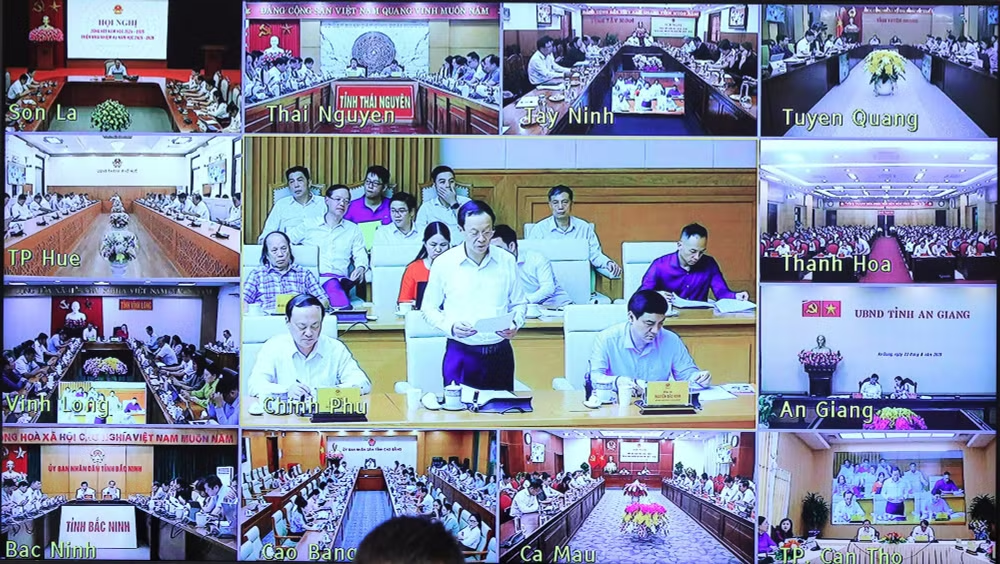
The minister said that the upcoming school year opening ceremony will be unlike any before. For the first time, it will be livestreamed nationwide, connecting over 52,000 educational institutions from preschool to university level. This event coincides with Vietnam’s 80th National Day and the celebration of 80 years of educational tradition - a moment of reflection on the sector’s core role in the new era./.