Resolution 71 presents pivotal opportunity for Vietnam’s education

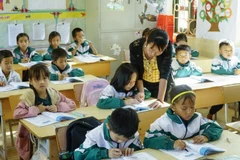
Resolution 71 outlines comprehensive solutions to address these bottlenecks, such as exempting tuitions, adopting full-day schooling, and prioritising investment in boarding and semi-boarding schools in border and disadvantaged regions.

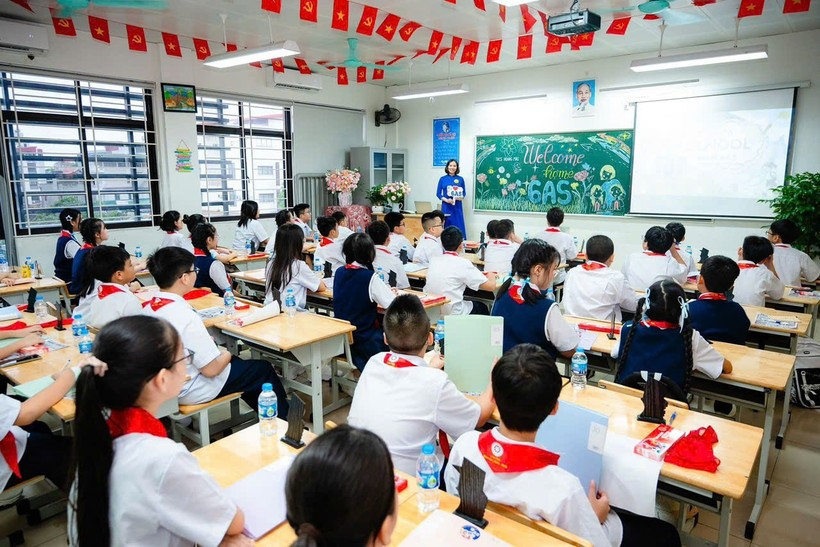
Resolution 71 is expected to create a breakthrough in education and training. (Photo: VietnamPlus)

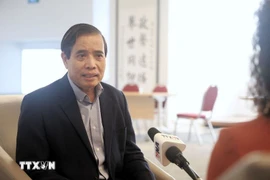
Hanoi (VNA) – The Politburo’s Resolution 71-NQ/TW on making breakthroughs in education and training development is seen as a significant milestone, reflecting the Party’s strategic vision for the sector, said Nguyen Thi Viet Nga, deputy head of the full-time National Assembly deputies of Hai Phong city and a member of the NA Committee for Culture and Education.

As the nation is entering a new era of development, with a strong aspiration for new heights, this resolution identifies education as a “top national policy”, considering it one of the key drivers of fast and sustainable development, she told VietnamPlus newspaper.

The greatest significance of Resolution 71 is that it underlines the decisive role of education in forming high-quality human resources, providing the foundation for Vietnam to realise its development aspirations and stand alongside the great powers around the world.
nguyen-thi-viet-nga.jpg
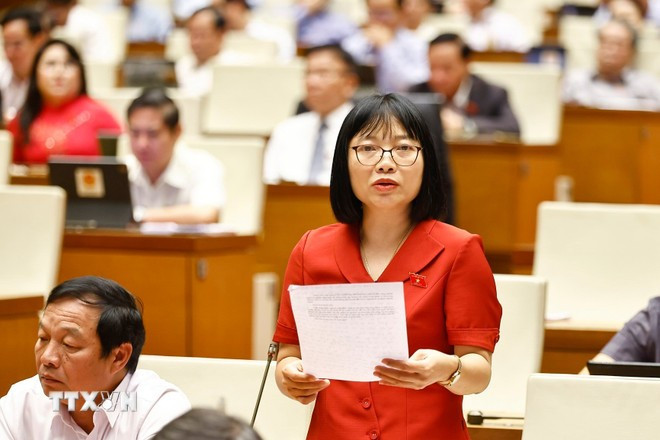
Nguyen Thi Viet Nga, deputy head of the full-time National Assembly deputies of Hai Phong city and a member of the NA Committee for Culture and Education. (Photo: VNA)

Nga noted that while Vietnam’s education sector has obtained notable achievements in recent years, it still faces several bottlenecks. These include the educational quality gap among regions, overly academic curricula and textbooks with limited practical application. Other challenges include inadequate policies for teachers that fail to encourage long-term dedication, and insufficient investment in infrastructure, especially in remote and disadvantaged areas.

Resolution 71 outlines comprehensive solutions to address these bottlenecks, such as exempting tuitions, adopting full-day schooling, and prioritising investment in boarding and semi-boarding schools in border and disadvantaged regions. Others include fundamentally reforming curricula and textbooks to ensure that they are up to date, logical and relevant to reality.

These are strong and timely policies to clear bottlenecks and create momentum for breakthroughs in education, Nga emphasised.

She highlighted three key breakthroughs in the resolution. First, education is positioned within the overall national development strategy and directly linked with industrialisation, modernisation, and international integration. Second, it stipulates that a single set of textbooks must be used nationwide and localities are allowed to add specific content to ensure both consistency and flexibility. Third, it gives priority to unprecedented policies such as tuition-free general education, full-day schooling, and the development of high-quality schools in border and island regions.

These breakthroughs will create a fundamental change, ensuring equal access to education while simultaneously improving training quality to help Vietnamese youth be fully prepared for the new era.

However, Nga also warned that the greatest challenge to the resolution implementation is resources – ensuring adequate funding, facilities, and teaching staff capable of meeting the very high requirements it sets. Social attitude and the adaptability of parents, students, and teachers to new changes also present a significant obstacle.
nghi-quyet-71a.jpg
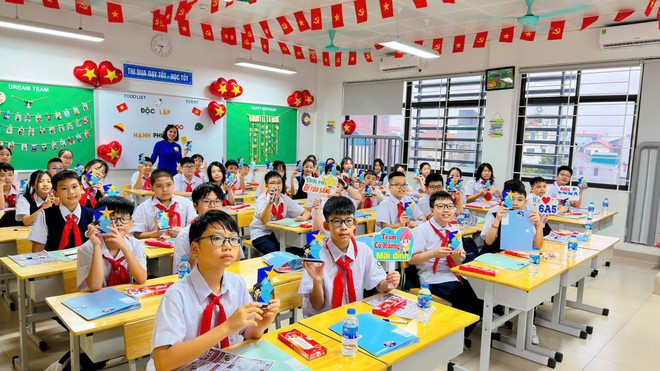
Caption: Sixth-grade students of Hoang Mai Secondary School in Hanoi are excited about their first day in the new academic year. (Photo: VietnamPlus)

To carry out the resolution, the legislator proposed three key measures. The first is to devise a rational plan to mobilise and allocate financial resources effectively, avoiding wastefulness and dispersion. The second is to enhance the quality of teachers while reforming salary and benefit policies so they can work with dedication and peace of mind. The third is to strengthen social monitoring and feedback to ensure all policies are implemented transparently, consistently and productively.

Nga shared the view of Minister of Education and Training Nguyen Kim Son, who stressed that education has never received such comprehensive and strong attention as it does today, and that if the sector fails to seize the development opportunity, it will be at fault to the nation and future generations.

Looking ahead, she underlined that the education sector must focus on the quality of the curriculum and textbooks, ensuring logicality, modernity and real-life relevance.

It is also critical to improve the quality of the teaching staff so that teachers truly become the ‘core’ of reform. Equally important is promoting the quality of educational governance, which means transparency, efficiency, overcoming the achievement-driven mentality and, above all, putting students at the centre of education.

When these aspects of quality are ensured, the country will be able to seize the opportunity that the Party, State and the people are providing for and raise Vietnam’s education to a new level, according to the deputy./.
VNA

See more

A young volunteer donates blood during the 2026 Red Sunday programme. (Photo: VNA)

Nearly 5,000 people join blood donation campaign in Ho Chi Minh City

According to health authorities, Vietnam collected nearly 1.75 million units of blood in 2025, with 98% from volunteer donors, equivalent to around 1.75% of the population participating in blood donation. Large-scale campaigns such as Red Sunday have played a key role in achieving these results.

More than 30 kilogrammes of various drugs trafficked from Cambodia to HCM City were seized in a police operation in March 2025. (Photo: VNA)

Ho Chi Minh City aims to become drug free by 2030

Every commune, ward or residential area in Ho Chi Minh City is expected to meet official drug-free standards by the end of 2029, while schools, hospitals, government offices, businesses and social organisations across the city are to remain free of drug activity.

Military forces take a resident from a flooded area. Photo: VNA

Da Nang, Oxfam join hands to support flood victims

In the coming time, the Da Nang Red Cross Society will continue to coordinate with Oxfam to implement support activities in Nong Son commune, helping residents overcome difficulties and stabilise their livelihoods.

Training on response to reservoir incidents (Photo: VNA)

Central Civil Defence Fund established to bolster disaster response

The Central Civil Defence Fund is authorised to receive, manage and use voluntary contributions from domestic and foreign entities and individuals, plus transfers from provincial civil defence funds in line with the PM’s decisions and allocations from relevant state financial sources outside the state budget, all earmarked for incident and disaster response and recovery efforts.

Vietnamese women shine in the traditional Ao dai (Photo: VNA)

March shines with elegance of “Ao dai”

In early March, scenes of women in flowing Ao dai taking spring photos by lakes, parks, offices, temples and historical sites have become a familiar sight on the streets of Hanoi. Social media is also filled with images and stories surrounding the elegant attire, which has become a symbolic signal of the season dedicated to honouring women.

Hanoi voters learn about candidates’ biographies and action programmes. (Photo: VNA)

Hanoi thoroughly prepares for NA, People’s Council election

According to the municipal Election Committee, the capital city has established election committees in 126 communes and wards. In addition, 11 electoral boards for National Assembly deputies, 31 electoral boards for the city-level People’s Council, 831 commune-level electoral boards and more than 4,000 polling teams have been set up to serve the election process.

Artisan Vu Van Vinh from Chuyen My commune introduces to visitors a set of mother of pearl inlaid lacquer furniture including a platform bed, tea cabinet, and lacquered horizontal boards and parallel sentences made by his family, worth more than 3 billion VND. (Photo: VNA)

Four Hanoi craft villages join global creative crafts network

The recognition is not only a source of pride for the capital but also creates opportunities to promote these craft villages globally, strengthen international connections, and support their sustainable development in the process of global integration.

Vietnamese women affirm growing role in national economy

Vietnamese women affirm growing role in national economy

Vietnamese women have long been an indispensable force in the country’s socio-economic development. Today, they are present across a wide spectrum of economic activities, from production, trade and small-scale services to innovative start-ups, collective economic development, the digital economy, green growth, the circular economy and financial inclusion.

Voters study information of candidates to the 16th National Assembly and People’s Councils at all levels in the 2026-2031 tenure. (Photo published by VNA)

K’Ho ethnic minority group in Lam Dong province looks forward to Election Day

Lac Duong commune is a remote locality largely inhabited by the K’Ho ethnic minority in Lam Dong. The commune has 15 villages with more than 14,000 residents in 3,119 households and 8,799 registered voters. Given that residents live scattered along National Highway 27C and that the area’s mountainous terrain makes travel difficult, local authorities have prepared plans to organise the election smoothly.

Officers of the Vietnam Coast Guard Region 2 Command step up communications efforts to encourage fishermen to comply with anti-IUU fishing regulations. (Photo: VNA)

Vietnam Coast Guard Region 2 intensifies efforts to help remove IUU fishing “yellow card”

According to Colonel Truong Ba Long, Deputy Commander and Chief of Staff of the Vietnam Coast Guard Region 2 Command, the close integration of efforts to combat IUU fishing with routine patrol and control activities to safeguard maritime sovereignty, prevent smuggling and trade fraud, fight drug-related crimes, and conduct search and rescue operations constitutes a regular task of the unit.