New Can Tho city positioned as regional economic engine: NA Chairman

NA Chairman Tran Thanh Man said the administrative unit merger paves the way for closer regional cooperation in economic, cultural, and social development, national defence, and security while expanding development space and strengthening Can Tho’s role as the central economic engine of the Mekong Delta region.​

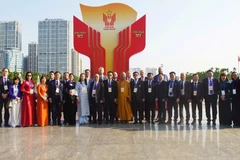
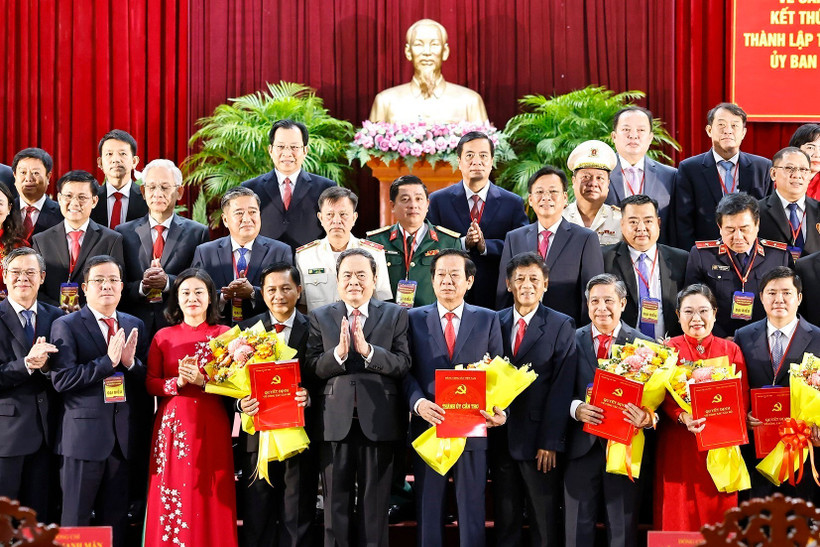
National Assembly Chairman Tran Thanh Man (front, fifth from left) presents the decisions of the Politburo and the Party Central Committee's Secretariat to the Party Committee, its Standing Board, Secretary, and Deputy Secretaries of Can Tho city on June 30. (Photo: VNA)

Can Tho (VNA) – A ceremony was held in the presence of National Assembly (NA) Chairman Tran Thanh Man on June 30 to announce the resolutions and decisions on the administrative unit reorganisation and personnel appointments in the Mekong Delta city of Can Tho.

According to the Party Central Committee's decisions along with the NA's and the NA Standing Committee's resolutions, the entire natural areas and populations of Can Tho city, Soc Trang province, and Hau Giang province are re-organised into a new administrative unit named "Can Tho city". Following the merger, the new Can Tho comprises 103 commune-level administrative units, including 31 wards and 72 communes.

The Party Committee of Can Tho city is established through the merger of the Party Committees of the former Can Tho city, Hau Giang province, and Soc Trang province. For the 2020–2025 tenure, it consists of 79 members while its Standing Board gathers 20 members.

Do Thanh Binh, member of the Party Central Committee and Secretary of the Party Committee of the former Can Tho, was appointed Secretary of the Party Committee of the new city for the rest of the 2020–2025 tenure.

Tran Van Lau, Deputy Secretary of the municipal Party Committee, was appointed as Chairman of the municipal People’s Committee for the 2021–2026 term. Dong Van Thanh, Standing Deputy Secretary of the municipal Party Committee, serves as Chairman of the People’s Council of the new city. Nguyen Tuan Anh, Deputy Secretary of the municipal Party Committee and an NA deputy, was assigned to act as head of Can Tho city’s NA delegation.

Stressing the significance of the administrative unit reorganisation, NA Chairman Man spoke highly of the Party Committees, People’s Councils, People’s Committees, Vietnam Fatherland Front Committees, and NA delegations of the three localities for their proactive leadership, close coordination, high sense of responsibility, and effective implementation of the merger. That, he said, has helped secure the broad consensus among local officials and Party members, as well as the strong support of people from all social strata for the move.

The top legislator expressed appreciation and respect for the enormous and enduring contributions by local Party organisations, authorities, Vietnam Fatherland Front committees, and mass organisations, particularly those at district and commune levels, to the administrative unit re-organisation. He acknowledged and praised the dedications by generations of officials, civil servants, armed forces personnel, and residents of Can Tho, Hau Giang, and Soc Trang, who have played a vital role in the development of this region.
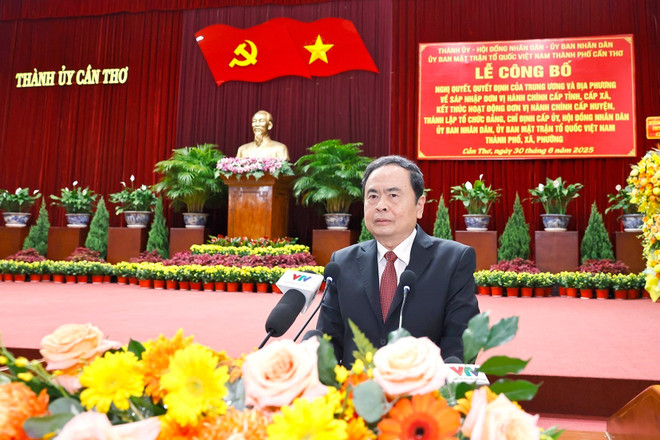
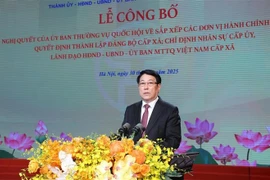
NA Chairman Tran Thanh Man delivers a speech at the ceremony. (Photo: VNA)

NA Chairman Tran Thanh Man delivers a speech at the ceremony. (Photo: VNA)

Chairman Man emphasised that the historic decision to reorganise local administrative units not only marks a milestone in public administration reform but also reminds the fact that the three localities – Can Tho city, Hau Giang province, and Soc Trang province were once parts of former Hau Giang province.

Now they are merged into Can Tho city, he said, adding that it paves the way for closer regional cooperation in economic, cultural, and social development, national defence, and security. It also expands development space and strengthens Can Tho’s role as the central economic engine of the Mekong Delta region.

The top legislator called on Can Tho’s political system to intensify communication and thoroughly disseminate the directives of the Party Central Committee, the Politburo, the Secretariat, the NA, the Government, and especially the guidance of Party General Secretary To Lam at his meeting with leaders of the three localities on June 4, 2025.

The city was urged to quickly stabilise its administrative structure, allocate personnel appropriately, and ensure smooth, uninterrupted public services. It must also effectively arrange new offices and equipment, manage public assets after the mergence, and avoid any losses or waste.

The NA Chairman emphasised the need for Can Tho city to focus on boosting socio-economic development, ensuring national defence and security, and positioning Can Tho as a growth pole of the nation. It should become a centre for trade, logistics, marine economy, innovation, science and technology, and artificial intelligence, while developing digital and processing industries, and high-tech agriculture.

He also stressed the importance of ensuring balanced cultural and social development, improved welfare, and a better quality of life for all people.

According to the NA Chairman, people must truly benefit from the fruits of socio-economic development. All urban corners and rural areas of the city should be green, clean, civilised, and safe. Can Tho must strive to become one of the most livable localities in Vietnam.

He urged the city to prepare thoroughly for upcoming Party congresses at all levels, build on past achievements, and present a bold new vision, underlining the importance of selecting capable, ethical, and responsible officials, with public trust as the highest standard. Preparations should also be made for the elections of deputies to the National Assembly and People’s Councils at all levels for the 2026-2031 term.

The NA Chairman expressed his confidence that the Party, administration, and people of Can Tho will overcome challenges, seize new opportunities, and contribute to the country’s ongoing renewal process./.
VNA

See more

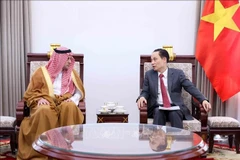
Chairman of the Can Tho People's Committee Chairman Truong Canh Tuyen (right) presents a souvenir to Pakistani Ambassador to Vietnam Kohdayar Marri at the meeting on July 21. (Photo: VNA)

Can Tho boosts trade ties with Pakistani partners

Can Tho also aims to strengthen cooperation with Pakistani partners in science, technology and human resource development, while exploring opportunities in information technology, innovation, digital transformation and high-tech agriculture.

National Assembly Chairman Tran Thanh Man (standing) addresses the meeting between the Standing Board of the NA Party Committee and the Standing Board of the Ho Chi Minh City Party Committee on July 21. (Photo: VNA)

NA leader calls for shift towards modern urban governance

NA Chairman Tran Thanh Man praised Ho Chi Minh City's preparations for the draft Law on Urban Development, describing it as a landmark piece of legislation that signals a shift in state thinking from urban administration to modern urban governance focused on enabling development.

Prime Minister Le Minh Hung (centre) hands over appoitment decisions to Acting Minister of Home Affairs Nguyen Tien Hai (right) and Permanent Deputy Minister of Ethnic and Religious Affairs Nguyen Hoai Anh on July 21. (Photo: VNA)

PM chairs ceremony announcing personnel changes at two ministries

Nguyen Tien Hai, Secretary of the An Giang provincial Party Committee, was assigned as Acting Minister of Home Affairs; while Nguyen Hoai Anh, Chairman of the Thanh Hoa People’s Committee, was appointed Permanent Deputy Minister of Ethnic and Religious Affairs.

Prof. Dr Nguyen Xuan Thang, Chairman of the Central Theory Council (right), and Koichi Hagiuda, Acting Secretary-General of Japan’s Liberal Democratic Party (LDP) at their meeting on July 21 (Photo:VNA)

Vietnamese, Japanese parties seek stronger theoretical, policy exchanges

Vietnam and Japan should continue to develop their Comprehensive Strategic Partnership for Peace and Prosperity in Asia and the World, with greater emphasis on substantive and effective cooperation in new areas, especially the strategic connectivity initiatives agreed upon by the two countries’ high-ranking leaders.

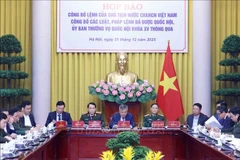
The opening session of the 14th Party Central Committee's third plenum (Photo: VNA)

Press release on second working day of 14th Party Central Committee's third plenum

During the morning session, chaired by Party General Secretary and State President To Lam, delegates discussed four agenda items, including a draft regulation of the 14th Party Central Committee on matters prohibited for Party members, which will replace Regulation No. 37-QD/TW dated October 25, 2021, issued by the 13th Party Central Committee.

Peter Jankowitsch (front row, 3rd from left), Honorary President of the Austria–Vietnam Society and members of the society pose for a commemorative photograph with Vietnamese Ambassador to Austria Vu Le Thai Hoang (front row, 4nd from left) and representatives of the Vietnam–Austria Friendship Association. (Photo: Published VNA)

Vietnam confers Friendship Order on Austria–Vietnam Society, Honorary President

Addressing the ceremony, Ambassador Vu Le Thai Hoang said the Friendship Order symbolises the Vietnamese State's recognition of Jankowitsch's more than six decades of unwavering dedication to fostering bilateral relations. The award, he added, also reflects the profound gratitude and appreciation of the Vietnamese people for his work.

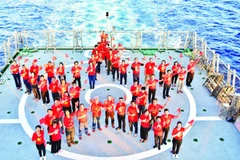
The welcome ceremony for the Vietnamese People's Navy delegation and frigate 015-Tran Hung Dao upon their arrival at Xinzhou Naval Port, Guangdong province, China. (Photo: qdnd.vn)

Vietnamese naval vessel begins friendship visit to China

On behalf of the Vietnamese delegation, Minh said he was confident that the activities will further strengthen mutual understanding and trust between the two militaries and navies, while contributing to the implementation of the common perceptions reached by the two countries' senior leaders on advancing more substantive defence and security cooperation.

Minister of Industry and Trade Le Manh Hung (right) and US Secretary of Commerce Howard Lutnick (Photo: Department of Foreign Market Development under Vietnam's Ministry of Industry and Trade)

Vietnam, US seek to advance economic, trade cooperation

During a working visit to the US in mid-July, Minister of Industry and Trade Le Manh Hung, accompanied by the Vietnamese Ambassador to the US and senior officials from several ministries, met with US Secretary of Commerce Howard Lutnick on major directions for bilateral economic and trade cooperation.

The article posted on the official Facebook page of Pathet Lao. (Photo published by VNA)

Vietnam–Laos special relationship to deepen over time

The editorial says the historical milestones demonstrate and reaffirm that the great friendship, special solidarity, comprehensive cooperation and strategic cohesion between the two Parties, States and peoples will continue to develop and deepen in the years ahead.

☕ Afternoon briefing on July 20

☕ Afternoon briefing on July 20

The third meeting of the 14th Party Central Committee, Standard Chartered sharply raising its forecast for Vietnam’s economic growth in 2026, and all six Vietnamese students winning medals at the 67th International Mathematical Olympiad are among news highlights on July 20.

Politburo member, Secretary of the Party Central Committee and Chairman of the Party Central Committee's Commission for Information, Education and Mass Mobilisation Trinh Van Quyet. (Photo: VNA)

Proactive strategy needed to counter cognitive warfare: Experts

Politburo member, Secretary of the Party Central Committee and Chairman of the Party Central Committee's Commission for Information, Education and Mass Mobilisation Trinh Van Quyet said hostile forces are increasingly using AI and digital platforms to wage cognitive warfare targeting the ideological foundation, public confidence and internal unity. He stressed that the challenge requires continuous innovation in both methods and capabilities.