New power plan lacks mechanisms to attract private investors

There are still issues to be resolved with the recently approved National Power Development Plan 8 (PDP8), namely how to attract and encourage private investors, including green financing from foreign financial institutions, according to the Ministry of Planning and Investment (MPI).
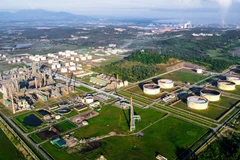
New power plan lacks mechanisms to attract private investors ảnh 1LNG Thi Vai Storage in the southern province of Ba Ria-Vung Tau is the country's only LNG complex. (Photo: VNA)
Hanoi (VNS/VNA) - There are still issues to be resolvedwith the recently approved National Power Development Plan 8 (PDP8), namely howto attract and encourage private investors, including green financing fromforeign financial institutions, according to the Ministry of Planning andInvestment (MPI).

Under PDP8, the estimated capital requirement for the developmentof power sources and transmission grids was estimated at nearly 135 billion USD.Of which, 119.8 billion USD was allocated to power sources, averaging 12billion USD per year, and 14.9 billion USD to transmission grids, averaging 1.5billion USD per year.

For the 2031-50 period, the estimated capital requirement for thedevelopment of power sources and transmission grids ranges from 399.2 billionUSD to 532.1 billion USD. Of which, 364.4 billion USD to 511.2 billion USD wereallocated to power sources, averaging 18.2 billion USD to 24.2 billion USD peryear, 34.8 billion USD to 38.6 billion USD to the transmission grid, averaging 1.7billion USD to 1.9 billion USD per year.

Given the substantial amount of capital requirement of the plan,MPI stressed the importance of participation from all economic players, as wellas the diversification of funding sources, including foreign partners as a keycomponent to the plan's success.

"Securing the necessary financial sources remains achallenging issue, which may pose various obstacles to the successfulimplementation of the country's power plan," said MPI in a publicstatement.

Besides relying on state-owned enterprises to carry out numerousprojects under PDP8, MPI advised the government to seek out and encourageprivate investors to participate in the plan.

As of now, there was not yet a working mechanism for encouragingand selecting private investors in the power sector, which may help ensurePDP8's smooth progress.

"We have observed instances in which projects experiencedprolonged delays, even in the investment phase; instances in which projectswere approved and assigned but not yet implemented or were being carried out atan extremely slow pace. There were even instances in which capacity forimplementation was not met but projects were not revoked," said MPI.

While waiting for the completion of PDP8's first phase, Vietnamhas been actively looking for alternative energy sources including liquefiednatural gas (LNG). The power-hungry Southeast Asian economy, now established asa major manufacturing hub in the Asia-Pacfic region, received its first LNGshipment last month.

Under PDP8, the country aims to generate an equivalent of 20GW of electricityfrom LNG by 2030, starting from zero. This figure is approximately 15% of the country's total electricity output, providing power to 20 millionhouseholds and helping to alleviate the load on the national electricitysystem.

However, numerous hurdles will likely hamper the country's ability to ensurethe supply of LNG at a reasonable cost, according to industry experts,especially as the country is making its moves to transition away from coal.

The global LNG market has witnessed increased delays and uncertainties insecuring long-term LNG supplies. Meanwhile, Vietnam will have to compete withbuyers from China, South and Southeast Asia, who have managed to ink a numberof long-term deals this year.

Without a long-term contract, the country will likely experience volatile spotprices, which have been recorded to skyrocket to 70 USD per British thermalunit (mmBtu) last year before stabilising at the current 12 USD per mmBtu.

Meanwhile, there are in-house problems that must be worked out bypower suppliers and Electricity Vietnam (EVN) regarding supply contracts andpricing as wind and solar power investors continued to voice their grievancesover difficulties in price negotiations and extending project deadlines withthe Power Trading Company (EVNEPTC) a subsidiary of EVN.

Experts have warned current disagreement over pricing could slowdown the sector's development while leaving a significant portion of the country'spower capacity stranded./.
VNA

See more

Hai Phong targets 4.3 billion USD in FDI in 2026 (Photo: VNA)

Hai Phong city targets 4.3 billion USD in FDI in 2026

Hai Phong’s investment appeal is underpinned by a rapidly expanding development space, including the Southern Coastal Economic Zone covering more than 20,000 hectares, a planned free trade zone, deep-water ports at Lach Huyen, and 12 industrial parks newly established in 2025.

The relocation of check-in counters aims to better meet the travel needs of residents and visitors. (Photo: VNA)

Vietjet shifts domestic check-in at Tan Son Nhat from January 13

During the recent New Year 2026 holiday peak, Vietjet added 380 flights, equivalent to nearly 78,000 additional seats, on many key domestic routes linking Hanoi and Ho Chi Minh City with destinations such as Vinh, Thanh Hoa, Hai Phong, Da Nang, Phu Quoc, Nha Trang and Da Lat.

Commercial banks are providing approximately 88% of total green credit outstanding in Vietnam. (Photo: nhandan.vn)

Capital sources expanded for sustainable growth

According to the State Bank of Vietnam (SBV), by the end of November 2025, outstanding green credit was estimated at around 750 trillion VND (28.55 billion USD), with an average growth rate exceeding that of overall credit in the economy.

Customers select goods at a supermarket. (Photo: VNA)

Retail market expands sharply, sustainability challenges persist

According to a report on recently released by the Ministry of Industry and Trade’s Agency for Domestic Market Surveillance and Development, the size of the market reached more than 7 quadrillion VND (about 266 billion USD) in 2025, up around 10% compared with 2024.

Oil rigs at the Bach Ho oil field. (Photo: VNA)

Resolution 79: State economy to lead growth

Resolution 79 is described as a “clear action declaration” by the Politburo, saying the state economy is not only responsible for maintaining macroeconomic stability, but must also become the force leading a new growth model that is green and sustainable.

Workers at Garment 10 Corporation produce apparel for export. (Photo: Nhan Dan)

Vietnam leverages export advantages within RCEP region

In 2025, seafood exports to China alone exceeded 2.2 billion USD, up about 33% compared to 2024. Shipments to Japan fetched nearly 1.7 billion USD, a year-on-year increase of 14.6%, while those to the Republic of Korea and Australia grew by 9.6% and 3.2%, respectively.

Certificates of membership in the Vietnam International Financial Centre in Da Nang are awarded at the conference on January 9. (Photo: VNA)

Da Nang continues targeted investment promotion approaches

According to Chairman of the Da Nang People’s Committee Pham Duc An, the city prioritises building sustainable economic ecosystems and focuses on key breakthrough sectors with strong spillover effects, including high technology and digital transformation, logistics, urban infrastructure, finance, processing and manufacturing industries, high-tech agriculture, and the pharmaceutical and medicinal herb industry.

In 2025, Hyundai sales reached 53,229 vehicles across the Vietnamese market. (Illustrative photo: Yonhap/VNA)

Hyundai sales in Vietnam rise almost 23% in December

In 2025, sales reached 53,229 vehicles across the market, a result considered a testament to the efforts by TC Group, Hyundai Thanh Cong, and the entire Hyundai dealership network nationwide amidst a volatile market.

Hydroponic vegetable cultivation model at the High-Tech Agricultural Park (Photo daibieunhandan.vn)

HCM City accelerates shift toward ecological urban agriculture

​The city’s agricultural sector is undergoing a strong transformation, restructuring toward higher value-added and sustainable development. In recent years, the sector has maintained steady growth, with agricultural, forestry and fisheries output rising by an estimated 2.5% annually.