New rules on numbers of vice chairpersons of provincial-, commune-level People’s Councils issued

A city formed through the merger of three provincial-level administrative units will have no more than four vice chairpersons of the People’s Council. If formed from two units, the number is no more than three, while a newly formed province also has up to three vice chairpersons.

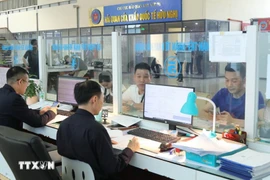
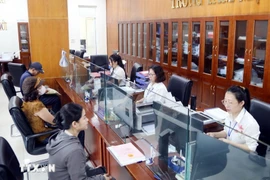
Illustrative photo (Photo: VNA)

Hanoi (VNA) – National Assembly Chairman Tran Thanh Man has signed off a resolution specifying the number of vice chairpersons of People’s Councils at the provincial and commune levels, along with the number of deputy heads of boards at these councils.

Under Resolution No. 106/2025/UBTVQH15, a city formed through the merger of three provincial-level administrative units will have no more than four vice chairpersons of the People’s Council. If formed from two units, the number is no more than three, while a newly formed province also has up to three vice chairpersons.

A province that is not reorganised will have no more than two vice chairpersons of the People’s Council.

Regarding the number of deputy heads of a provincial-level People’s Council’s boards for legal affairs, economic – budgetary affairs, and cultural – social affairs in reorganised provinces or cities, the resolution sets a maximum of four deputy heads in the localities formed from three provincial-level units, and three deputy heads for those formed from two.

For the ethnic affairs board of the provincial-level People’s Council in a reorganised locality, if the board is established basing on the merger of three similar boards of three former provincial-level administrative units, it may have up to four deputy heads. If it is formed through the merger of two similar boards of two former provincial-level administrative units, the number is no more than three; and if established basing on the board of a pre-merger provincial-leval administrative unit, no more than two.

The board for urban affairs of a newly formed city may have no more than two deputy heads.

In provinces or cities that have not undergone restructuring, each board of their provincial-level People’s Councils has no more than two deputy heads.
At the commune level, each People’s Council has one vice chairperson, according to the resolution.

Meanwhile, Resolution No. 108/2025/UBTVQH15, also signed by Chairman Man, defines the criteria for establishing an ethnic affairs board of a provincial-level People’s Council.

The board may be formed if that province or city meets at least two of the following three conditions: having over 20,000 ethnic minority residents living in concentrated communities such as villages or hamlets; having over 5,000 ethnic minority people in need of state assistance and development support; and having ethnic minority populations residing in strategic or sensitive areas in terms of national defence and security, or border areas with frequent cross-border interaction among ethnic communities.

These new regulations are part of efforts to improve the organisation and efficiency of People’s Councils at all levels following recent administrative reforms in Vietnam./.

VNA
See more

Prime Minister Pham Minh Chinh visits the operational system of the Nhon Trach 3 and 4 power plants (Photo: VNA)

Nhon Trach 3 and 4 thermal power plants reflect Vietnam’s determination, expertise: PM

The Nhon Trach 3 and 4 power thermal plants, invested by Petrovietnam Power Corporation, have a total investment of around 1.4 billion USD. With a combined capacity of 1,624 MW, the plants are expected to supply over 9 billion kWh annually once fully operational, adding substantial baseload power to the system, particularly in the southern region.

Minister of Foreign Affairs Le Hoai Trung receives Non-Resident Ambassador of Nepal to Vietnam Dhan Bahadur Oli in Hanoi on December 13, 2025. Photo courtesy of the Ministry of Foreign Affairs.

Vietnam, Nepal seek to promote deeper, substantive cooperation

Nepalese leaders attach great importance to relations with Vietnam and wish to learn from its experience and development models in socio-economic development and international integration, said Non-Resident Ambassador of Nepal to Vietnam Dhan Bahadur Oli.

Vietnamese Minister of Foreign Affairs Le Hoai Trung (Photo: VNA)

Vietnamese, Lao foreign ministers hold online talks

The two ministers agreed to maintain close coordination in the time ahead and to expand cooperation under the new framework and orientation, underscoring the significance of the two countries’ “great friendship, special solidarity, comprehensive cooperation, strategic cohesion”.

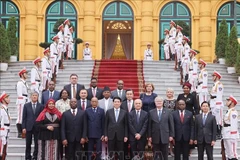
State President Luong Cuong (fourth from left, first row) and newly-appointed foreign ambassadors in Hanoi on December 12, 2025. (Photo: VNA)

State President receives newly-appointed foreign ambassadors

Receiving Egyptian Ambassador Hany Mostafa Mohamed Mostafa Hassan, President Cuong affirmed that Vietnam highly evaluates Egypt’s role, position, and contributions to regional peace and stability. He also congratulated the African country on its achievements in implementing the 2030 Vision.

An overview of the seminar on the Party’s leadership in ensuring macroeconomic stability, renewing the growth model, restructuring the economy and promoting international integration (Photo: VNA)

Vietnam, Cuba exchange theoretical views on Party’s leadership in macroeconomic stability

The two sides explored in depth the Party’s role in leadership, orientation, oversight and strategic coordination in economic management; approaches to implementing economic restructuring programmes alongside the renewal of the growth model; measures to respond to global economic volatility, inflationary pressures and shifts in global trade; and the building of effective strategic advisory bodies to ensure the Party’s comprehensive leadership in a changing context.

Vietnam’s Ambassador to Australia Pham Hung Tam (Photo: VNA)

Australia–Vietnam Policy Institute serves as bridge for bilateral relations

Established in 2022, AVPI serves as a forum for exchanging ideas among businesses, government agencies, non-profits, universities, and scholars in Australia on Vietnam. The institute acts as a platform for policy dialogue, focusing on research and insights on strategic relations and bilateral economic ties.