New rural criteria must fit local realities: Deputy Minister

The draft proposes nine major categories for commune-level assessment, including planning, infrastructure, rural economy, human resources, culture, environment, governance, science and digital transformation, and access to law and public security.

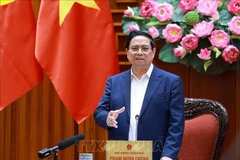
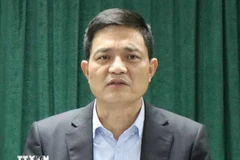
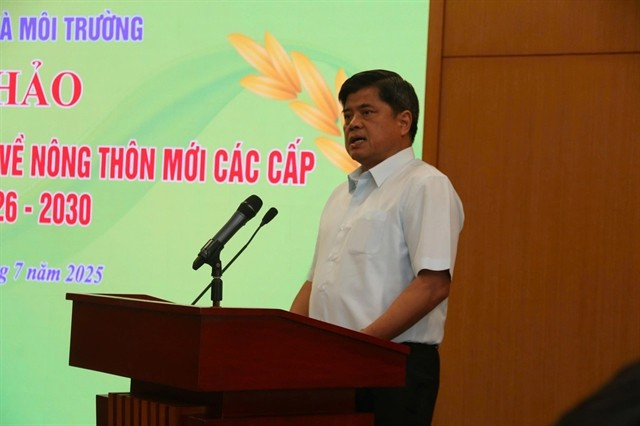
Deputy Minister of Agriculture and Environment Tran Thanh Nam speaks at the workshop. (Photo: nongthonmoi.gov.vn)

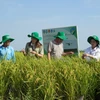
Hanoi (VNS/VNA) - Vietnam’s new rural development framework for the 2026–30 period must better reflect ground realities and empower local authorities to take the lead in implementation, Deputy Minister of Agriculture and Environment Tran Thanh Nam said at a consultation workshop in Hanoi on 25.

At the event, officials discussed a draft revision of the national criteria for new-style rural communes, which proposes dividing communes into three development groups to better align the standards with local conditions.

Group 1 includes poor and particularly disadvantaged communes in ethnic minority and mountainous areas.

Group 2 covers communes where farmland accounts for at least 70% of the total area.

Group 3 comprises urbanising communes, including those with high population density, merged communes, or localities with minimal agricultural output or urban development orientation.

This classification is expected to help localities adopt more suitable criteria based on their specific circumstances.

The draft proposes nine major categories for commune-level assessment, including planning, infrastructure, rural economy, human resources, culture, environment, governance, science-technology and digital transformation, and access to law and public security.

Deputy Minister Nam noted the criteria were initially developed in late 2024 based on input from ministries and provinces, but they now require revision to reflect administrative restructuring and new development challenges.

Ngo Truong Son, Chief of the Central Coordination Office for the National Target Programme on New Rural Development, said the current 2021–25 criteria had proven to be a vital tool for planning and monitoring. More than 95% of communes nationwide have now met seven core criteria such as planning, electricity access, and education.

However, income, poverty reduction, and environmental protection remain challenging areas.

The updated framework for 2026–30 will include new features such as a modern rural commune category, while removing the rigid model commune label to allow more flexibility. It also proposes stronger decentralisation and improved integration with other national target programmes like the sustainable poverty reduction agenda.

Experts at the workshop stressed the need to clarify the functions of each criteria group.

Assoc. Prof. Dr. Nguyen The Chinh, former Director of the Institute of Strategy and Policy on Natural Resources and Environment, emphasised the importance of clear, consistent environmental standards that align with national strategies and legal frameworks through 2050.

In terms of planning and infrastructure, Doctor, Architect Pham Thi Nham from the Ministry of Construction said criteria should help shape quality living spaces, support agricultural production, and respond to modern trends such as urbanisation, digitalisation, and climate change.

Participants also suggested incorporating new metrics such as a happiness index and smart village indicators.

Deputy Minister Nam affirmed that all feedback would contribute to finalising a more adaptive and inclusive set of criteria for the coming phase of the New Rural Development Programme./.

VNA

See more

Vietnamese Ambassador to Japan Pham Quang Hieu (standing) briefs the delegation on the development of the Vietnamese community and related affairs in Japan. (Photo: VNA)

Vietnamese community in Japan urged to strengthen unity, contribute to homeland's development

The representatives expressed appreciation for the support provided by the Party, the State, the VFF Central Committee and the Vietnamese Embassy. They reaffirmed their commitment to fostering a united and law-abiding community, enhancing the image of Vietnamese people in Japan, supporting members' integration into local society, and promoting Vietnam's culture and people to Japanese friends.

Soldiers visit the exhibition (Photo: VNA)

Exhibition showcases over 400 documents, artefacts on Agent Orange legacy

Da Nang remains one of the localities most severely and persistently affected by toxic chemicals after the war. The city has more than 37,700 people who rendered services to the revolution, including about 4,790 exposed to toxic chemicals. Among 17,350 people affected by toxic chemicals, nearly 3,900 benefit from policies for persons with disabilities.

The burned-out shell of the bus after the crash (Photo: VNA)

Drowsy driver detained after Dong Nai coach accident kills seven

Tran Thanh Hai, 41, a resident of the central province of Khanh Hoa, was charged for violating road traffic regulations under Article 260 of the Criminal Code, after his coach slammed into highway guardrails in Dong Nai city and caught fire, killing seven passengers and injuring five others. ​

Vietnamese language teachers from the CVCEC and the Viet Youth Readiness Hub guide young Vietnamese expatriates at a class. (Photo published by VNA)

Expatriate woman helps bridge Vietnam, Canada

Phan Thi Quynh Trang is the founder and Chair of the Canada–Vietnam Culture and Education Council (CVCEC), a Canadia-based non-profit orgtanisation that targets culture as a foundation for integration, and education and technology as tools to empower young people.

Delegation members visit the family of Tran Thi Yen (centre), daughter of martyr Tran Quang Tien. (Photo: VNA)

Vietnamese veterans visit martyrs’ families in Berlin

The Vietnam War Veterans Association in Berlin-Brandenburg has run multiple events in recent years to honour war invalids, martyrs and their families, paying tribute to earlier generations while bolstering solidarity within the Vietnamese community in Germany and keeping the nation's cherished traditions alive.

Luong Van Thoi (born in 1997), a resident of Tan Tien village in Chieu Luu commune, Nghe An province, at the investigation agency's office. (Photo: VNA)

Border guards seize 15,200 drug pills, heroin in major trafficking bust

At about 10:15 pm on July 20, officers from the Operations Division of the Nghe An Border Guard Command and the Nam Can International Border Gate Border Guard Station, in coordination with customs officers at the Nam Can International Border Gate, caught a resident of Tan Tien hamlet, Chieu Luu commune, Nghe An province, allegedly transporting narcotics in Tien Tieu hamlet, Nam Can commune.

Vietnam's religions embrace digital age while safeguarding freedom of belief

Vietnam's religions embrace digital age while safeguarding freedom of belief

Minister of Ethnic and Religious Affairs Nguyen Dinh Khang said digital technology and AI are transforming religious practices by enabling online participation and supporting heritage preservation. At the same time, they require stronger legal education, improved digital literacy among religious dignitaries and followers, and monitoring and enforcement against online violations.

Checking a DNA sample (Photo: VNA)

Tuyen Quang to collect DNA samples to identify over 3,900 martyrs

Three main collection hubs will cover 18 spots across the province. This is a key mission within a 500-day national campaign to search for, recover and identify the remains of fallen soldiers, in the lead-up to the 80th anniversary of War Invalids and Martyrs’ Day (July 27, 1947 - 2027).