Hanoi (VNA) - In the context of information globalisation, freedom of expression and freedom of the press are values respected and ensured by all countries. However, these rights are never absolute.
International legislative history as well as legal practices in developed nations affirm that no civilised country allows the abuse of freedom of expression to distort the truth, defame leaders, incite hatred, disrupt social order, or act against the State.
Crossing the limits of freedom of expression and press freedom
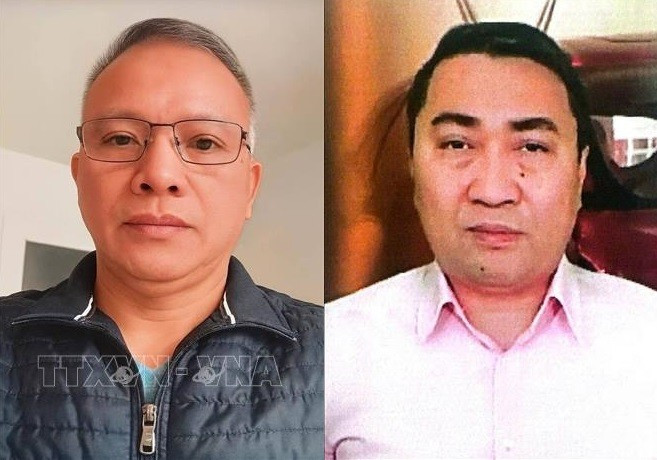
From the perspective of international law and Vietnamese law, it is necessary to clearly recognise that the acts committed by individuals such as Le Trung Khoa and Nguyen Van Dai do not fall within the scope protected by freedom of expression or press freedom. These rights are provided in Article 25 of Vietnam’s 2013 Constitution and Article 19 of the International Covenant on Civil and Political Rights (ICCPR), of which Vietnam has been a member since 1988. However, the ICCPR itself - the world’s highest human rights standard - also affirms in Clause 3, Article 19 that the right to freedom of expression must be restricted when necessary to protect national security, public order, social morality, as well as the rights and reputations of others.
This means that any acts of fabricating, distorting, or defaming leaders; any rhetoric inciting or advocating opposition to the administration; and any activities organising, assisting, or calling for external interference in Vietnam’s internal affairs fall outside the protection of freedom of expression and must be subject to legal sanctions. By spreading false information, causing public confusion, and undermining the credibility of the State, individuals such as Khoa and Dai have clearly crossed the limits of freedom of expression and press freedom.
Article 117 of Vietnam’s 2015 Penal Code stipulates that the offence of “making, storing, disseminating, or propagating information, documents or materials against the Socialist Republic of Vietnam” infringes upon the solidity of the people’s administration, the socialist regime, and the State of the Socialist Republic of Vietnam. This offence undermines national security, ideological unity, and the people’s trust in the regime, as well as shakes public confidence in the administration.
All legitimate needs in safeguarding national interests, including ensuring security, order, stability and peace to serve national development, must be protected. This regulation establishes a clear boundary between the lawful exercise of freedom and democracy, and criminal acts that violate the law (such as disseminating false information, distortion, fabrication, defamation against the administration). It does not restrict the exercise of freedom of speech, freedom of the press, or other human rights.
In the cause of national construction and defence, the Communist Party of Vietnam and the State of the Socialist Republic of Vietnam have always identified the guarantee and exercise of freedom of expression and freedom of the press as important measures to arouse and promote the will, aspirations, intellect and spiritual strength of all people, in order to successfully realise the goal of a prosperous people, a strong nation, democracy, justice and civilisation.
Furthermore, during the process of international integration, Vietnam has always been proactive in learning and adopting progressive experiences from countries around the world to better ensure freedom of speech and freedom of the press for all citizens. However, these rights must have certain limits, consistent with Vietnamese culture, traditions and laws. No one is allowed to abuse them to infringe upon the interests of the State or the legitimate rights of Vietnamese citizens. Vietnam resolutely does not allow any organisation or individual to misuse freedom to violate sovereignty, undermine the State, insult leaders, or incite division and hatred. Freedom can never be used as a pretext to destroy the nation, offend leaders or spread hostility. Those who abuse freedom to commit wrongful acts must be held accountable before the law. This is Vietnam’s firm message: ensuring freedom, while strictly protecting social order, discipline and national sovereignty.
In recent times, several individuals such as Khoa and Dai have deliberately overstepped legal boundaries, using cyberspace as a tool to spread harmful information, seriously affecting political security and social order, and stirring public frustration. The public has expressed strong indignation over the abuse of cyberspace to incite hatred, create confusion among society, and damage the nation’s reputation. Public opinion demands that authorities take strong, resolute and lawful measures to strictly handle such violations, ensuring justice, upholding legal discipline, and safeguarding the peace of the people. This reflects a legitimate expectation and demonstrates the vigilance and sense of responsibility of society as a whole.
Many former collaborators and those who once followed them have now realised the truth and bravely spoken out to expose their tactics and intentions. Even Do Van Nga, an accomplice of Khoa, admitted his violations during working sessions with competent authorities, and submitted a written denunciation against Khoa for writing articles with content against the Communist Party of Vietnam and the State of the Socialist Republic of Vietnam, calling on the public to remain vigilant when encountering false information published on the “Thoibao.de” website.
Therefore, the decisions to initiate legal proceedings and investigations, prosecute and try in absentia Khoa and Dai (who both have Vietnamese nationality) are appropriate and in line with public expectations. It ensures that violations are handled in accordance with the law, on the right persons and the right offences, in compliance with Vietnamese legal regulations, consistent with international law, and aligned with national interests. This reflects the resolve of a strong rule-of-law state, a sovereign nation, and a people who will never accept being insulted, divided, or misled by wrongful allegations.
Vietnam’s judicial and law enforcement agencies have strictly followed all procedures in accordance with legal regulations. The investigations are based on clear, objective evidence and comply with both domestic and international legal standards. Like many countries around the world, Vietnam does not allow any organisation or individual to abuse the rights to democratic freedom, freedom of speech, or freedom of the press to infringe upon national security, the interests of the State, or the legitimate rights and interests of organisations and individuals.
Vietnam resolutely safeguards its jurisdiction
From the perspective of international law, any country that tolerates or shelters foreign nationals (both Le Trung Khoa and Nguyen Van Dai still hold Vietnamese citizenship) who abuse the rights to democratic freedom, freedom of the press and freedom of expression to violate the law and infringe upon Vietnam’s cyber sovereignty is failing to comply with international legal obligations. Such actions negatively affect diplomatic relations with Vietnam and demonstrate a lack of respect for sovereignty and goodwill in international relations. Vietnam is determined to protect its jurisdiction and does not accept any form of interference in its law enforcement processes.
Relevant countries must fulfill their shared responsibility in addressing individuals who exploit cyberspace to undermine peace and stability in Vietnam. In the digital age, cybercrime and anti-State propaganda are transnational in nature, requiring close international cooperation. Handling such individuals is not only Vietnam’s responsibility, but also an objective requirement for countries that are tolerating or harbouring them.
Vietnam and Germany has maintained a strategic partnership. Recent diplomatic and cooperation activities between the two countries have been strengthened on the basis of mutual trust and the promotion of shared interests for peace and development of both nations. However, the recent violations of Vietnamese criminal law committed in cyberspace by Khoa and Dai could negatively affect the good relationship that both nations have built.
As active members of the United Nations Convention against Cybercrime (2025) and the UN Convention against Transnational Organised Crime, Vietnam requests Germany to refrain from tolerating or supporting these individuals and not to allow them to exploit German territory and resources to conduct activities against Vietnam. Vietnam also demands cooperation in extraditing or expelling these individuals to be dealt with in accordance with Vietnamese law; and the implementation of necessary measures and sanctions to shut down Thoibao.de - a “black spot” in the online media environment created by Khoa for economic gain and personal motives, with the purpose of harming the interests of Vietnam and its people./.

Police conclude probes into cases involving Nguyen Van Dai, Le Trung Khoa
The Security Agency for Investigation issued the investigation conclusion and gave a prosecution proposal regarding the case of Nguyen Van Dai on December 8.