Ninh Thuan ramps up nuclear power projects with resettlement push

Building upon the previous groundwork, local authorities are working with the projects' investors to review and adjust planning schemes, eyeing to complete land handover procedures at the end of December 2025.

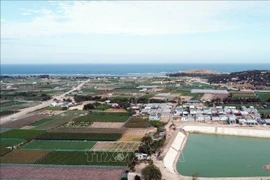
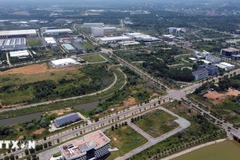
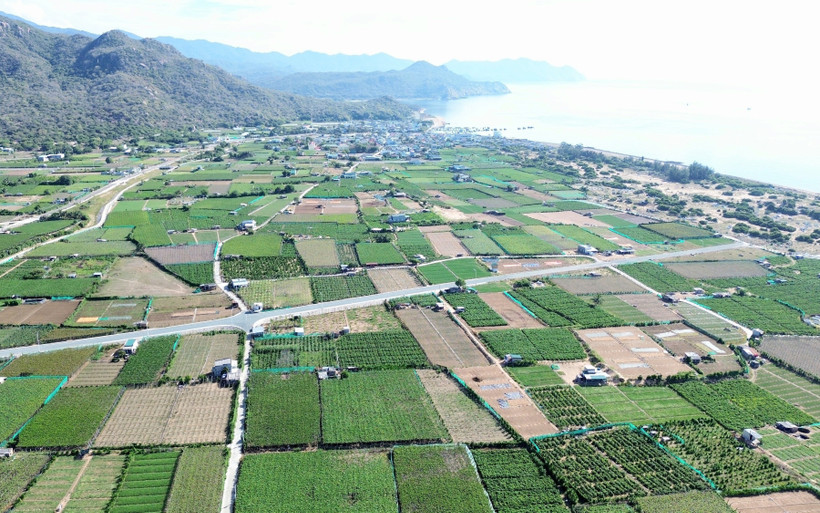
The Ninh Thuan 2 nuclear power plant project will cover 643 hectares in Thai An village, Vinh Hai commune, Ninh Hai district. (Photo: VNA)

Ninh Thuan (VNA) - The south central province of Ninh Thuan is intensifying efforts to carry out preparations for the construction of two nuclear power plants, with a focus placed on the site clearance and resettlement work.

A suite of special policies to support the livelihoods of thousands of affected residents will be put in place as well.

Building upon the previous groundwork, local authorities are working with the projects' investors to review and adjust planning schemes, eyeing to complete land handover procedures at the end of December 2025.

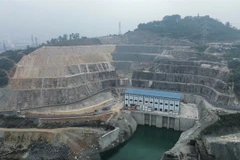
The construction of the Ninh Thuan 1 nuclear power plant spanning more than 485 hectares in Vinh Tuong village, Phuoc Dinh commune, Thuan Nam district, will affect 617 households with 2,910 residents. The province has designated a 64-hectare resettlement area in Tu Thien village, also in Phuoc Dinh commune, offering 648 residential plots of 300 and 100 square metres.

Meanwhile, the Ninh Thuan 2 nuclear power plant project covering over 643 hectares in Thai An village, Vinh Hai commune, Ninh Hai district, will displace 844 households with 2,319 residents. The locality has zoned off 54 hectares in Vinh Hai commune for resettlement, providing 540 plots of 200 and 100 square metres, along with nearly 160 hectares for the reallocation of agricultural production.

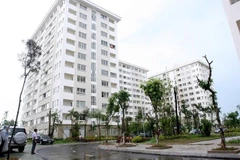
The resettlement zones will be designed in accordance with standards of modern tourism urban areas, ensuring sustainable livelihoods through integration of commercial activities, services, and production.

vna-potal-trien-khai-cac-du-an-thanh-phan-nha-may-dien-hat-nhan-ninh-thuan-8049141.jpg
The Ninh Thuan 1 nuclear power plant spans more than 485 hectares in Vinh Tuong village, Phuoc Dinh commune, Thuan Nam district. (Photo: VNA)

According to Chairman of the provincial People’s Committee Tran Quoc Nam, to accelerate the projects, the province has requested the Government to separate land clearance, compensation, and resettlement as independent sub-projects, and allow the parallel implementation with the approved planning scheme for 2021-2030 with a vision to 2050 and land-use plans for 2021-2025.

In terms of funding, the province has sought an initial 3.2 trillion VND (123.3 million USD) from the state budget for 2025, with more funding to be determined based on project scope and practical needs.

Earlier this year, the National Assembly adopted a resolution stipulating several special mechanisms and policies for the development of the two nuclear power projects, including a compensation multiplier of 1.5 times the standard land price for expropriated properties.

Ninh Thuan also proposed additional measures. Those occupying land without formal legal titles but with long-standing use and without dispute may now be eligible for official recognition and compensation. Residents ineligible for land compensation could still receive 50% support, and all relocated households will be granted a monthly support of 500,000 VND for electricity and water expenses for six months to ease their transition. Besides, a production support grant of 20,000 VND per square metre will be offered to help affected farmers restart agricultural production.

Additionally, the province suggested a 20 million VND bonus for households that hand over their land within 10 days of receiving compensation and resettlement plans./.


VNA

See more

Toy production at a Hong Kong-invested factory (Photo: VNA)

Vietnam targets deeper market penetration in Hong Kong in 2026

Vietnam-Hong Kong trade hit 62.3 billion USD in the first 11 months of 2025, soaring 73.1% annually. Vietnamese exports to Hong Kong amounted to 36.8 billion USD, a 90.6% hike, ranking fourth among Hong Kong’s import sources, while imports from Hong Kong stood at 25.5 billion USD, up 52.9% and ranking third.

Vietnam’s start-up market enters restructuring phase

Vietnam’s start-up market enters restructuring phase

In 2026, venture capital inflows into Vietnam’s start-up ecosystem are expected to recover gradually, though in a more selective manner. VinVentures forecasts that capital will focus on start-ups that have survived the rigorous screening of 2024–2025, possess clear business models, strong commercialisation capacity, and the ability to generate real cash flows.

Workers process tra (pangasius) for export (Photo: VNA)

Vietnam–Singapore trade continues to thrive

For the year as a whole, Vietnam retained its position as Singapore’s 10th largest trading partner. Bilateral trade reached a record high of nearly 40 billion SGD, up 26.2% from the previous peak of 31.67 billion SGD recorded in 2024.

Eric Van Vaerenbergh, an energy expert and lecturer at the Brussels Engineering School (ECAM) (Photo: VNA)

Belgian expert optimistic about Vietnam’s economic outlook

Vietnam should move from a growth model based mainly on expanding capital and labour to one driven by productivity improvements. He said that this requires enhancing the quality of the workforce, particularly engineers, technicians, and managers in industrial sectors.

Workers at the VSIP Hai Phong industrial and urban complex, which specialises in producing electronic components for office equipment. (Photo: VNA)

Roadmap aims to improve business climate and boost competitiveness

By the end of 2026, Vietnam aims to rank among the world’s top 50 performers in the United Nations Sustainable Development Goals, advance at least three places in the International Property Rights Index, and climb at least one position in the Global Innovation Index.

Vietnam is strengthening its position in the technology value chain, becoming a major manufacturing hub for complete consumer electronics products. (Photo: VNA)

ESG standards offer opportunities to reposition Vietnam’s electronics firms

The 2025-2027 period will be a critical turning point, as exporters to the European market will be required to strictly comply with ESG standards, including net-zero emissions roadmaps, labour standards, corporate governance and transparency requirements. As a key export sector, the electronics industry is being directly and strongly affected by this shift.

A production line for camera modules and electronic components at the factory of MCNEX VINA Co. Ltd, a Republic of Korean-invested company in Phuc Son Industrial Park, Ninh Binh province. (Photo: VNA)

Science, technology, innovation as engines of economic growth

To ensure that science and technology truly act as a powerful growth engine, experts emphasised the need for the Government to put in place supportive mechanisms and policies that encourage enterprises to invest in research and development, while strengthening cooperation among the State, research institutions and the business sector.