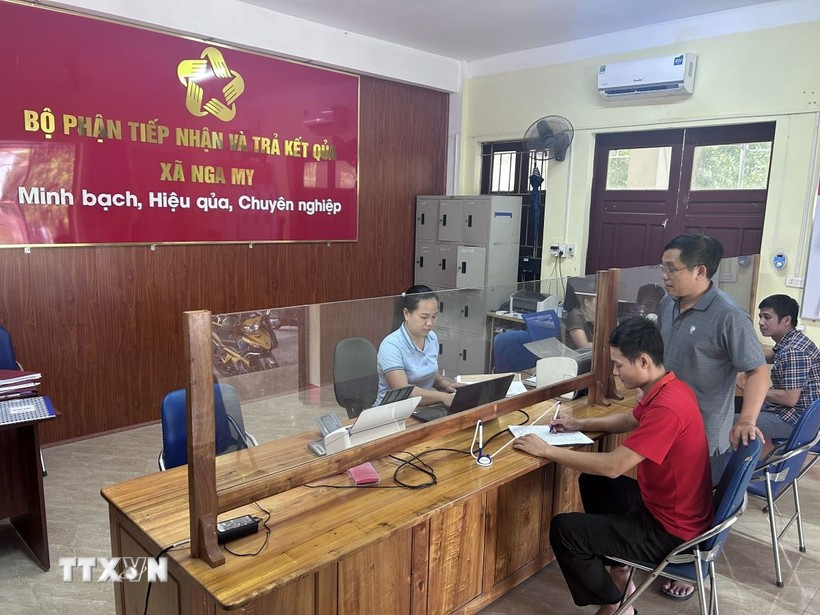
Hanoi (VNA) – The two-tier local administration model continues to achieve significant results, clearly reflecting the sound policy of the Party and State, along with the strong political will, close guidance from both central and local authorities, and public consensus. Many obstacles that arose during its operation have been solved, but for greater efficiency, bottlenecks still need to be addressed.
On September 19, the Politburo and the Party Central Committee's Secretariat issued Conclusion No. 192-KL/TW on the implementation of laws regarding decentralisation, delegation of authority, and delineation of powers in operating the two-tier local administration model.
The Politburo and the Secretariat assigned the Party Committee of the National Assembly (NA) to direct the issuance of legal normative documents to ensure consistency and uniformity. Through its supervision, the NA can promptly propose amendments if shortcomings are identified. Meanwhile, the Party Committee of the Government is responsible for directing ministries and sectors to review the feasibility of decentralisation and delegation of authority, continue to improve specialised laws, and increase guidance and support for localities.
The Ministries of Home Affairs, Justice, Finance, Education and Training, Science and Technology, Construction, and Agriculture and Environment are also assigned specific tasks. The ministers, secretaries of the provincial and municipal Party Committees, and chairpersons of the provincial and municipal People’s Committees are required to directly inspect and evaluate task performance at the commune level for timely guidance provision. The conclusion also demands localities make adjustments, propose amendments, or issue documents in line with practical conditions; and focus on addressing obstacles and comprehensively strengthening the commune level to ensure the smooth and effective operation of the model.
Earlier, on September 15, the Party Central Committee issued Document No. 59-CV/BCD on the restructuring of public service units, state-owned enterprises (SOEs), and units within agencies and institutions of the political system. It requests the Standing Board of the Government’s Party Committee to lead and direct ministries and ministery-level agencies to review their organisational apparatus to ensure effectiveness and efficiency. The focus is on reviewing functions and tasks, improving the institutional framework for decentralisation and delegation of authority, reforming administrative procedures in a thorough, effective, and rational manner, and streamlining internal organisational structures to avoid overlap in functions and duties.
The Ministry of Finance and the Ministry of Home Affairs are assigned to coordinate with other ministries and sectors to review and propose plans for restructuring SOEs, public service units, schools, and medical facilities. The Standing Board of the NA’s Party Committee is tasked with working with the Standing Board of the Government’s Party Committee to study and propose amendments, supplements, and promulgation of laws and resolutions to provide a legal basis for apparatus reorganisation. The Standing Board of the Vietnam Fatherland Front's Party Committee and central-level mass organisations direct the prompt completion of the streamlining of mass associations and affiliated press agencies.
The Standing Boards of the provincial and municipal Party Committees, along with agencies under the Presidential Office, the Supreme People’s Court, the Supreme People’s Procuracy, and the State Audit Office, are also asked to review and streamline their organisational structures to ensure clear delineation of responsibilities, avoid overlaps, and enhance efficiency. The Party Central Committee’s Organisation Commission is tasked with developing an appropriate model for Party organisations in universities, as well as studying the streamlining of public service agencies and units of the Party, and provincial-level Fatherland Front agencies.
Recently, the Government issued Resolution No. 07/2025/NQ-CP on policies and regimes for individuals affected by the restructuring of organisational apparatus and administrative units at all levels, in line with Conclusion No. 183-KL/TW of the Politburo and the Secretariat. The resolution sets out policies for five specific groups of individuals who, depending on their circumstances, may be entitled to immediate retirement, early retirement, resignation, preservation of benefits, or access to social insurance and unemployment insurance. Severance allowances are calculated based on length of service, with a maximum of no more than 24 months of current salary. Funding comes from the state budget, local budgets, or trade unions' financial sources. The resolution took effect on September 17, 2025.
Clear progress has been recorded in operating the two-tier local administration model.
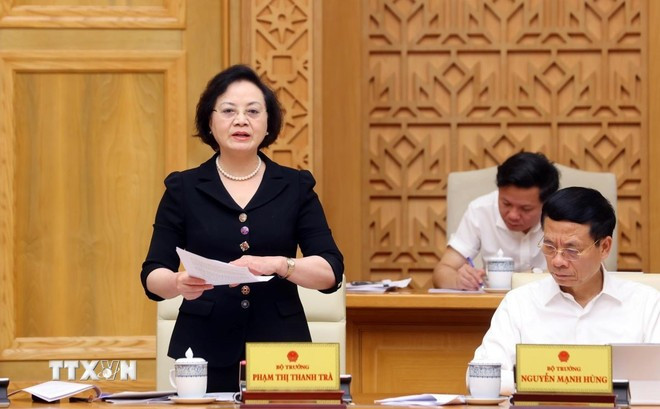
Reporting at a recent Government meeting, Minister of Home Affairs Pham Thi Thanh Tra stated that issues regarding authority, decentralisation, delegation of authority, and delineation of powers are being addressed while IT system failures have been basically solved. As of September 15, a total of 741 administrative procedures had been decentralised from the central to local levels; the organisational structures of 465 specialised agencies under the People’s Committees of 34 provinces and cities had been consolidated; and 9,916 specialised divisions under the People’s Committees of 3,321 communes, wards, and special zones had operated stably and efficiently.
At the meeting, while welcoming the ministries for sending working groups to the 34 localities, Permanent Deputy Prime Minister Nguyen Hoa Binh also emphasised that within their respective functions, tasks, and authority, ministries should guide localities in addressing remaining problems.
From the local perspective, many provinces and cities have issued resolutions on the decentralisation of revenue sources and expenditure responsibilities between the provincial and commune levels, and opened State Treasury accounts for communes. The payment of salary and policy benefits for affected individuals, though not yet fully implemented in some places, is generally following the set roadmap. Many localities have directed and organised training and capacity-building programmes on IT application and digital transformation for civil servants.
However, in practice, some localities are still slow in implementation; several disadvantaged areas have not received sufficient support; and commune-level personnel remain insufficient in number and lack professional expertise. Besides, obstacles persist in the information system and in deeper decentralisation, policy and benefit payments are delayed in some areas, and financial resources and working facilities are inadequate in certain places.
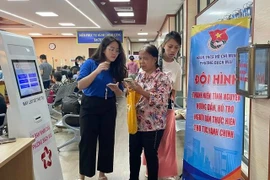
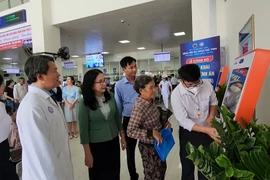
In Ho Chi Minh City, administrative procedure reform still faces many difficulties. About 4.5% of documentation is overdue, and the proportion of fully online documentation remains low; the city’s index of services for citizens and businesses in the digital environment ranks among the lowest nationwide. Staffing in many commune-level units does not meet workload requirements, leading to overload, delays, and reduced quality of work, with one personnel having to undertake multiple responsibilities. IT infrastructure is not synchronised, causing difficulties for citizens. There is also a lack of interoperability in technology applications, and the civil service lacks a well-trained and professional workforce.
Recognising these difficulties and obstacles, Nguyen Manh Cuong, Vice Chairman of the municipal People’s Committee, requested communes, wards, and special zones to accelerate the digitalisation of records, while simultaneously upgrading facilities and implementing measures to increase the proportion of fully online public service documentation.
In the central province of Nghe An, the operation of this new model has also revealed limitations that need to be addressed promptly. To solve these issues, the provincial People’s Committee recently established four working groups, each led by a vice chairperson of the provincial People’s Committee, with the participation of leaders and representatives of relevant departments and agencies, as well as heads of commune-level People’s Committees, among others./.