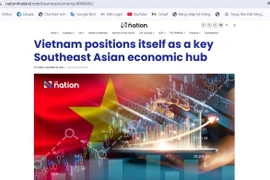
Hanoi (VNA) - The year 2025 stands out as a strategically significant turning point in Vietnam's growth, with its global standing consolidated comprehensively. Amid rapid, complex, and unpredictable global changes, Vietnam has not only maintained stability but also proactively created new opportunities and strengths, enhancing the capacity for self-reliance and the ability to formulate policies, thus paving the way for the country to enter an era of sustainable development and prosperity.
Foreign policy remains a cornerstone of Vietnam's overall development strategy. A proactive, comprehensive and balanced approach has enabled the country to expand its network of partnerships, widen its “strategic space” and shape an international environment conducive to development. A notable highlight is Vietnam’s elevation of relations to Comprehensive Strategic Partnerships with five countries, including New Zealand, Indonesia, Singapore, Thailand and the UK, bringing the total to 14, including all five permanent members of the UN Security Council. Additionally, Vietnam also forged Strategic Partnerships with nine countries and Comprehensive Partnerships with two others.
Prof. Hal Hill from the Australian National University's Crawford School of Public Policy portrayed Vietnam as an emerging exemplar of "strategic balance" among major powers as geopolitical rivalries intensify in the Indo-Pacific.
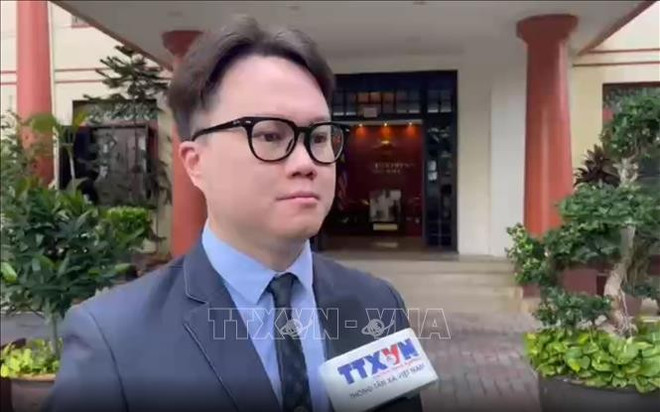
Enzo Sim Hong Jun from Malaysia’s Penang Institute stressed that Vietnam's outreach, from powerhouse East Asian economies like Japan and the Republic Korea (RoK) to developing nations amid global uncertainty and escalating tariff threats, has diversified partnerships, mitigated dependence on any single market, and preserved strategic autonomy and balance.
At the same time, Vietnam has deepened enduring traditional relationships. High-level visits by its leaders to Russia, China, and the RoK over the past year underscored a steadfast approach: preserving political trust while broadening substantive cooperation in long-term strategic fields. Neighbourhood diplomacy has further fostered strategic linkages and long-term alignment for sustainable development, resilience and shared prosperity, as seen in Vietnam and Laos injecting fresh content into their bond through the framework of "Great Friendship, Special Solidarity, Comprehensive Cooperation, and Strategic Cohesion".
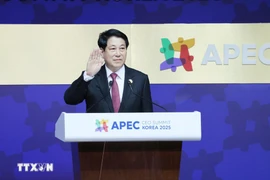
Building on solid bilateral foundations, Vietnam has continued to assert its role and voice at multilateral forums. After three decades in ASEAN, Vietnam is widely regarded as one of the bloc’s members with the capacity to lead, connect and shape a long-term development vision.
Beni Sukadis from Indonesia’s Institute of Defence and Strategic Studies called Vietnam a “bridge” bolstering ASEANS’s links with major partners, thus consolidating its centrality. Meanwhile, Dinna Prapto Raharja from Indonesia’s Synergy Policies Institute pointed to Vietnam's contributions in driving intra-ASEAN trade, which has quadrupled over the past 30 years.
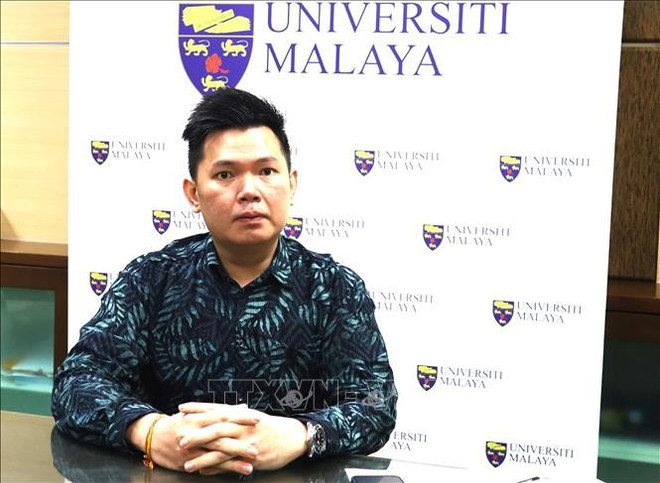
Collins Chong Yew Keat from the University of Malaya observed that Vietnam has transformed from “integration beneficiary” into an “active architect shaping ASEAN’s agenda,” demonstrating its leadership in ASEAN expansion, promoting peace in the East Sea, and spearheading digital transformation and green growth. Highlighting Vietnam’s pivotal role, ASEAN Secretary-General Kao Kim Hourn affirmed that a strong Vietnam means a strong ASEAN, and vice versa.
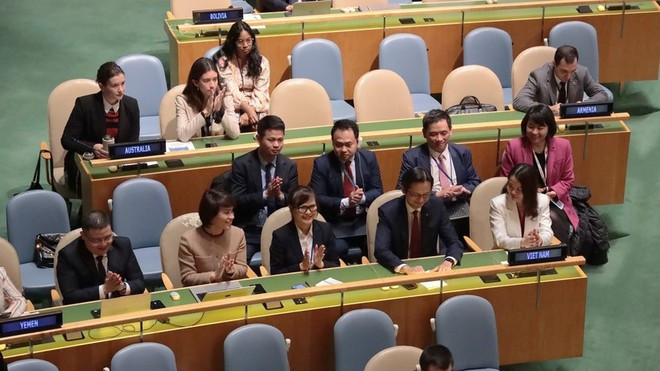
In 2025, Vietnam's footprint expanded noticeably at global frameworks. Its re-election to the UN Human Rights Council for 2026-2028, backed by strong vote tallies, signaled widespread trust in its human rights record and contributions. Hosting the signing ceremony for the UN Convention against Cybercrime, dubbed the Hanoi Convention, placed Vietnam centrally in global cybersecurity efforts, owing to its proactive and constructive role. The Washington Times viewed it as a proof of Vietnam’s ability to shape global rules in the digital era. Thong Mengdavid from the Institute for International Studies and Public Policy at the Royal University of Phnom Penh said the event elevated Vietnam’s role as a neutral coordinator and “bridge nation” in global governance, demonstrating the maturity, credibility and political mettle of a “middle power” committed to international law and multilateralism.
Vietnam’s transformation in 2025 is further illustrated by its role as a “responsible, future-oriented country” proactively sharing perspectives, initiatives and engaging in shaping global policy directions. UN Secretary-General António Guterres hailed Vietnam as an active member of a multipolar world and expressed expectation that it would assume a role matching its growing stature in global governance. Scholar James Borton, writing in International Policy Digest, noted that Vietnam is moving from “participation” to “proactive leadership” in global integration.
Observers have also noted Vietnam’s effective use of forums such as the Summer Davos Forum 2025 in Tianjin to spread a message of unity, cooperation and the building of a prosperous and sustainable “Asian era” in the face of global challenges.
Key 2025 appointments at UNESCO and BRICS partner-country status underscored Vietnam's flexible, forward-looking diplomacy. Prof. Pan Jin'e from the Chinese Academy of Social Sciences suggested Vietnam could bridge BRICS and ASEAN, fostering South-South cooperation and a more balanced global influence.
Against a backdrop of global turbulence, foreign experts have applauded Vietnam's reforms and strategic orientation. Wei Wei, head of the Vietnamese Language Department at China Central Radio and Television, stressed the value of administrative reforms and provincial mergers. Meanwhile, Ludwig Graf Westarp from Germany’s Dortmund University of Technology said the Politburo’s “pillar resolutions”, particularly those on the private sector, innovation, and science and technology, would fuel a takeoff era. Giulio Chinappi, Asia Regional Director of Italy’s Anteo Edizioni publishing house, said clearly identifying these “pillars” reflects a comprehensive vision in the new context.
In sum, observers agreed that Vietnam is entering a new developmental phase on firmer footing, with heightened stature and greater strategic space, though it must strengthen internal capacity and improve growth quality to weather future uncertainties. Looking ahead, experts like Hal Hill predicted that by 2045, Vietnam will wield even greater influence in ASEAN and beyond, proactively defining its strategic place in the new era./.