Party chief calls for stronger efforts in innovation, digital transformation

General Secretary Lam also emphasised the need to immediately issue policies to attract and retain high-level domestic and overseas talents, particularly in critical fields like AI, semiconductors, and advanced materials.

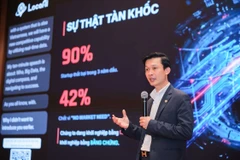
From left: Prime Minister Pham Minh Chinh, Party General Secretary To Lam and permanent member of the Party Central Committee's Secretariat Tran Cam Tu launch three digital platforms which are vital to Resolution 57’s performance. (Photo: VNA)

Hanoi (VNA) – Party General Secretary To Lam has urged heads of agencies, ministries, sectors, and localities to continue to uphold a strong sense of responsibility and high political determination, remaining resolute, persistent, and steadfast in fulfilling their duties in promoting science-technology development, innovation and digital transformation in order to strengthen public trust across society.

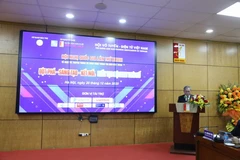
The Party chief made the call while chairing a meeting of the Central Steering Committee for the Development of Science, Technology, Innovation, and Digital Transformation in Hanoi on July 2 to review its performance in the first haft of 2025 and set tasks for the rest of the year.

At the meeting, the steering committee reported that implementing Resolution No. 57-NQ/TW over the past six months has sparked major shifts in awareness and action throughout the political system. The National Assembly passed two foundational laws — the Law on Science, Technology and Innovation, and the Law on the Digital Technology Industry — establishing a legal basis for developing high-impact sectors such as artificial intelligence, semiconductors, and big data.

To support this transition, the Government issued 16 decrees and one resolution, introducing key reforms on administrative procedures, single-window mechanisms, and decentralised governance aligned with the newly-adopted two-tier local administration model.

A major breakthrough was the steering committee’s simultaneous rollout of two overarching frameworks and the deployment of two integrated systems - one for monitoring the implementation of Resolution 57 and another for gathering and processing public feedback, initiatives, and scientific solutions. These tools are helping lay the foundation for a real-time, data-driven governance model.

The Government also identified 11 key strategic technology groups essential for sustainable growth and global competitiveness. Vietnam’s science and innovation ecosystem continued to expand, with 858 science and technology firms, 45 high-tech enterprises, and over 73,000 digital tech companies operating. The Ministry of Science and Technology mobilised 277 experts to support major AI initiatives, boosting high-level human resources in strategic sectors.

Domestic tech firms showed strong engagement — a testament that Resolution 57 has become a broad-based societal and business movement, not merely a government-led initiative.

However, the steering committee also pointed to challenges, including fragmented policy frameworks, disjointed national data infrastructure, limited data sharing, and a shortage of skilled workforce.

vna-potal-ban-chi-dao-trung-uong-ve-phat-trien-khoa-hoc-cong-nghe-doi-moi-sang-tao-va-chuyen-doi-so-trien-khai-nhiem-vu-6-thang-cuoi-nam-2025-8127167.jpg
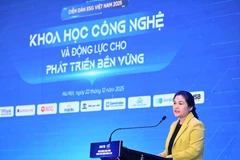
Party General Secretary To Lam addresses the meeting. (Photo: VNA)

General Secretary Lam showed delight at the achievements. For the rest of 2025, he stressed that digital transformation must become the “central nervous system” — the bridge between provincial and local administrations — and act as a “data brain” to synthesize, analyse, and provide early warnings. Without it, the new two-tier administration model cannot function effectively, he underlined.

The Party chief stressed the need for an extensive communications campaign on the groundbreaking aspects of the Law on Science, Technology and Innovation, along with the preparations of sub-law legal documents as well as sector-specific regulations, and the effective, substantive rollout of fully online public services.

Localities and agencies must incorporate the strategic action plan and its implementation guidance into their own programmes, aligned with existing strategic systems and key national initiatives, he said.

A new data governance approach is essential, prioritising efficiency and ensuring data is accurate, clean, real-time, and interconnected, the Party leader said, adding ministries must urgently complete and operationalise the National Data Centre.

Administrative processes must be restructured to enable seamless data sharing and improve digital services for people and businesses. National 5G deployment must be accelerated, alongside satellite internet, electricity stability, and closing coverage gaps in remote regions, the Party leader requested.

Grassroots infrastructure must be reinforced with reliable networks, endpoint devices, and sufficient personnel to support digital transformation, he noted.

General Secretary Lam also emphasised the need to immediately issue policies to attract and retain high-level domestic and overseas talents, particularly in critical fields like AI, semiconductors, and advanced materials. This effort will be anchored in a National Talent Strategy through 2030, with a vision to 2050.

Funding should focus on flagship, interdisciplinary, and interregional projects with real impacts, avoiding fragmented, symbolic spending. Priority will be given to digital initiatives serving the new administration model and to the most critical projects outlined in the Strategic Action Plan.

He further underlined the need to safeguard data security, privacy, and intellectual property.

At the conference, General Secretary Lam and other senior Party and State leaders officially launched three digital platforms vital to Resolution 57’s performance, including the Communist Party of Vietnam’s online portal; the monitoring and evaluation system for the implementation of Resolution 57; and the national system for receiving feedback, proposals, initiatives, and solutions on the development of science, technology, innovation, and digital transformation./.


VNA

See more

A medical worker gives guidance to a mother on how to care for a newborn in Ta Ca commune, Nghe An province. (Photo: VNA)

Top leader unveils people-centred vision for new development model

Vietnam's growth model, long fueled by low-cost labour, resource extraction, contract manufacturing, expanded investment, and capital accumulation, has run out of road. The country now needs a sweeping reform agenda to shift from extensive growth to a model driven by productivity, knowledge, science and technology, innovation, and digital transformation.

Youth union members in Bu Gia Map commune help local residents complete administrative procedures. (Photo: VNA)

Digital governance transforms life in border commune of Dong Nai city

A year after adopting the two-tier local administration model, Bu Gia Map, a remote border commune in the southern city of Dong Nai with a significant ethnic minority community, has experienced notable improvements in public administration, making digital public services more accessible to residents and boosting governance efficiency.

Individuals and organisations should strengthen data protection measures in the digital economy. ( Photo: nhandan.vn)

Experts recommend risk-based data governance to strengthen legal protection

In the first quarter of 2026, more than 6.9 million accounts were exposed, double the figure recorded in the same period last years. Stolen personal data has frequently been exploited in sophisticated online scams, particularly impersonation schemes targeting victims through fake relatives or acquaintances.

The exhibition combines digital technology, simulation models and hands-on activities to help the public gain knowledge of information security in an engaging and easy-to-understand manner. (Photo: VNA)

Interactive "Cyber Security Wall" exhibition spreads digital safety awareness in Hanoi

Through a series of display areas, visitors can explore notable scientific and technological achievements of the People's Public Security Force in safeguarding national security in cyberspace. The exhibition also provides information on common forms of online fraud and cyber scams, along with practical guidance on how to identify and prevent them.

A SMT (Surface Mount Technology) production line for electronic devices at Trung Nam EMS Factory, Da Nang High-Tech Park. (Photo: VNA)

New decree offers major incentives for high-tech R&D

The decree, which took effect on July 1, gives priority to investment in high-tech R&D, including research into innovative and core technologies; efforts to decode, master and improve high technologies; and the application, testing and refinement of advanced technologies.

The smart medical kiosk system at Hop Luc General Hospital in Thanh Hoa province makes it easier for patients to access medical examination and treatment services. (Photo: VNA)

Vietnam’s digital overhaul starts to deliver: French newswire

Inforadar noted that Vietnam has progressively streamlined its regulatory framework to clear institutional bottlenecks while putting in place mechanisms designed to spur innovation and technology adoption. The process has also pivoted from a resource-heavy approach to one focused on practical results, with stricter monitoring of projects’ progress.

Visitors experience an e-book app (Photo: VNA)

Verified subscriber data builds stronger digital shield

As Vietnam accelerates its national digital transformation, every correctly verified mobile subscription builds a more comprehensive and reliable telecom database, laying the groundwork for secure, sustainable digital services and public confidence in the country’s digital ecosystem.

A banana plantation cultivated to standardised production practices by Hung Son High-Tech Agriculture JSC in An Phu ward, Gia Lai province. (Photo: VNA)

Crop breeding innovation key to boosting agricultural productivity

According to the Plant Production and Protection Department under the Ministry of Agriculture and Environment, improved crop varieties have increased yields by 8–15%, depending on the crop, while enhancing farmers' incomes and supporting the restructuring of the agricultural sector.

Quantum technology is emerging as a strategic frontier in global science, technology and security competition. - Illustrative image (Photo: VNA)

Quantum tech seen as strategic pillar for Vietnam’s technological self-reliance

In Vietnam, the Politburo’s Resolution No. 57-NQ/TW identifies science, technology, innovation and digital transformation as breakthrough drivers of national development. In this context, the Prime Minister’s Decision No. 21/2026/QD-TTg has added cybersecurity and quantum technologies to the country’s list of 10 strategic technology groups.