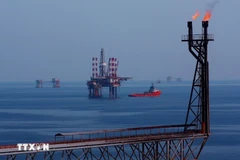
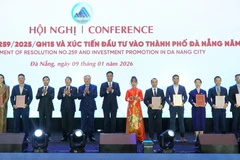
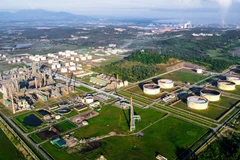
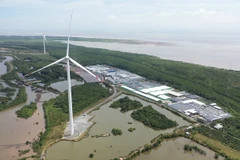
An overview of the Ca Mau gas-power-fertiliser complex (Photo: petrovietnam.petrotimes.vn)
Hanoi, (VNA) – As a big State-owned enterprise, the Vietnam Oil and Gas Group (PetroVietnam) has the mission of supporting economic development in disadvantaged regions and localities. The group has always given due priority to projects in poor localities which can serve as a driver for local economic growth.
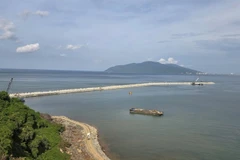
The Dung Quat refinery is a typical example. Before the refinery was built, Quang Ngai was among provinces with lowest budget revenues in the central region. After becoming operational, the Dung Quat refinery contributed trillions of VND to the local budget each year.
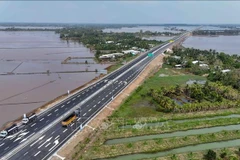
The financial contribution from Dung Quat has enabled the provincial authorities to invest in infrastructure such as electricity transmission grids, roads, schools and health stations serving local residents, thus improving their living conditions
The refinery also helped stimulate the establishment of many service and supporting enterprises in the province to serve its operation.
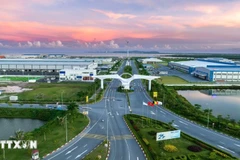
Another example of the role of PetroVietnam’s projects in local development is the southern province of Ca Mau. In the past, Ca Mau, which is located far from key economic zones, was a purely agricultural province. The project on building a gas – power – fertiliser complex in Ca Mau has played a great role in boosting socio-economic development in this southernmost province. The complex’s contribution accounts for nearly 30% of annual revenues of Ca Mau province.
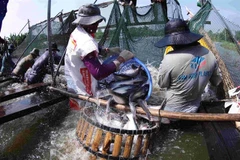
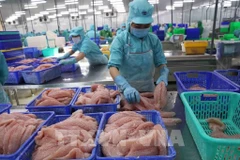
The complex has also helped turn the province into a major aquaculture hub which exports hundreds of millions of USD worth of aquatic products each year.
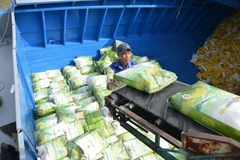
The Ca Mau Gas-Power-Fertilizer Complex, invested by the PetroVietnam Camau Fertiliser Joint Stock Company (PVCFC), has recorded strong growth over the past decade and become the leading fertiliser production hub of the country.
The Ca Mau 1 and 2 Power Plants with total capacity of 1,500 MW, have contributed greatly to ensuring national energy security.
Most recently, the implementation of a project to build the Nghi Son Refinery and Petrochemical Complex in the northern central province Thanh Hoa, which has a total investment of up to 10 billion USD, has brought about fast changes in the socio-economic conditions in the locality.
According to National Assembly deputy Bui Sy Loi, since the launch of the project, marked changes have been seen in not only the northern part of Thanh Hoa province but also the southern part of Nghe An province. In the past, the provincial authorities had to grant food aid to those areas in the between-crop period every year. However, the region has prospered along with the pace of the project.
The investment of the oil and gas sector has laid the foundation for economic growth in the region, he said, stressing that the Nghi Son oil refinery marked an extremely significant start for a breakthrough in socio-economic life in not only a province but also an entire region.
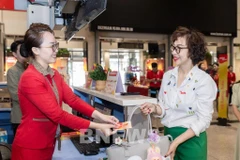
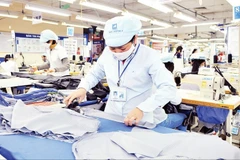
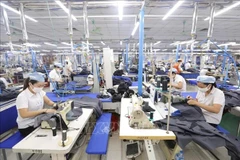
In addition, the oil and gas sector also contributed to the settlement of an important social issue, that is creating jobs for labourers through its investment projects. Along with creating employment, oil and gas investment projects help improve the quality of the workforce. As oil and gas projects require advanced technologies, enterprises wishing to cooperate with or supply services for them must also meet certain requirements on science-technology, professionalism and qualified personnel.
Last year, PetroVietnam remains one of the three largest enterprises in the country, the 14th year in a row, according to the VNR500 rankings unveiled by Vietnam Report JSC.
Despite the complex COVID-19 situation that has adversely affected almost all businesses, thanks to effective response measures, PetroVietnam has sustained operations and supply of strategic products, helping to stabilise the market, guarantee the national energy security, and contribute to the State budget./.