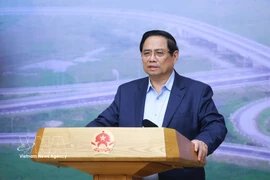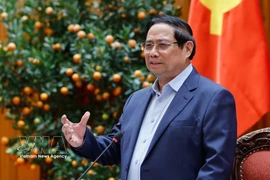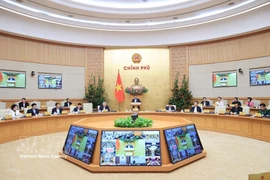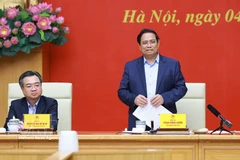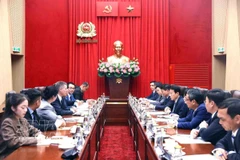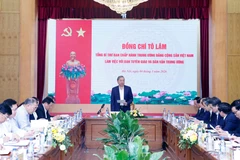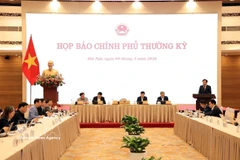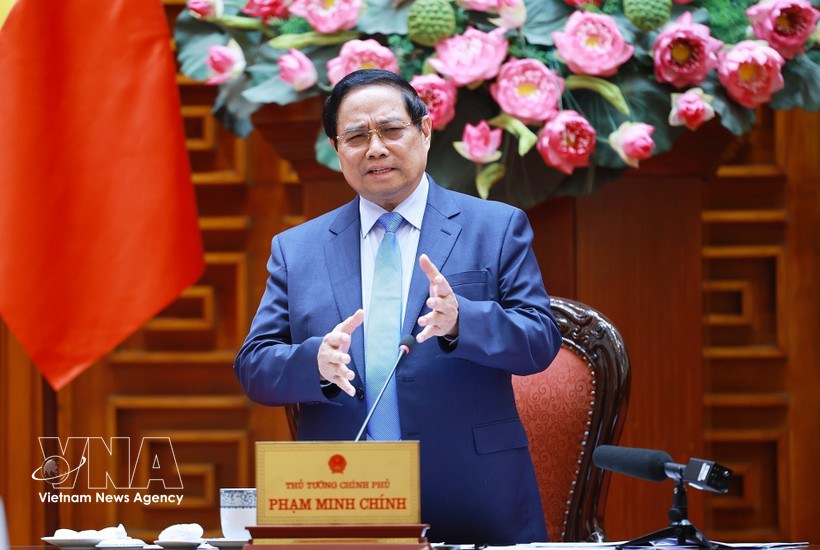
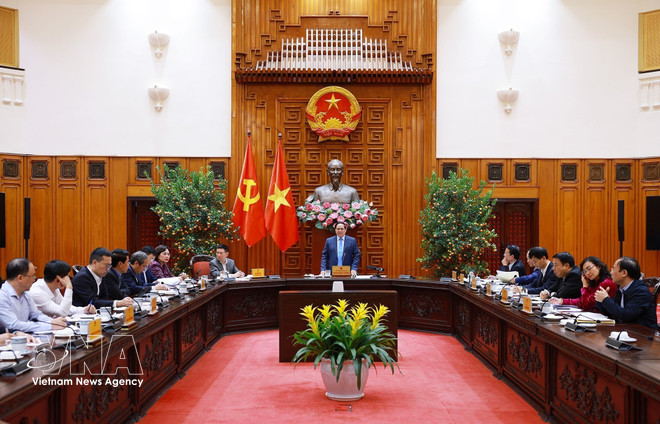
Hanoi (VNA) - Prime Minister Pham Minh Chinh on March 5 chaired a meeting with ministries and relevant agencies to discuss key tasks and solutions for the management of monetary and fiscal policies.
Analysing current developments, the PM called for flexible, safe and effective adaptation to any circumstances to maintain macroeconomic stability, control inflation, achieve double-digit growth, ensure major economic balances, and keep public debt, government debt and external debt within permitted limits.
He underlined that external developments may disrupt supply chains, raise transport and logistics costs, and create energy difficulties, thereby increasing production costs and affecting business activities and people’s livelihoods. As a developing and highly open economy in transition, Vietnam remains significantly exposed to such impacts.
Against this backdrop, PM Chinh asked ministries, sectors, localities and relevant units to closely monitor developments, remain calm and steadfast in major orientations and principles, neither pessimistic nor complacent, and adopt appropriate and feasible solutions to maximise the country’s competitive advantages and opportunities while minimising negative impacts on the economy.
He reiterated that the overarching goals are to maintain macroeconomic stability, control inflation, achieve growth of at least 10%, ensure major economic balances, and keep public, government and external debts within allowable limits. At the same time, authorities must respond flexibly, safely and effectively to any possible scenarios, avoiding passivity or unexpected disruptions, he added.
The PM commended the State Bank of Vietnam for its proactive, flexible and resilient management and urged it to continue implementing timely, proactive and effective monetary policies in line with practical conditions, including interest rates, exchange rates, foreign exchange reserves and credit growth. He also called for the early establishment of a national gold trading floor, stronger digital transformation in banking, and accelerated disbursement of preferential credit packages for social housing and other priority sectors.
The Ministry of Finance was tasked with continuing a targeted and focused expansionary fiscal policy, including effective budget revenue and expenditure management, stronger public investment in key infrastructure projects, tax and fee reductions or extensions, development of an international financial centre, mobilisation of all resources for development through mechanisms such as public-private partnerships, and further development of the capital and stock markets, including bond issuance, to expand medium- and long-term funding sources and reduce pressure on the banking system.
He stressed the need to shift from heavy reliance on credit capital to diversified and lawful funding sources, ensuring that monetary and fiscal policies complement and reinforce each other.
He also called for effective implementation of the 14th National Party Congress Resolution and thematic resolutions of the Politburo to renew traditional growth drivers such as investment, consumption and exports, while promoting new engines, particularly science and technology, innovation, digital transformation, green transition, energy transition and labour restructuring.
At the same time, ministries and agencies were urged to improve productivity, quality and competitiveness, unlock resources across all economic sectors, particularly small and medium-sized enterprises, in line with Politburo Resolutions 68-NQ/TW and 79-NQ/TW.
The PM also instructed further administrative reforms, simplification of investment procedures, faster site clearance and accelerated implementation of key projects to improve capital efficiency and reduce the ICOR index.
Authorities were also urged to step up trade promotion, diversify markets, products and supply chains, support enterprises affected by global trade fluctuations, and stimulate domestic consumption, including the launch of a “Vietnamese Goods Consumption Week”.
PM Chinh also directed continued restructuring of the energy sector towards a green and sustainable direction, early issuance of a directive on energy saving linked with green transition, and measures to ensure the safe and sustainable development of the real estate market, including increased supply of social housing. He also called for the prompt establishment of a State-managed real estate and land-use rights trading centre and stronger foreign investment attraction.
PM Chinh assigned Deputy PM Ho Duc Phoc to directly oversee the implementation of tasks and solutions in monetary and fiscal policy management./.