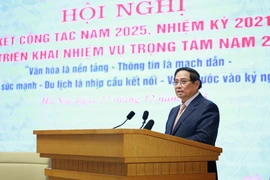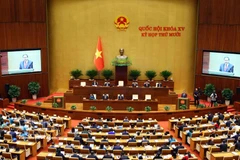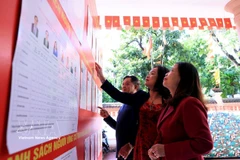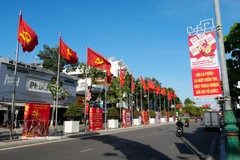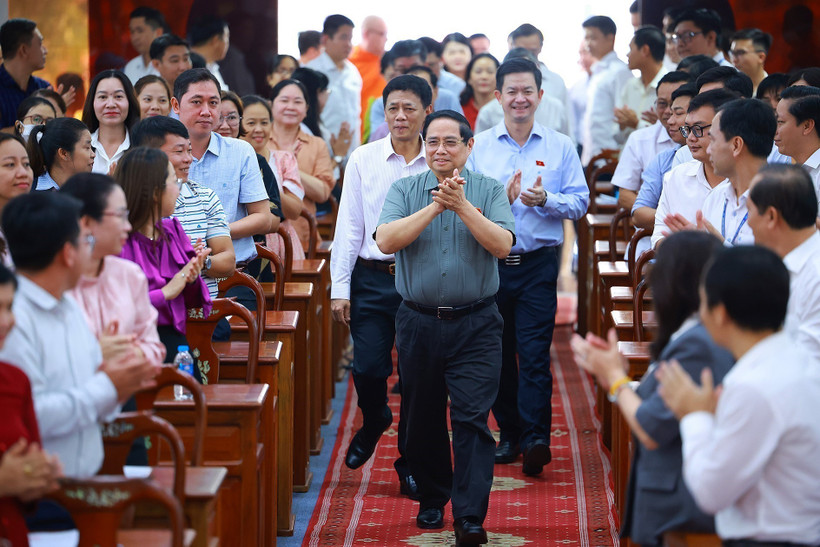
Can Tho (VNA) – Prime Minister Pham Minh Chinh held a meeting with voters in the Mekong Delta city of Can Tho on December 28 to inform them of the outcomes of the 15th National Assembly (NA)’s 10th session and listen to their opinions, with discussions concentrating on major policy breakthroughs in healthcare and education.
Attending the meeting were National Assembly (NA) deputies: Secretary of the municipal Party Committee Le Quang Tung; Chairman of the NA’s Council for Ethnic Affairs Lam Van Man; and NA General Secretary and Chairman of the NA Office Le Quang Manh, Minister of Education and Training Nguyen Kim Son, Minister of Health Dao Hong Lan, along with more than 300 voters who are officials, civil servants, teachers, lecturers, and medical workers in the city.
The meeting devoted significant time to voter feedback, particularly regarding the implementation of Politburo Resolution No. 71 on breakthrough development in education and training, and Resolution No. 72 on measures to better protect and improve public health.
Responding to voters’ concerns, the Prime Minister and leaders of ministries provided clarifications on policies to encourage private investment in elderly care, incentives for medical workers, measures to attract human resources to grassroots healthcare facilities, and legal reforms to match the two-tier local administration model. They addressed policies to enhance the role of the private sector, support universities in the Mekong Delta to become knowledge hubs, and strengthen financial mechanisms to improve higher education quality and scientific research.
PM Chinh emphasised that healthcare and education are two key pillars directly related to the well-being of every citizen and the country’s aspiration to move toward prosperity, civilisation and sustainable development. To concretise Resolution No. 72, the Government submitted to the National Assembly two laws and one resolution for approval, including the Law on Population, the Law on Disease Prevention, and a resolution on breakthrough mechanisms for healthcare development, aiming to build a strong Vietnam where every citizen can enjoy longer, healthier, and better lives.
He stressed that the Government will swiftly implement the newly approved national target programme on healthcare, population and development for 2026–2035, with five projects totalling nearly 90 trillion VND (3.4 billion USD), focusing on strengthening grassroots healthcare networks, improving disease prevention capacity, enhancing public health, population development, and social care for vulnerable groups.
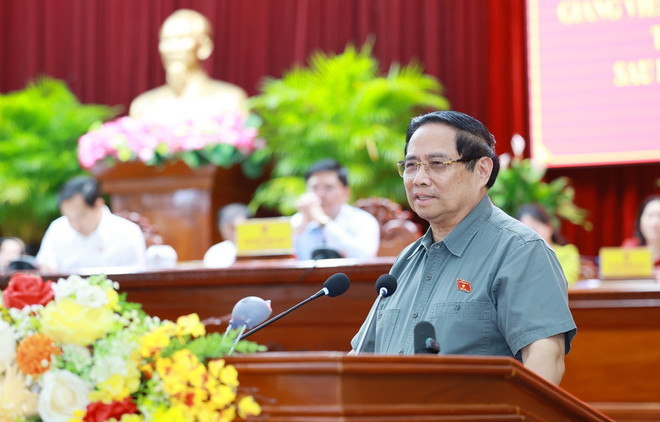
Regarding education, the PM reaffirmed that high-quality human resources are a decisive factor for national development. At the 10th session, the Government submitted and the National Assembly approved three laws and one resolution related to education, including the Law on amendments and supplements to several articles of the Law on Education, the Law on Higher Education, the Law on Vocational Education, and the NA resolution on special and breakthrough mechanisms and policies to advance educational reform and development.
The Government also submitted a national target programme worth over 580 trillion VND to modernise and enhance the quality of education and training at all levels for the legislature’s approval.
While acknowledging Can Tho’s achievements, the Government leader pointed out existing shortcomings such as uneven school standards, teacher shortages, especially at preschool and primary levels, and incomplete financial autonomy. He requested the city to restructure its education network in accordance with the two-tier local administration model, consolidate universities in the region, and improve quality rather than expanding administration.
He also stressed the need to further improve human resources, facilities, and management capacity, while promoting digital transformation in both healthcare and education.
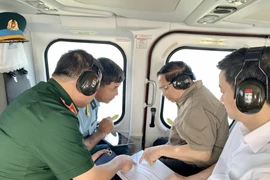
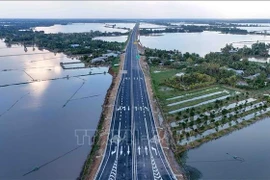
Later the same day, PM Chinh inspected the Chau Doc – Can Tho – Soc Trang expressway project’s section in Can Tho city, urging accelerated progress, strict quality control, and prevention of wastefulness and corruption, while ensuring resettlement policies to safeguard people’s livelihoods.
Phase 1 of the expressway project spans 188.2 kilometres with a four-lane design and a total investment capital of nearly 44.7 trillion VND. The project is required to be completed by 2026 and fully operational across the entire route by 2027.
This is a key horizontal expressway linking localities in the Mekong Delta, running through An Giang province and Can Tho city (previously covering An Giang, Can Tho, Hau Giang and Soc Trang before administrative merger).
The PM also requested that the Can Tho – Ca Mau expressway project must be completed no later than January 31, 2026, in order to ensure full connectivity of the North–South Expressway from Cao Bang to Ca Mau./.