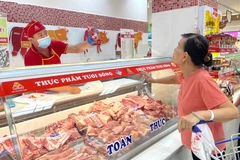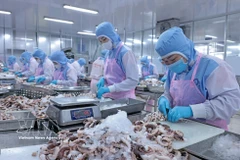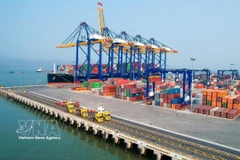
Hanoi (VNA) – Prime Minister Pham Minh Chinh has issued a dispatch asking for coordinated actions to maintain stability in the production, sale, and export of agricultural, forestry, and aquatic products in response to mounting global trade uncertainties.
The dispatch, issued on May 8, has been sent to the Ministers of Agriculture and Environment, Industry and Trade, Finance, Foreign Affairs, Science and Technology, Defence, and Public Security; the Governor of the State Bank of Vietnam; and the Chairpersons of People’s Committees in provinces and centrally-run cities.
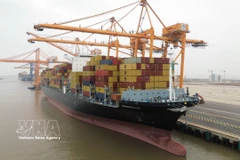
Vietnam’s agro-forestry-fishery sector has enjoyed steady growth over recent years, especially in food production. In 2024, the country achieved a record agro-forestry-fishery export value of 62.5 billion USD.
However, tariff policy changes in several countries signal looming global trade disruptions that could severely impact both production and exports, particularly of agricultural products. Still, the PM noted this is considered an opportunity to push for sustainable reform, product diversification, and market expansion.
To mitigate the fallout from global trade instability and protect farmers’ livelihoods, the government leader has instructed relevant ministries and local authorities to stay closely attuned to global trade trends and adopt timely, flexible measures. Ministries are to provide businesses with up-to-date information to help them adapt to import and tariff policy shifts from overseas markets.
The Ministry of Agriculture and Environment has been tasked with bolstering domestic food supply while maintaining steady exports to safeguard national food security. It has been also asked to work with other sectors and localities to maintain the flow of agricultural goods, avoid supply chain disruptions, and ensure stable livelihoods.
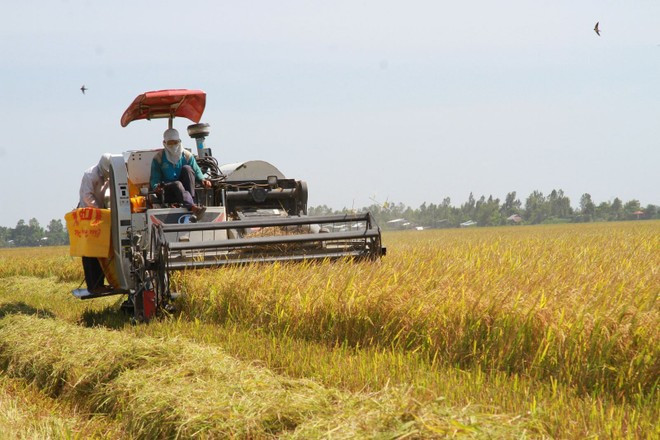
Efforts are to be focused on scaling up large-scale, sustainable, and green agricultural practices, including the continued rollout of the plan to sustainably cultivate one million hectares of high-quality, low-emission rice in the Mekong Delta by 2030.
Authorities are also encouraged to revise production plans in coordination with business associations and local governments, ensuring product and market diversity, expanding geographical indication and brand building, and tightening traceability systems, particularly in industries prone to origin fraud.
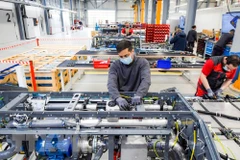
The ministry was directed to advance research and technology in agriculture, with a focus on climate-resilient crops and livestock, smart farming, and digital transformation. More investment is needed in cold storage and deep processing, especially for high-value items like shrimp, tra fish, and fresh fruit, to increase added value and reduce reliance on raw exports.
To shield farmers from price drops during peak harvest seasons, the ministry is to coordinate with the Finance Ministry on support mechanisms for temporary stockpiling, especially for rice, coffee, and pepper.
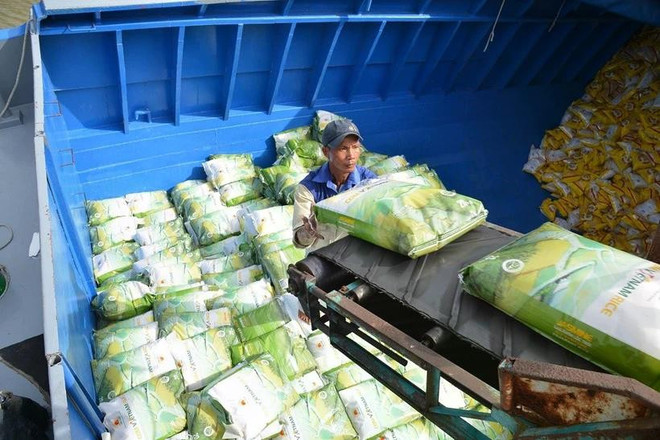
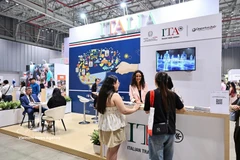
The Ministry of Industry and Trade will be in charge of ramping up trade promotion and negotiations with key FTA partners to unlock new markets and reduce dependence on a narrow group of trading partners. This includes organising agricultural product weeks, domestic trade fairs, and overseas promotion campaigns. Suitable defensive measures will be deployed to protect domestic producers.
The Ministry of Finance is to streamline customs and VAT refund procedures, ease land rental and tax obligations, and propose tax policies tailored to the agricultural sector to improve competitiveness.
Meanwhile, the State Bank of Vietnam has been instructed to maintain and potentially expand concessional credit packages to support production and protect jobs and incomes for farmers.
At the same time, the PM requested leaders of provinces and centrally-run cities to ensure stable production and distribution in their areas, clamp down on fake goods and false origin claims, and strengthen post-harvest safety and quality control. Violations relating to fraudulent origin claims, price manipulation, or market destabilisation are to be punished severely.
Businesses in the agriculture, forestry, and fishery sectors were asked to keep a close eye on trade developments, particularly tariffs in key markets, and adjust production and export strategies accordingly. The dispatch also emphasises the importance of forming supply chain linkages, investing in raw material zones, adopting modern tech, and expanding storage and processing capacity.
Firms should also consider buying and stockpiling produce during peak harvests to aid farmers and prepare for value-added processing, the PM advised.
The Government Office was tasked to monitor and coordinate implementation of the dispatch and promptly report to the PM and relevant Deputy PMs on emerging issues./.