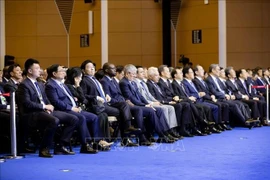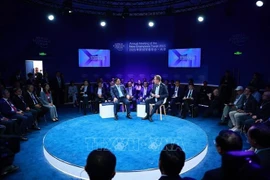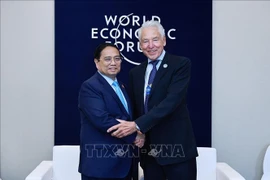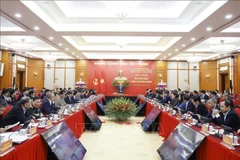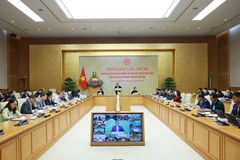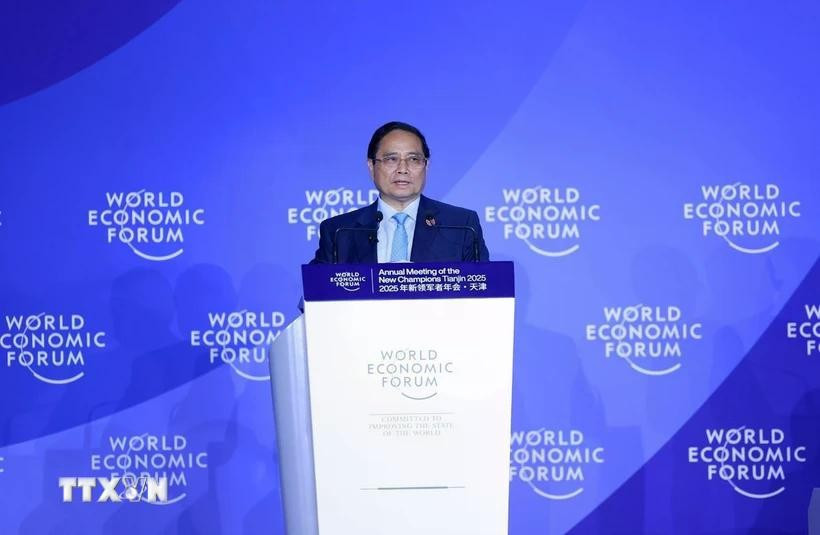
Tianjin (VNA) – Prime Minister Pham Minh Chinh on June 25 proposed five pioneer orientations to help build a wealthy, prosperous, and sustainable Asia during his keynote speech at a session titled “Is Asia's Century at Risk?”, part of the 16th Annual Meeting of the New Champions of the World Economic Forum (WEF) in Tianjin, China.
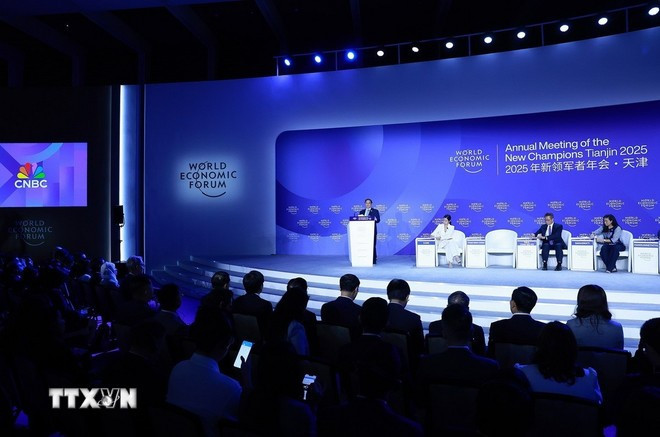
This was one of the most anticipated and significant sessions of this year’s forum, drawing the participation of a large number of government officials, business leaders, scholars, and representatives from international organisations.
PM Chinh noted that in a world marked by political polarisation, economic fragmentation, institutional disparity, and widening development and income gaps, Asia faces not only real but numerous challenges. It is facing major challenges and risk arising from geopolitical tension, protectionism, inflationary pressure, growth decline, natural disasters, epidemics, especially after COVID 19, climate change, resource depletion, aging population, social instability, cybersecurity and conflict, among many others.
At the same time, Asia remains a region of trust and hope as it has a strong political, economic, societal, and cultural foundation, he added.
Asia has half a century of tireless innovation and integration through which it has accumulated the kind of strength, the kind of power, the kind of mettle, the kind of experience necessary to overcome all crises and risks, he stressed, expressing his belief that Asia shall stand in solidarity and cooperation, stand strong, and act together to build strong and develop together in shared benefit to leave no one behind.
The Vietnamese leader showed his confidence that Asia has all the necessary foundations to continue rising, asserting its role as a pillar and driving force of the global economy.
He proposed five pioneer orientations of strategic significance to Asia so as to build an Asian century of wealth, affluence, prosperity, and sustainable development.
First, the PM elaborated, Asia should pioneer in steadfastly pursuing the goal of maintaining a peaceful, stable, cooperative, and developmental environment, while firmly protecting the fundamental values of international relations.
Second, Asia should also pioneer in the development of science, technology, innovation, digitisation, green transition, circular economy, and the sharing economy; and accelerate its shift from being the “world’s factory” to becoming a “global centre of innovation.”
Third, Asia must take the lead in connecting value chains, and promoting global economic linkages and integration, he went on, adding that Asia must lead a new game and a new journey in which Asian countries "go, arrive, work, enjoy and win together" in the spirit of harmonising benefits and sharing risks.
Fourth, he urged Asian countries to advance entrepreneurship, innovation, and business development, stressing the need to create an open, transparent, and internationally competitive business climate, and that the WEF has a particularly important role to play in attracting global enterprises and investors to Asia.
Fifth, Asia should also pioneer in promoting cultural and social links to ensure that human beings are at the heart of all policies and strategies for development. It must respect differences and unity in diversity, advance commonalities and reduce differences, and engage all around inclusive and comprehensive connections, especially for the young generation.
To contribute to this process, the PM proposed two specific initiatives: the “Asian Innovation Network” and the “Asian Innovation Portal”, aimed at enhancing connections among regional research institutes and universities, and supporting small and medium-sized enterprises.
Vietnam stands ready to actively join and hopes for strong support from the WEF, China, and other partners in bringing the proposed regional initiatives to fruition, he affirmed.
Following his keynote address, the Vietnamese leader and other speakers participated in a panel discussion on global dynamics and solutions to shared regional challenges.
To overcome such challenges, he stressed the importance of resilience, perseverance, and a steadfast commitment to peace, cooperation, and development. He underscored the need to ensure fairness and social welfare so that no one is left behind. According to the PM, the current context also presents a valuable opportunity for nations to reassess their development models and global relations, restructure their economies toward greater productivity, quality, and competitiveness, and enhance responsiveness to external shocks.
PM Chinh also emphasised the importance of solidarity, unity, multilateralism, and the core values of each nation. Every process, he noted, requires leadership, trailblazers, and even sacrifice. He reaffirmed that building an independent and self-reliant economy while proactively and effectively integrating into the world is a common trend, but cooperation must bring mutual benefits for each country, for Asia, and for the world.
When asked about soft power, the PM described it as the effective utilisation of hard power and available advantages to generate higher added value. For Vietnam, the concept of soft power encompasses a broad set of factors: a sound and suitable ideological foundation for national development, effective institutions that drive national competitiveness, a proud cultural and historical legacy, national unity, the Party’s clear-sighted leadership, and the ability to awaken the potential of young people, citizens, and businesses at the right time and in the right way.
The discussion reinforced a shared awareness of abundant opportunities and the urgent need to boost cooperation to ensure a prosperous and thriving Asia./.