Hanoi (VNA) – Prime Minister Pham Minh Chinh on December 29 attended a national conference reviewing the performance of the diplomatic sector in 2025 and outlining key tasks for 2026, where he stressed the need for the strengthened implementation of a comprehensive foreign policy strategy at a higher level.
Addressing the event, PM Chinh emphasised that in 2025 in particular, and throughout the 2021–2025 period in general, the world has experienced epoch-defining changes, ranging from pandemics and natural disasters to conflicts, strategic competition, non-traditional security challenges, and shifts in economic policy.
Against this backdrop, Vietnam has navigated “strong headwinds” to sustain macroeconomic stability, control inflation, maintain major economic balances, strengthen national defence and security, promote social progress and improve people’s livelihoods. He affirmed that diplomacy and international integration have been carried out comprehensively, flexibly and effectively, contributing significantly to these achievements and further elevating Vietnam’s international standing.
He highlighted key lessons from recent diplomatic efforts: steadfastness in strategic direction, flexibility and agility in execution; and a deep understanding of global developments. Diplomats, he said, must be politically sensitive, economically astute, technologically aware, and possess both competence and integrity.
Forecasting the situation in the coming period, PM Chinh highlighted three major emerging issues: the rapid, strong and decisive policy adjustments by many countries; the increasing number and scale of conflicts and instabilities, with growing impacts and potential risks of clashes in hotspot areas; and the emergence of new political, security, economic and technological trends and movements that will exert profound and multidimensional impacts on the domestic economy.
In this context, the Party and State place great expectations on diplomacy and international integration to continue fulfilling their pioneering, pivotal and regular role, and to remain an important pillar in the cause of national development and defence, in line with the Politburo’s Resolution No. 59-NQ/TW on international integration in the new context.
The priority is to firmly consolidate the national security–development belt, maintain strategic proactiveness in responding to complex, unexpected developments and global uncertainties; and continue deepening, stabilising and sustainably strengthening relations with priority and key partners. In particular, relations with neighbouring countries, major powers, strategic partners, comprehensive partners, traditional friends and other important partners must be further promoted. The diplomatic service should continue to elevate Vietnam’s “international mission,” contributing more actively to peace, development and the settlement of regional and global challenges, thereby helping to build and safeguard a fair, equal international order based on international law.
The PM urged further expanding development space, creating breakthrough opportunities, and making the most of external resources and favourable conditions to ensure rapid and sustainable growth. He emphasised the need to bring into full play national soft power and promote the image of Vietnam as an “independent, self-reliant, peaceful, friendly, cooperative, developing, prosperous and happy” nation, commensurate with the country’s stature and strength in the new era.
It is also important to continue building a comprehensive, modern and professional diplomacy, and effectively implementing activities across the three pillars of Party, State, and people-to-people diplomacy, he added.
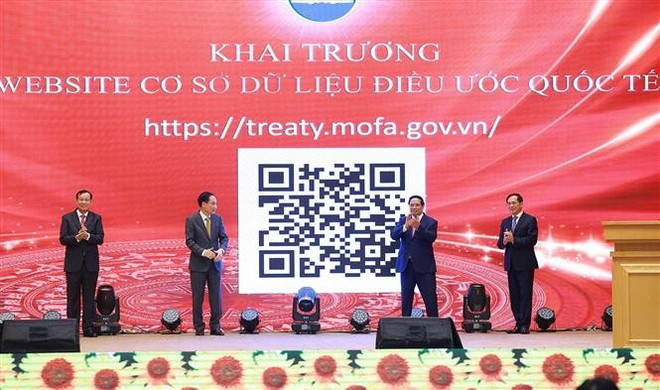
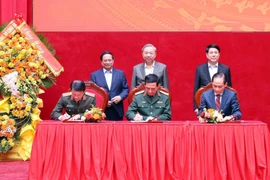
At the conference, PM Chinh, Deputy PM Bui Thanh Son, and leaders of ministries and sectors launched the Ministry of Foreign Affairs’ new database on international treaties./.