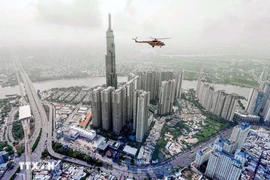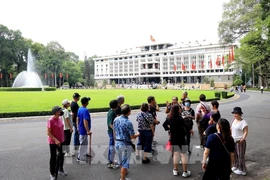
HCM City (VNA) – Prime Minister Pham Minh Chinh has requested Ho Chi Minh City to spearhead Vietnam’s development through pioneering efforts in five critical areas as the newly-formed megacity emerges as Southeast Asia’s largest one following administrative reorganisation.
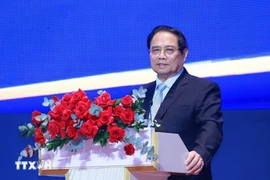
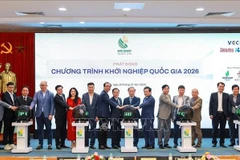
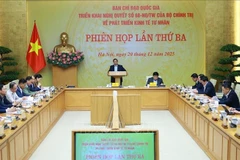
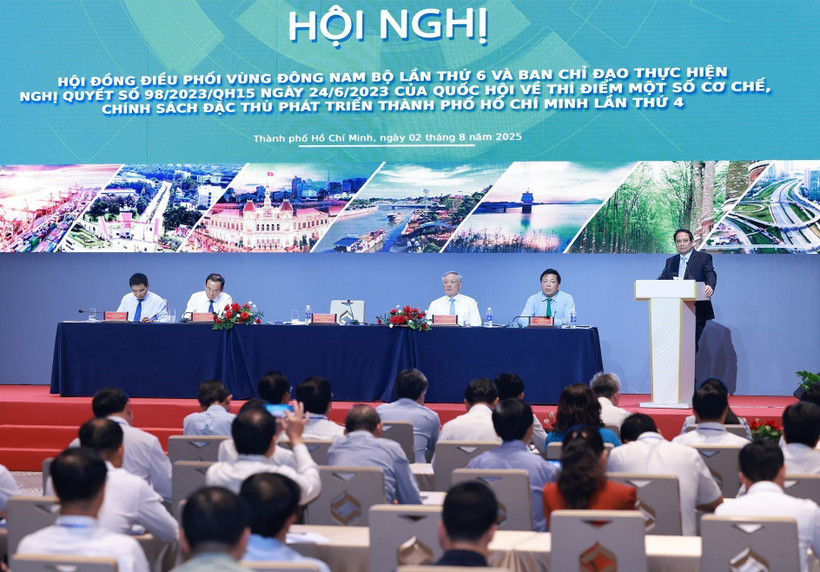
The Government leader made the request while chairing the sixth meeting of the Coordinating Council for the Southeastern Region, and the fourth meeting of the Steering Board for implementing the National Assembly’s Resolution 98/2023/QH15 on piloting several special mechanisms and policies for HCM City’s development on August 2.
While acknowledging the city’s initial achievements after two years implementing the resolution, including resolving years-long bottlenecks, ensuring social welfare and sustainable poverty reduction, using the municipal budget for inter-regional and expressway projects, and mobilising resources for development, PM Chinh asked the city to demonstrate stronger determination and greater efforts as well as capitalise on the special mechanisms in a more effective fashion.
HCM City must take the lead in digital transformation, scientific – technological development and application, startup and innovation promotion, and smart city development, he said, asking for its leading performance in attracting investment in high-tech and green industries connected with sustainable development; expanding the financial, service, and tourism sectors as well as the maritime economy; developing high-quality human resources and a pool of top-tier experts in key areas; and advancing social welfare policies to ensure that no one is left behind.
He noted that it is a must to continue operating the two-tier local government model in a stable and smooth manner, harmoniously carrying out measures to bolster economic growth to secure GRDP expansion of 10.3% in the second half and 8.5% this year, and building a strong and people-centred administration. He also demanded proactive moves to cope with natural disasters and climate change.
PM Chinh expressed his confidence that with solidarity, high determination, great efforts, and drastic actions, HCM City will be able to leverage its achieved results, unlock potential, and turn challenges into opportunities for development.
Regarding the southeastern region, he noted that with the expanded development space and resources following the administrative unit reorganisation, the region has attained robust achievements across socio-economy, security, defence, and external affairs.
PM Chinh ordered ministries, sectors, and localities to review institutional frameworks as well as master plans of each locality and the whole region to integrate the plans based on scientific evidence and practical needs to create new development spaces. Besides, he urged competent sides to mobilise resources, especially the private sector's, for the region’s fast and sustainable development.
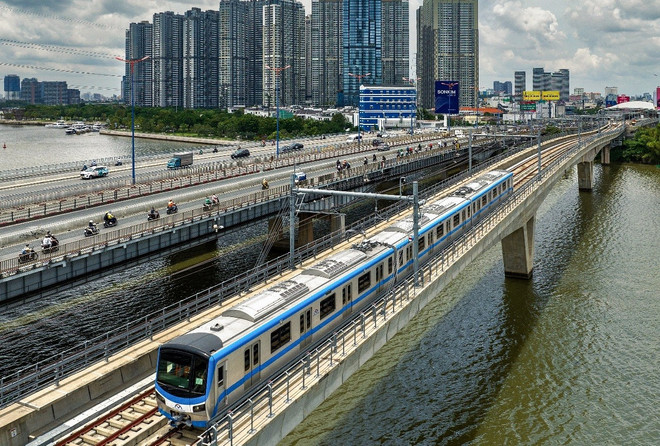
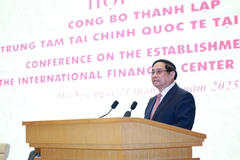
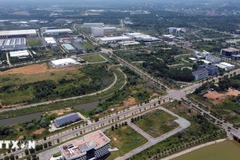
Additionally, he requested accelerated progress on strategic projects such as HCM City’s Ring Road 4, the Can Gio international transshipment port, Long Thanh International Airport and its connectivity with Tan Son Nhat International Airport, the international financial centre in HCM City, and key inter-regional expressways like Gia Nghia – Chon Thanh and HCM City – Moc Bai.
The Government leader also called for studying the Loc Ninh – Bien Hoa railway connecting Cai Mep and Can Gio ports, implementing the HCM City – My Thuan route through public-private partnerships, and considering the construction of underground metro or urban railway linking Tan Son Nhat and Long Thanh airports.
The southeastern region is the country's economic locomotive and a decisive growth pole for national development. In the first six months of 2025, the region's GRDP growth reached an estimated 7%, lower than the national average and the lowest among six economic regions.
Following the administrative unit merger, the region now consists of three localities: HCM City (with the merger of HCM City, Ba Ria - Vung Tau, and Binh Duong), Dong Nai province (with the merger of Dong Nai and Binh Phuoc), and Tay Ninh province (with the merger of Tay Ninh and Long An). It has a combined population of nearly 21 million, a GRDP of over 150 billion USD, and foreign direct investment representing more than 42% of the total nationwide.
Meanwhile, HCM City boasts a population of 14 million and a GRDP of 2.72 quadrillion VND (113 billion USD), equivalent to 23.6% of the total nationwide. In the first half of the year, the local economy grew 6.56%, while the foreign direct investment attracted in the first seven months approximated 5 billion USD, up 17.7%./.