PM urges measures for strengthening state budget management

Ministries, agencies, and localities are requested to continue effectively implementing key measures and tasks to promote administrative procedure reform, improve the investment and business environment, enhance national competitiveness, remove production and business obstacles, and foster socio-economic development.

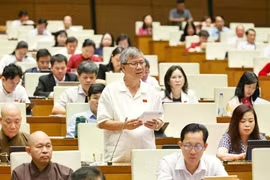
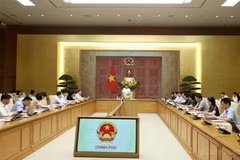
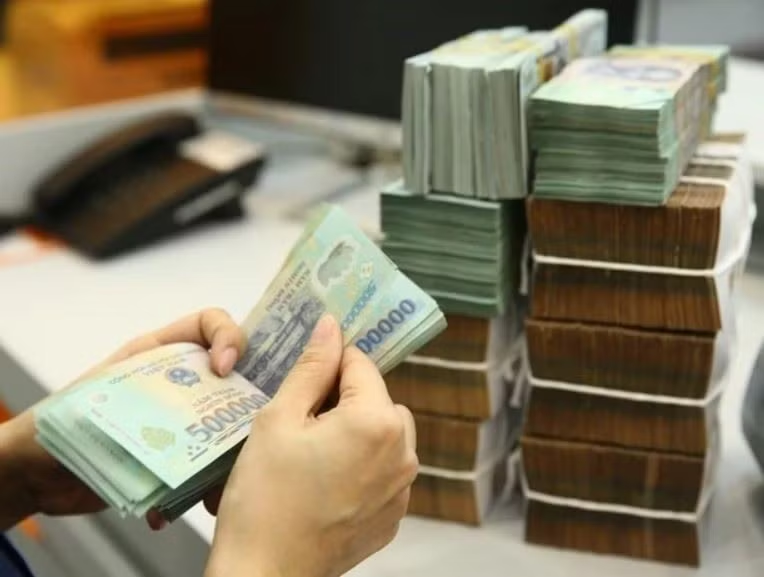
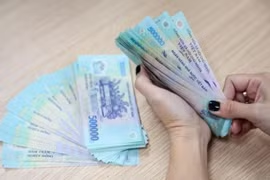
Prime Minister Pham Minh Chinh urges measures for strengthening state budget management - Illustrative image (Photo: VNA)

Hanoi (VNA) – Prime Minister Pham Minh Chinh has ordered drastic measures to be taken to improve the management and governance of the state budget in the remaining months of 2025.

According to an official dispatch issued by the PM on October 2, ministries, agencies, and localities are requested to continue effectively implementing key measures and tasks to promote administrative procedure reform, improve the investment and business environment, enhance national competitiveness, remove production and business obstacles, and foster socio-economic development.

He emphasised strengthening the management of state budget collection, aiming for at least a 25% increase compared to the set target for 2025; expanding tax revenue sources, especially e-commerce, restaurant services, and retail stores; strongly promoting digital transformation in tax management; taking strict measures to prevent smuggling, trade fraud, transfer pricing, and tax evasion, particularly in digital business activities and real estate transactions; and proactively and thoroughly managing the state budget, especially regular expenditure, to improve the efficiency of public fund use.

In particular, the PM also asked for accelerating the disbursement of public investment, especially for national and key projects; striving to achieve 100% of the 2025 public investment plan; ensuring efficient use and savings; and absolutely preventing any imbalance between revenue and expenditure at localities, agencies, or units.

The Government leader directed agencies to review and reorganise public assets, handle surplus assets following the restructuring of apparatus and administrative units at all levels in accordance with regulations, and ensure that public assets are not wasted or lost.

The directive demands a properly expanded, focus-driven, and effective fiscal policy closely and harmoniously coordinated with the monetary policy to foster growth, maintain macroeconomic stability, control inflation, and ensure the economy’s key balances. It also emphasises keeping the state budget deficit and public debt within permissible limits.

Tax and customs agencies at all levels are tasked with actively implementing revenue management measures, enhancing tax administration efficiency through IT application and digital transformation, and refining the legal and policy framework for state budget revenue.

Ministries, central agencies, and localities must be accountable for any failure to comply with regulations, resolutions, and instructions of the PM on budget spending tasks, the document said.

Deputy PM Ho Duc Phoc was assigned to directly supervise the implementation of measures and settlement of any issues arising./.
source

See more

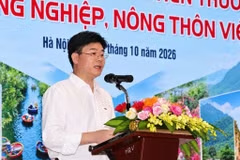
Phuong Dinh Anh, Deputy Chief of the Office of the Central Coordination Office for the National Target Programme, speaks at the event.( VNA)

Turning OCOP products into rural tourism experiences

Experts stressed that rural tourism can develop sustainably only when local communities actively participate and benefit from it. Investment in transport, accommodation and attractions must go hand in hand with clean water, waste treatment, hygiene, traditional craft preservation and environmental protection.

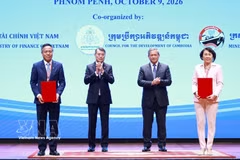
Prime Minister Le Minh Hung and his Cambodian counterpart Hun Manet witness the exchange of cooperation agreements between businesses of the two countries (Photo: VNA)

Vietnam, Cambodia look to elevate economic links

Prime Minister Le Minh Hung said that economic, trade and investment cooperation constitutes an important pillar of bilateral ties, which has achieved positive results. However, considerable room remains for further expansion to match the strong political ties and the potential of both countries.

An overview of the meeting (Photo: chinhphu.vn)

Deputy PM calls for tighter price management of essential goods

Deputy PM Thang, who is also head of the committee, urged ministries and agencies to coordinate closely to deliver effective fiscal and macroeconomic policies. The aim is to control inflation, stabilise the macroeconomy, ensure major economic balances, create room to support growth and bolster the economy’s resilience to external shocks.

 Khanh Binh International Land Border Gate in An Giang province.( Photo: VNA)

Vietnam-Cambodia trade gathers pace towards 20 billion USD target

After setting a record of more than 11.3 billion USD in 2025, bilateral trade reached about 8.7 billion USD in the first eight months of 2026, up 8.3% year on year. Vietnam is currently Cambodia’s third-largest trading partner, its second-largest source of imports and second-largest export market.

Vietnamese Ambassador to India Trinh Minh Manh discusses potential areas and strengths for cooperation between Vietnam and India’s Gujarat state. (Photo: VNA)

Vietnam, India’s Gujarat state seek to unlock cooperation potential

Vietnam attaches importance to strengthening cooperation with Indian states boasting strong economic potential, including Gujarat, to further advance the two countries’ Enhanced Comprehensive Strategic Partnership, particularly in the economy, trade and investment, said Ambassador Trinh Minh Manh.

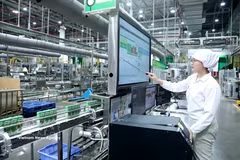
At Nestlé Vietnam factory in Hung Yen province (Photo: VNA)

Vietnam seeks to build stronger ecosystem for FDI

The World Bank has stressed the need to connect global companies with domestic suppliers, improve the business climate and develop supply-chain finance solutions. Those steps will let domestic firms gradually meet requirements on quality, technology, costs and delivery times, and position them to become suppliers to multinational corporations.

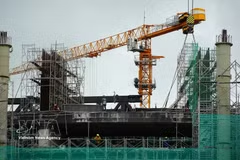
Construction of technical infrastructure facilities serving APEC 2027 in Phu Quoc Special Zone, An Giang province. (Illustrative photo: VNA)

Vietnam enters investment grade credit rating category for first time

Vietnam has maintained robust growth, outperforming other Southeast Asian economies. Its ongoing government reforms aimed at streamlining the state apparatus, promoting the private sector, improving the institutional framework and developing capital markets will strengthen the country’s growth potential and economic resilience.

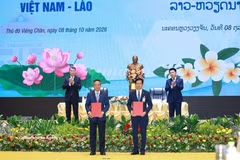
Vietnamese Prime Minister Le Minh Hung and Lao Prime Minister Saleumxay Kommasith witness the presentation of investment certificates and investment cooperation agreements between businesses of the two countries. (Photo: VNA)

Vietnam, Laos strengthen “strategic cohesion” in economic sector

The great friendship, special solidarity, comprehensive cooperation and strategic cohesion between Vietnam and Laos, and between Laos and Vietnam, are an invaluable asset of the Vietnamese and Lao Parties, States and people. It is the responsibility of today's generation to transform this invaluable political asset into new resources for the development of the two countries’ people.

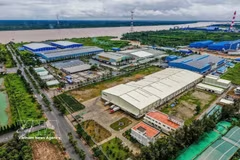
West Food Hau Giang JSC’s factory at the Nam Song Hau Industrial Park – Phase 1, Can Tho city (Photo: VNA)

Southern industrial property market enters new phase of competition

Industrial site selection was previously driven largely by land prices, location and access to markets. However, as supply chains become more complex and manufacturing projects face higher technical requirements, businesses are increasingly assessing sites based on their long-term operational capabilities.

Members of the RoK delegation visit booths showcasing signature agricultural products of Da Lat – Lam Dong. (Photo: VNA)

Lam Dong seeks stronger economic, tourism links with RoK

Lam Dong is particularly interested in sectors in which Korean businesses have strengths, including agriculture, green energy, the circular economy, high-quality tourism, healthcare, education, human resources training and digital transformation, an official said.