Quang Ninh strengthens tourism as a driver of sustainable economic growth

With its diverse natural and cultural assets, from marine and island destinations to spiritual, highland, border, rural and community-based tourism, alongside world-class resorts and distinctive travel experiences, Quang Ninh remains a preferred destination for domestic and international visitors alike.

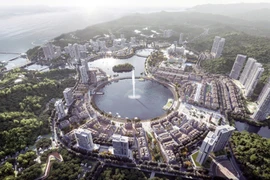
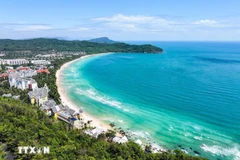
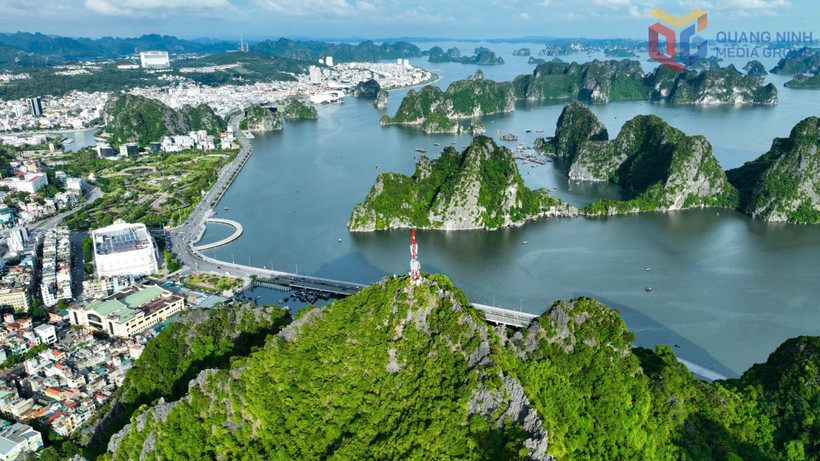
With specific goals, tasks, and solutions set for the new phase, Quang Ninh continues to affirm itself as an all-season destination. (Photo: baoquangninh.vn)

Quang Ninh (VNA) – The northern province of Quang Ninh is pursuing a strategic transformation towards “less quantity, higher quality”, with a vision to become one of Vietnam’s leading centres for green and sustainable tourism.

With its diverse natural and cultural assets, from marine and island destinations to spiritual, highland, border, rural and community-based tourism, alongside world-class resorts and distinctive travel experiences, Quang Ninh remains a preferred destination for domestic and international visitors alike.

Tourism and services have long served as one of the province’s spearhead economic sectors, making significant contributions to socio-economic growth. In the next stage, Quang Ninh aims to position itself as a gateway for regional and global tourism cooperation, aligned with the province’s orientation towards green growth and the development of the night-time economy, heritage economy, and cultural industries.

The province continues to consolidate the “Ha Long – Quang Ninh Tourism” brand, associated with the World Heritage Site and Natural Wonder of Ha Long Bay, as well as the Yen Tu – Vinh Nghiem – Con Son, Kiep Bac Relics and Landscape Complex, which has recently been recognised as a World Cultural Heritage site. These heritage values not only enhance regional linkages but also promote the image of Vietnam and Quang Ninh to the world.

At the same time, Quang Ninh is unlocking the potential of Bai Tu Long Bay and the Van Don – Co To island area, while renewing traditional tourism offerings and introducing new, premium products such as luxury cruises and internationally branded resorts.

The province has intensified tourism promotion, partnerships, and event organisation, successfully hosting numerous national and international political, cultural, sports, and entertainment events. These efforts have strengthened Quang Ninh’s image as a safe, friendly, professional, and attractive destination.

Tourism infrastructure has also seen robust improvements, both in scale and quality. The province now has about 1,700 accommodation facilities with nearly 40,000 rooms, including 20 five-star and 28 four-star hotels and resorts.

Thanks to strategic planning, effective destination management, and consistent infrastructure investment, Quang Ninh welcomed over 70.5 million visitors in the 2021–2025 period, including 10.8 million international arrivals, 1.32 times higher than in 2016–2020. Tourism revenue is projected to exceed 160 trillion VND (6.06 billion USD), up 1.58 times compared to the previous period, with an average annual growth rate of 17.8%.

Looking ahead, Quang Ninh continues to regard tourism and services as key pillars of its economic structure. The province is determined to enhance tourism quality, diversify products, and elevate its global profile as one of the most attractive destinations in the region and beyond.

To this end, Quang Ninh will strengthen regional cooperation to become a four-season destination, develop a diverse tourism ecosystem with world-class, high-quality, and unique products linked to eco-tourism and community-based tourism, and promote the value of the Ha Long Bay World Heritage Site and the Yen Tu – Vinh Nghiem – Con Son, Kiep Bac complex. It also plans to develop the Bai Tu Long Bay, Tra Co National Tourism Area, and Van Don – Co To into leading national destinations.

In particular, the province will connect tourism growth with coastal and marine economic zones, leveraging the Ha Long – Bai Tu Long – Van Don – Co To area to form an international centre for resort, leisure, and marine heritage tourism. By fostering its cultural heritage and artistic identity, Quang Ninh aspires to become a regional hub for culture and the arts, as well as a premier destination for heritage and cultural tourism in Asia and beyond.

With clearly defined goals, concrete strategies, and strong determination, Quang Ninh is set to accelerate its tourism development, reinforce its reputation as an all-season destination, and sustain tourism as a driving force of the province’s economic growth./.
VNA

See more

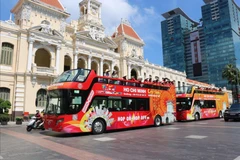
A double-decker sightseeing bus in Ho Chi Minh City. (Photo: VNA)

HCM City elevates destination appeal, enhances tourism workforce quality

As Ho Chi Minh City’s tourism sector continues to sustain growth momentum, it is shifting strongly from post-merger recovery to development acceleration, with a focus on restructuring destination spaces to offer diverse tourism models and attract more domestic and international visitors.

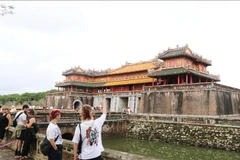
Visitors tour Ngo Mon (Noon Gate) at the Hue Imperial Citadel. (Photo: VNA)

Visit Vietnam Year – Hue 2025: renewing heritage, shaping distinct brand

Visit Vietnam Year – Hue 2025 has left a series of strong imprints, reflecting a marked transformation in Hue’s tourism in terms of scale, quality and brand positioning. More than a programme of events, it has become a powerful driver, helping position Hue as a competitive cultural and heritage tourism centre in the region.

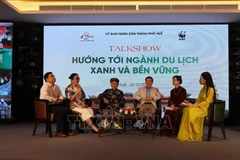
A view of the talkshow within the conference in Hue on December 12 to review and discuss strategic orientations for the 2023-2025 roadmap to reduce plastic waste in the local tourism sector. (Photo: VNA)

Hue accelerates shift toward green, low-plastic tourism models

Over the past three years, Hue tourism authorities have strengthened communication and advocacy for plastic waste reduction through 10 training sessions with 690 participants, “Coffee Talk” events, professional Zalo groups, and direct engagement with businesses. As a result, 102 enterprises and business households have signed commitments to reduce plastics, and 12 hotels have pioneered plastic-reduction practices.

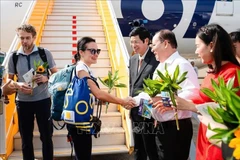
The inaugural flight from New Delhi lands at Phu Quoc International Airport (Photo: Sun Group)

Phu Quoc welcomes new direct flights from India

Phu Quoc International Airport welcomed over 180 Indian travellers on a new direct flight from New Delhi on December 10, marking the start of a month-long flight series that will link the two destinations and bring a fresh wave of visitors to Vietnam’s pristine island.

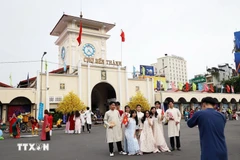
Visitors pose for a photo at Ben Thanh Market in HCM City (Photo: VNA)

HCM City speeds up digital tourism to draw more travellers

Following its goal of building a friendly destination, the Ho Chi Minh City Department of Tourism is rolling out a range of local stimulus programmes, with a focus on bringing the city’s signature attractions closer to domestic and international visitors through digital platforms.

Foreign visitors are touched to receive meaningful gifts from their Vietnamese friends (Photo: VietnamPlus)

Vietnam welcomes more than 19 million international visitors in 11 months

A UN Tourism report highlighted Vietnam’s performance as one of the most notable recoveries worldwide. While tourism across the Asia–Pacific has rebounded to only around 90% of pre-COVID levels, Vietnam is among a select group of destinations, alongside Japan, recording rapid and sustained growth, it said.

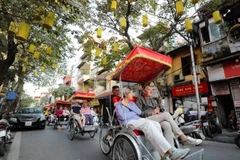
Foreign visitors explore Hanoi’s old quarters by cyclo, admiring the city’s timeless beauty. (Photo: VNA)

Vietnam draws French holidaymakers during Christmas, New Year

Patrice Caradec, President of the Syndicate of French Tour-Operators (SETO), said the country has not attracted as many French tourists since COVID-19. As Vietnam reopened later than several Asian destinations, pent-up demand has surged with the full recovery of tourism. The “S-shaped” nation has now returned to pre-pandemic levels of French arrivals.