Resolution on construction of North-South high-speed railway issued

National Assembly Chairman Tran Thanh Man recently issued a resolution on the investment policy for the North-South high-speed rail project.

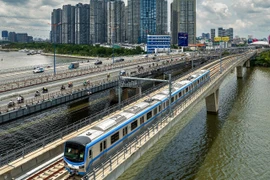
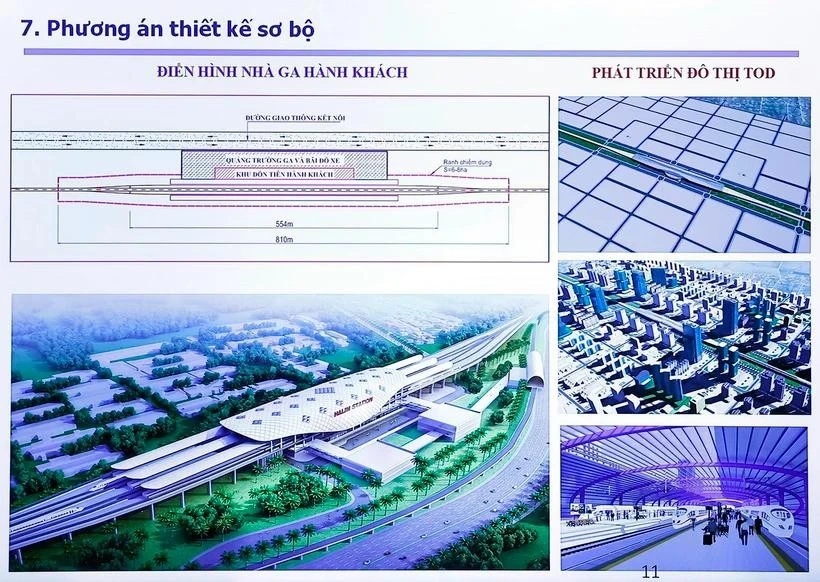
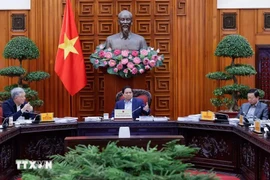
The project is estimated to cost more than 66.7 billion USD. (Photo: VNA)

Hanoi (VNA) – National Assembly Chairman Tran Thanh Man recently issued a resolution on the investment policy for the North-South high-speed rail project.

The resolution stated that the construction of a modern and integrated railway aims at meeting transport needs and creating motives for rapid and sustainable socio-economic development while captialising on the advantages of the North-South economic corridor, ensuring effective connectivity with the East-West corridors and regional countries.

Besides, the railway is expected to help with international integration, environmental protection and climate change as well as promote the nation’s industrialisation and modernisation, contributing to delivering on the goals and missions set at the document adopted at the 13th National Party Congress and other resolutions of the Party.

Starting from Ngoc Hoi station in Hanoi, the 1,541-kilometre railway will pass through 20 provinces and centrally-run cities before ending at Thu Thiem station in Ho Chi Minh City.

The project includes the construction of a twin-track line with a standard gauge of 1,435 mm, designed to operate at speeds of up to 350 km/h. It will feature 23 passenger stations and five cargo stations, serving both passenger and freight transport.

More than 10,800 hectares of land will be required for the project, with some 120,800 people to be relocated.

The project is estimated to cost more than 1.7 quadrillion VND (66.7 billion USD), coming from the state budget allocated over multiple mid-term investment planning periods, along with other legal sources.

A feasibility study will be carried out from 2025. The project is set to be completed in 2035.

The Government is responsible for carrying out the project and managing its investment in accordance with related regulations, ensuring that it stays on schedule with quality, with the economical and effective use of captial and resources, preventing corruption, wastefulness and negative phenomena. Besides, communications work should be enhanced to raise public awareness and create public consensus on the investment policy.

Meanwhile, the Vietnam Railways will be in charge of infrastructure management, maintenance and operation. It will collaborate with other enterprises to continue restructuring, build a modern and effective infrastructure management model, contributing to the country’s rail industry development./.
VNA

See more

An overview of the meeting between representatives from Polish businesses and the Agency for Domestic Market Surveillance and Development. (Photo: Agency for Domestic Market Surveillance and Development)

Polish businesses seek suppliers, partners in Vietnam

MAJAMI, a confectionery manufacturer and trader under Sweet House, is seeking distributors for Polish confectionery products in the Vietnamese market. Meanwhile, GABONA, a distributor and wholesaler of professional cosmetics, hair care and make-up products and beauty accessories, is looking for Vietnamese manufacturers of vegan and natural cosmetics.

Kendra Rinas, Chief of Mission for IOM Vietnam speaks at the event. (Photo: VNA)

Vietnam advances in building, using migrant labour data system: workshop

Data presented in the report reflects effective migration governance in recent years. The average recruitment cost paid by migrant workers dropped by 23.8%, from 164.9 million VND (6,400 USD) in 2021 to 125.7 million VND in 2025. Conversely, average first-month earnings abroad rose by 25.4%, increasing from 22.4 million VND to 28.1 million VND.

Workers produce leather shoes for export at Lefaso Tra Vinh Investment and Production Joint Stock Company in Tra Cu commune, Vinh Long province. (Photo: VNA)

Vietnamese exporters pivot to ease pressure from US tariffs

Pressure from the new US tariff policy is prompting Vietnamese exporters to reassess their strategies. Rather than pursuing volume-driven growth, many are shifting towards higher-value orders, tighter cost control, greater productivity and a more balanced allocation of markets to reduce reliance on a single destination.

A worker handles and stacks goods. Nearly 138,100 businesses were newly founded from January to August, up 7.7% over the same period last year, while more than 40,800 businesses completed dissolution procedures, a jump of 125.5%. (Photo: VNA)

Firm entry and exits point to continued restructuring pressure

Updates from the National Statistics Office last week showed that nearly 138,100 businesses were newly founded from January to August, up 7.7% over the same period last year, while more than 40,800 businesses completed dissolution procedures, a jump of 125.5%.

A Vietnamese business introduces durian cakes to Chinese visitors at the 22nd China-ASEAN Expo (CAEXPO) in 2025. (Photo: VNA)

Vietnam steps up trade, investment promotion at China-ASEAN Expo

According to the CAEXPO Secretariat, Vietnam will once again lease an entire exhibition area of about 3,000sq.m, featuring 170 booths, making it one of the ASEAN countries with the largest exhibition spaces at this year’s event. Nearly 100 Vietnamese businesses have confirmed their participation, including major brands such as Trung Nguyen Group, TH Group, Saigon Coffee and Biti’s.

An overview of the VIFC's Executive Council meeting on September 7 (Photo: VNA)

Six groups of products, services proposed at Vietnam International Financial Centre

Deputy Minister of Finance Nguyen Thi Bich Ngoc said the products and services include investment funds and asset management, asset-backed digital assets, international carbon credits, commodity trading and derivatives infrastructure linked to trade and supply-chain financing, financial technology, and bonds issued at the centre. As these groups are at different stages of readiness, they will be rolled out in phases rather than simultaneously.

The meeting between the Quang Ninh delegation and Siemens Mobility (Photo published by VNA)

Quang Ninh seeks cooperation, investment opportunities in Germany

A Quang Ninh official praised the collaboration between Siemens Mobility and VinSpeed in developing the Hanoi–Quang Ninh high-speed railway and expressed his hope that the project will pave the way for future cooperation between Siemens Mobility and Quang Ninh in modern railway development and workforce training.

At the 10th intersessional meeting of UNCITRAL Working Group III in Ninh Binh province on September 7, 2026. (Photo: VNA)

Vietnam hosts UNCITRAL Working Group III intersessional meeting for first time

By hosting the 10th UNCITRAL Working Group III intersessional meeting, Vietnam wishes to continue playing an active and proactive role in UNCITRAL in general and Working Group III in particular, working alongside the international community to strengthen cooperation, share experience and contribute to the development of the international legal framework.

An Asian customer with a Vietnamese coconut product served with straws (Photo: VNA)

Vietnam’s agricultural exports: Shifting from volume to value

Vietnam has about 1.2 million hectares of fruit-growing areas, producing around 13 million tonnes a year. Its fruits are exported to more than 60 countries, including major markets such as the US, the EU, Japan, the Republic of Korea and China. The country is also among the world’s leading exporters of rice, cashew nuts, pepper and coffee, with its products reaching more than 150 countries, including markets with stringent standards.

A modern production line at Hana Micron Vina Co. Ltd., a wholly invested by the Republic of Korea, in Van Trung Industrial Park in Bac Ninh province (Photo: VNA)

Northern Vietnam attracts 80.5% of new manufacturing FDI in first half

John Campbell, Director and Head of Industrial Services at Savills Vietnam, said investment in electronics and semiconductors continued to concentrate in northern localities, which have developed relatively complete manufacturing ecosystems encompassing industrial infrastructure, technical labour and supplier networks.