Hanoi (VNA) – Cultural heritage is emerging as a driving force for sustainable tourism development in Vietnam, with traditional brocade weaving among the Thai ethnic community in Nghe An province and the preserved Tay cultural space in Thai Nguyen province offering notable examples.
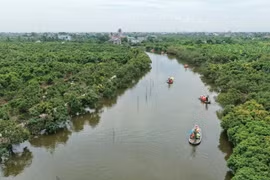
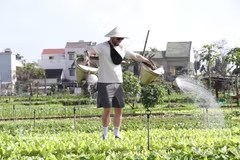
Vietnam currently has more than 600 agricultural and rural tourism models, generating over 25 trillion VND (956 million USD) in annual revenue. The sector has become an important source of income for many rural communities seeking to diversify their livelihoods.
Hoa Tien village in Chau Tien commune, Nghe An province, continues to preserve the traditional brocade weaving craft of the Thai ethnic community.
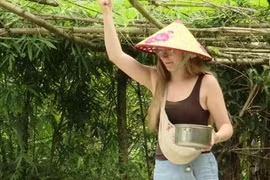
Local residents have diversified their products to include scarves, handbags, wallets and souvenirs while developing hands-on tourism activities. Visitors can take part in fabric dyeing, silk production and brocade weaving while learning about local culture and daily life.
Sam Thi Bich, Director of the Hoa Tien Brocade Weaving Craft Village Cooperative, said the cooperative offers visitors not only brocade products but also stories about Thai culture, helping introduce local cultural values to a wider audience.
The cooperative also provides local women with stable employment during periods when they are not engaged in farming, with an average monthly income of about 3 million VND.
It currently has around 150 members, while more than 50 households are involved in mulberry cultivation, silkworm farming and brocade weaving.
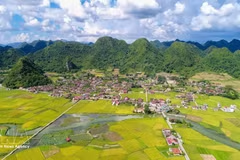
According to Chau Tien commune People's Committee Chairman Nguyen Tien Hung, the locality's largely intact natural forests are among its greatest advantages. Building on these resources, the commune has developed a project to preserve the cultural values of the Thai ethnic community in connection with tourism development.
To promote sustainable community-based tourism, Chau Tien is investing in infrastructure and transport while strengthening training for local workers. Young residents are receiving tourism skills training, gradually creating a locally based tourism workforce.
The commune plans to expand experiences including brocade weaving, forest exploration, stays with local families, traditional cuisine and evening cultural programmes to encourage visitors to stay longer and enhance their overall experience.
In Thai Nguyen province, Thai Hai village has turned the traditional cultural space of the Tay ethnic community into the foundation of its community-based tourism model.
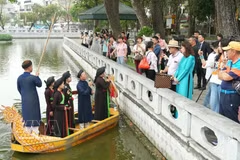
Visitors can experience life in a traditional village, stay in stilt houses, enjoy local cuisine and discover Then singing, the Tinh lute and other cultural traditions that have been carefully preserved.
A visit traditionally begins with a hand-washing ritual at the village well, symbolising the shedding of everyday worries before entering the village's peaceful surroundings. Visitors can then immerse themselves in the tranquil setting of traditional stilt houses and experience the community's slower pace of life.
Nguyen Thi Thanh Hai, Director of the Thai Hai Reserve Area of Ecological Houses-on-Stilts Village, said the village's appeal lies not only in its landscape or old stilt houses but, more importantly, in its living indigenous culture. Residents continue to live and work together while preserving the traditional customs of the Tay people.
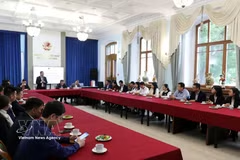
Nguyen Chu Thu, Deputy Director of the Thai Nguyen provincial Department of Culture, Sports and Tourism, said the province is mobilising resources and implementing coordinated measures to turn tourism into an important economic sector.
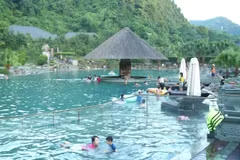
Thai Nguyen is continuing efforts to attract investment, particularly in resort and entertainment tourism around Nui Coc Lake and distinctive culture-based tourism products.
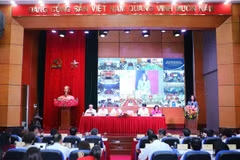
Nguyen Xuan Dai, Chief of the Central Coordination Office for the National Target Programme, said the next development phase should prioritise the preservation and development of traditional craft villages alongside smart rural development, science and technology, and digital transformation.
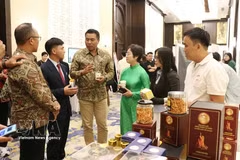
He also called for the development of high-quality, distinctive and environmentally friendly OCOP products that embody local cultural values, together with rural, community-based, ecological and agricultural experiential tourism.
According to the Ministry of Agriculture and Environment, coordination among ministries and sectors will be strengthened during the 2026-2030 period to improve mechanisms and policies supporting OCOP products and rural tourism./.