Heritage resources fuel Hue’s new growth ambitions

Hue is simultaneously stepping up efforts to attract investment into tourism, services and cultural industries. In the first five months of 2026, the city secured more than 19 trillion VND in newly registered investment capital, with projects planned in coastal tourism, lagoon-based ecotourism, cultural spaces along the Perfume River, convention and exhibition centres, night-time economy projects and cultural innovation hubs.

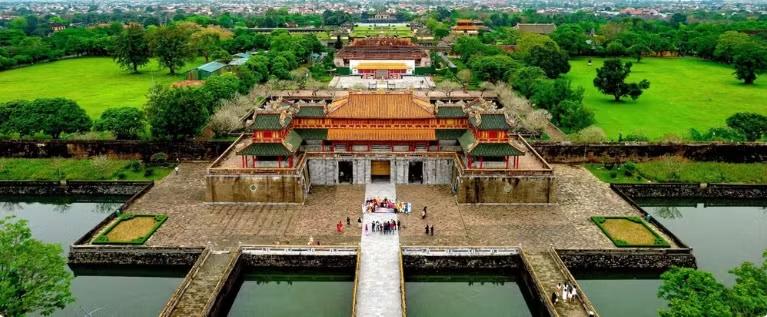
Seen from above, Hue Imperial Citadel glows brilliantly at the heart of the heritage city. (Photo: nhandan.vn)

Hue (VNA) – As Hue enters a new phase of development as a centrally governed city, local authorities are seeking to transform its centuries-old cultural heritage into a new growth engine, with tourism expected to unlock the economic value of culture and support the city’s ambition of achieving double-digit growth.

Heritage assets drive tourism growth

After experiencing the “Imperial Citadel by Night” programme, French visitor Marie Laurent said Hue stood out from other heritage destinations she had visited around the world. It is not just a collection of ancient monuments; it is a living cultural space, she said.

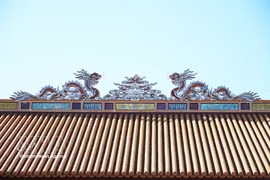
Few localities in Vietnam possess such a rich combination of tangible and intangible heritage. Hue is home to the Complex of Hue Monuments, Royal Court Music, the Nguyen Dynasty Woodblocks and Imperial Archives, alongside living traditions such as Hue folk singing, royal cuisine, craft villages, traditional festivals and the iconic Hue ao dai. These cultural assets are complemented by diverse landscapes stretching from Chan May–Lang Co Bay and the Tam Giang–Cau Hai Lagoon to the forests of western Hue.

According to Dr. Cung Trong Cuong of the Hue City Institute for Development Studies, the city’s advantage lies not only in the number of heritage sites but also in their cultural depth. Visitors can experience history through architecture, music, cuisine and community life, a combination rarely found in other heritage cities in the region, he said.

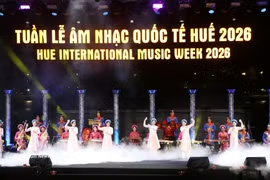
In recent years, the Hue Festival, night tours of the Imperial Citadel, the Huong (Perfume) river pedestrian zone, craft village experiences and community-based tourism have helped revitalise the city’s tourism sector. Hue welcomed around 4 million visitors in 2024, generating nearly 8 trillion VND (304 million USD) in tourism revenue. In the first five months of 2026 alone, the city received nearly 3.6 million visitors and earned about 8.3 trillion VND, up almost 70% year-on-year.

Despite these gains, experts believe Hue has yet to fully capitalise on its heritage advantages. Average visitor stays remain relatively short and spending levels modest, while tourism products, though culturally rich, are not yet diverse enough to encourage longer stays.

The city also faces challenges related to tourism infrastructure, a shortage of high-quality entertainment and service facilities, limited international-standard human resources and weak regional connectivity. At the same time, growing demands for heritage preservation and restoration require substantial investment.

Turning heritage into an economic engine

Hue is now moving beyond a preservation-focused approach and placing greater emphasis on leveraging heritage for economic development.

Chairman of the Hue People's Committee Nguyen Khac Toan has identified tourism and services as key drivers of growth in the city’s new development phase. The objective is not only to attract more visitors but also to increase the economic value generated from cultural products, destinations and tourism experiences.

According to Hoang Viet Trung, Director of the Hue Monuments Conservation Centre, the long-term vision is to transform heritage sites into living cultural spaces. Programmes such as “Imperial Citadel by Night”, royal guard-changing performances, court ceremony reenactments and the application of digital technologies are helping bring heritage closer to visitors while creating new economic opportunities.

The city is also expanding tourism development beyond its historic core. Vice Chairman of the Hue People's Committee Tran Huu Thuy Giang said plans focus on four strategic areas: the central heritage urban zone, the Tam Giang–Cau Hai Lagoon, the Chan May–Lang Co coastal area and the western ecological region. Together, these areas are expected to form a more diverse and sustainable tourism ecosystem.

Hue is simultaneously stepping up efforts to attract investment into tourism, services and cultural industries. In the first five months of 2026, the city secured more than 19 trillion VND in newly registered investment capital, with projects planned in coastal tourism, lagoon-based ecotourism, cultural spaces along the Perfume River, convention and exhibition centres, night-time economy projects and cultural innovation hubs.

According to Director of the Hue Department of Tourism Tran Thi Hoai Tram, the sector is prioritising improvements in destination quality, longer visitor stays and higher tourist spending. Heritage tourism, green tourism, community-based tourism and experiential travel are expected to be the key growth segments supporting Hue’s next stage of development./.
VNA

See more

With its crystal-clear waters and majestic scenery, Hoa Binh lake, located within the reservoir area of the Hoa Binh Hydropower Plant, has become an unmissable destination for visitors to Phu Tho province. (Photo: VNA)

Phu Tho moves to unlock tourism potential after administrative mergence

With coordinated efforts in planning, infrastructure development, product diversification, human resources training, digital transformation and destination branding, Phu Tho is well-positioned to transform tourism into a spearhead economic sector and a new engine of sustainable growth in the years ahead.

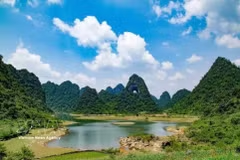
The Eye Mountain, one of the signature attractions of the Non Nuoc Cao Bang UNESCO Global Geopark. (Photo: VNA)

Cao Bang seeks to boost sustainable tourism

During the first five months of 2026, Cao Bang welcomed nearly 1.3 million visitors, generated 1.43 trillion VND (54.3 million USD) in tourism revenue, and recorded an average accommodation occupancy rate of 53%.

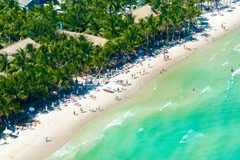
The natural beauty of Kem Beach, one of the world’s 50 most beautiful beaches, helps Phu Quoc captivate visitors from around the globe (Photo: Fabl Belek)

Phu Quoc surpasses Bali among Asia’s best islands in Travel + Leisure ranking

Phu Quoc, also called Pearl Island, rose to second place on the list of Asia-Pacific’s best islands, moving up one position from 2025 and surpassing many renowned destinations such as Bali (Indonesia), Palawan (the Philippines), Langkawi (Malaysia), and Sumba (Indonesia). Ranked only behind Koh Samui (Thailand), Pearl Island was also the sole representative from Vietnam to appear in this year’s ranking.

Vietnam tourism – A journey of endless discovery

Vietnam tourism – A journey of endless discovery

Vietnam possesses an exceptionally rich tourism offering. From the mist-covered mountains of the North to the turquoise beaches of the central region and the fertile waterways of the South, each destination presents its own distinctive charm, attracting both domestic and international visitors and contributing to the diverse appeal of the country's tourism sector.

Vietravel Airlines is prioritising efforts to enhance operational capacity and efficiency, with particular emphasis on fleet expansion. (Illustrative photo: VNA)

Vietravel Airlines expands route network during peak summer season

Flight VU1213, operating the Hanoi–Buon Ma Thuot service with 220 passengers on board, landed at Buon Ma Thuot Airport at 2:20 pm on June 15. The flight marked Vietravel Airlines’ inaugural service on the new route linking the capital with the Central Highlands’ largest city.

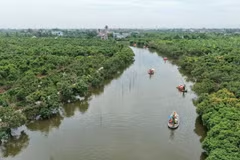
Visitors take boat tours through lychee orchards at Dong Man Ecotourism Area (Source: thanhha.haiphong.gov.vn).

Hai Phong promotes seasonal fruit tours to unlock rural tourism potential

As lychee orchards turn bright red in early summer, the Dong Man Ecotourism Area in Thanh Ha commune, Hai Phong city is bustling with visitors eager to experience rural life and fruit harvesting. The model is emerging as a promising example of how agricultural resources can be transformed into tourism products, helping create a new growth driver for the local economy.

Visitors pose for a photo beneath lush, fruit-laden grape trellises in Muong Phang commune, Dien Bien province. (Photo: VNA)

Green tourism charts a new course for Vietnam

With its rich agricultural ecosystem, where each region boasts unique produce, culinary traditions, and farming practices, Vietnam is well positioned to develop and expand the farm-to-table model. Cities and provinces, such as Hanoi, Thai Nguyen, Da Nang, Hue, Can Tho, Lam Dong, and Vinh Long, are already embracing the model as part of their green tourism strategies.

French daily Le Parisien describes Vietnam as one of Asia’s must-visit destinations, renowned for its stunning scenery, rich cultural legacy and globally acclaimed cuisine. (Photo: Le Parisien)

Vietnam earns praise from French media for rich tourism appeal

In a recent feature, the newspaper described Vietnam as a destination that leaves a lasting impression from the moment travellers arrive. It singled out iconic attractions such as Ha Long Bay, sweeping terraced rice fields and ancient temples and pagodas, while also noting Vietnam’s emergence as one of Asia’s most dynamic economies, home to more than 100 million people.

Tourists can experience city views from the Saigon River on boats. (Photo: VNA)

Ho Chi Minh City forms Waterway Tourism Society

The society, under the Ho Chi Minh City Tourism Association, brings together businesses, organisations, and individuals operating tourist transportation, restaurant boats, travel agencies, and other waterway tourism services.

Ha Long Bay suspends visitors' access to Soi Sim beach. (Photo: VNA)

Ha Long Bay temporarily closes Soi Sim beach to visitors

The move comes shortly after Soi Sim beach became the only Vietnamese beach included in the 2026 Corona Beach 100, an annual global guide recognising the world's top 100 beaches, compiled by the US-based Corona organisation in collaboration with international tourism experts.

Phong Nha is best known for its dramatic limestone karsts, vast primary forests and spectacular cave systems within the UNESCO-recognised Phong Nha–Ke Bang National Park. (Photo: VNA)

Phong Nha named among top nature-connected wellness destinations

According to the Quang Tri provincial Department of Culture, Sports and Tourism, Agoda recently unveiled Asia's Hidden Nature Retreats for 2026, featuring places that offer visitors opportunities to unwind, restore mental well-being and recharge amid tranquil natural surroundings.