Lai Chau leverages cultural heritage for sustainable tourism growth

The province is transforming its natural and cultural assets into key drivers of economic growth, aiming to make tourism a major pillar of its economy in the coming years.

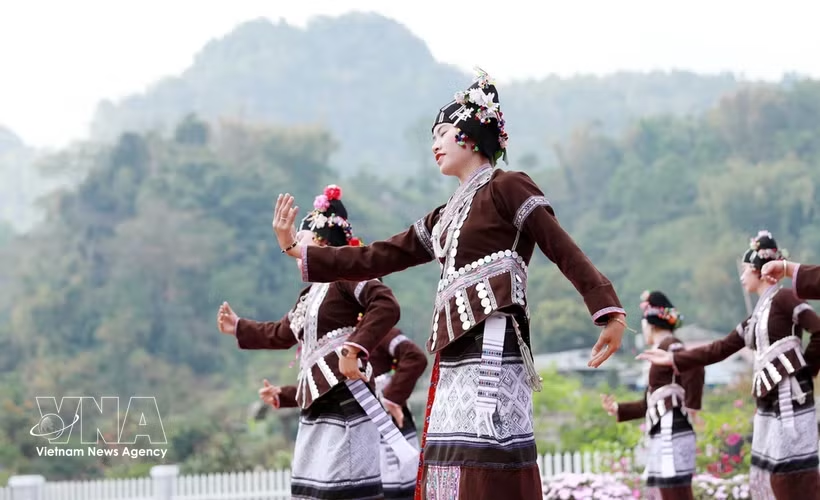
Traditional costume of the Lu ethnic group in Lai Chau province. (Photo: VNA)

Lai Chau (VNA) – With its majestic landscapes and rich cultural heritage nurtured by 20 ethnic groups, the northern mountainous province of Lai Chau is developing sustainable tourism that places cultural preservation and community participation at its core.

The province is transforming its natural and cultural assets into key drivers of economic growth, aiming to make tourism a major pillar of its economy in the coming years.

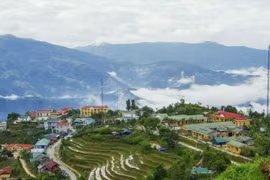
Covering more than 9,068 sq.km, Lai Chau boasts diverse ecosystems. It owns or shares seven of the country’s ten highest mountain peaks, including Pu Ta Leng (3,049 metres) and Bach Moc Luong Tu (3,046 metres). Other attractions such as O Quy Ho Pass, Tac Tinh Waterfall, Nam Luc Waterfall and vast hydropower reservoirs also provide ideal conditions for ecotourism, adventure tourism and high-end resort development.
vnanet-hang.jpg
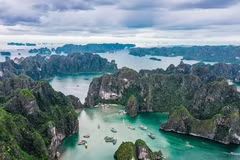
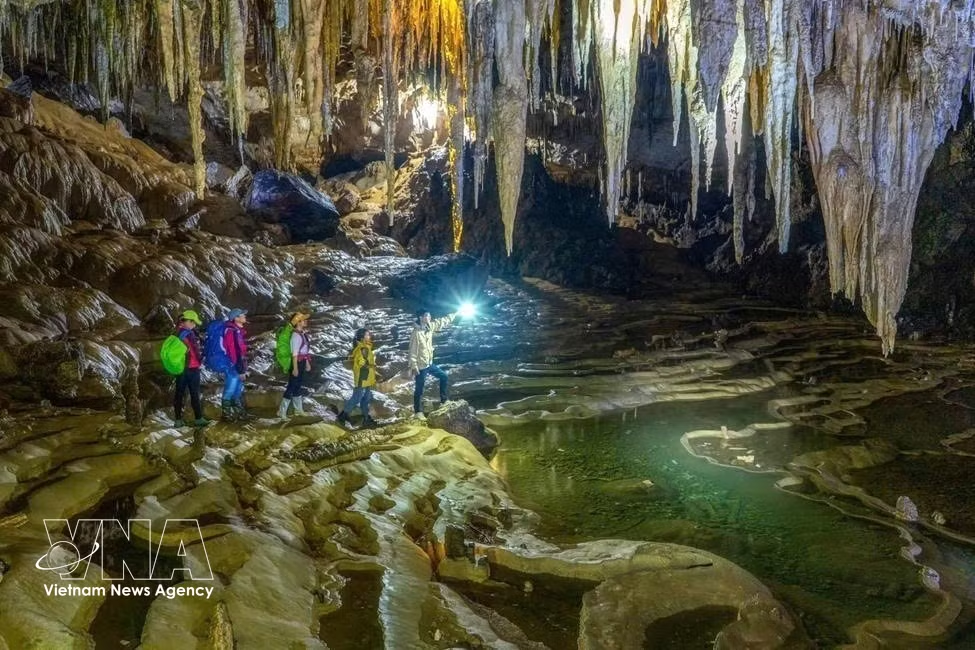
Lai Chau boasts numerous cave complexes with breathtaking beauty that attract many tourists. (Photo: VNA)

Equally valuable is Lai Chau’s cultural diversity. Home to 20 ethnic groups, the province preserves a wealth of traditional customs, languages, folk knowledge, festivals, handicrafts, music and dance forms. These unique cultural resources have become a distinctive advantage that cannot be found anywhere else.

Permanent Vice Chairman of the provincial People’s Committee Tong Thanh Hai said Lai Chau identified tourism linked with cultural preservation as a strategic development priority at an early stage. The provincial Party Congress for the 2020–2025 term listed tourism development among key tasks while subsequent resolutions established policy frameworks to promote ethnic cultural values in tourism development.
vnanet-cho.png
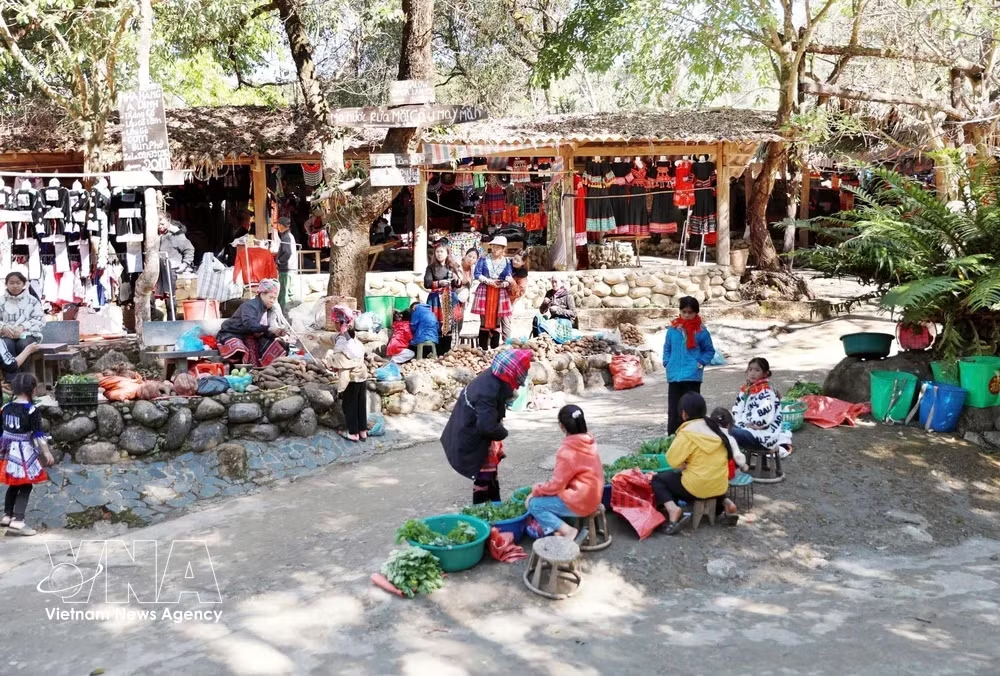
The Sin Suoi Ho market is a unique cultural feature of the Mong people in Sin Suoi Ho commune, Lai Chau province. (Photo: VNA)

As a result, the province welcomed more than 5 million visitors during the 2021–2025 period, with annual growth averaging over 33%. Tourism revenue was estimated at over 3.8 trillion VND (144 million USD), contributing significantly to the local economy. Lai Chau is currently home to two provincial-level tourism areas (Rong May Glass Bridge and Hoang Lien Pass), 20 officially recognised tourist destinations and three provincial festival-themed tourism products.

Community-based tourism has emerged as one of the province’s most successful models. Villages such as Sin Suoi Ho, Si Thau Chai and Lao Chai 1 have become well-known destinations where tourism development goes hand in hand with cultural preservation and promotion.
lai-chau.png
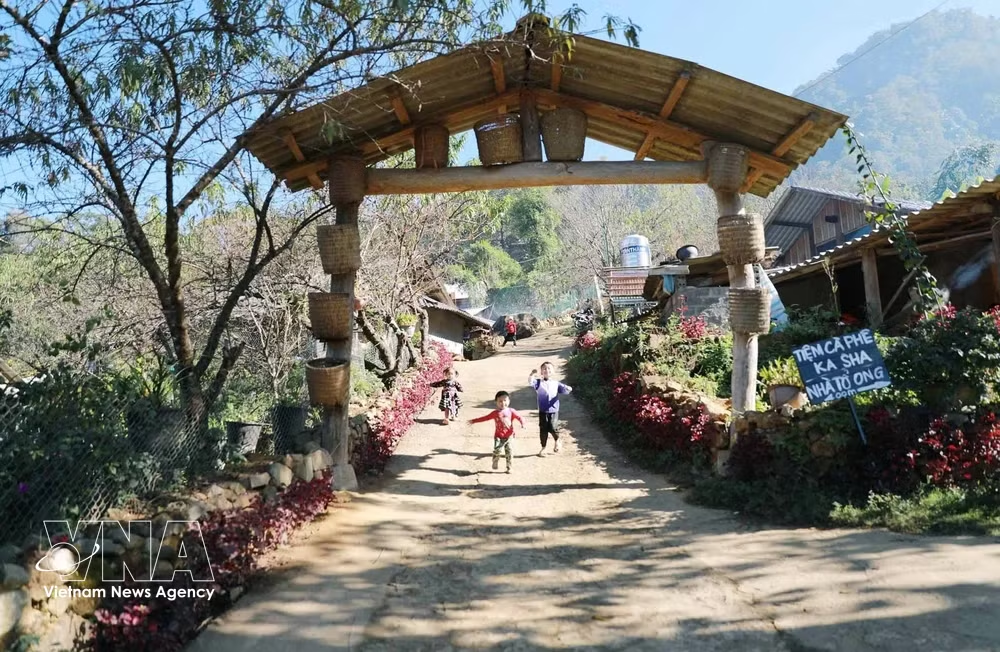
Sin Suoi Ho community-based tourism village is an outstanding destination in Lai Chau province. (Photo: VNA)

Notably, in 2023, Sin Suoi Ho village received the ASEAN Community-Based Tourism Award, affirming the quality and sustainability of Lai Chau’s tourism model.

Director of the provincial Department of Culture, Sports and Tourism Tran Manh Hung said every tourism product must be associated with authentic cultural values while engaging and generating direct benefits for local communities. Community-based tourism has not only improved livelihoods but also encouraged ethnic minority residents to preserve their languages, traditional costumes, customs and crafts.

Located at an altitude of about 1,400 metres and inhabited entirely by Mong people, Sin Suoi Ho has become a model of sustainable tourism. Residents operate homestays, sell handicrafts, provide tourism services and, at the same time, maintain traditional embroidery, folk songs and cultural festivals.
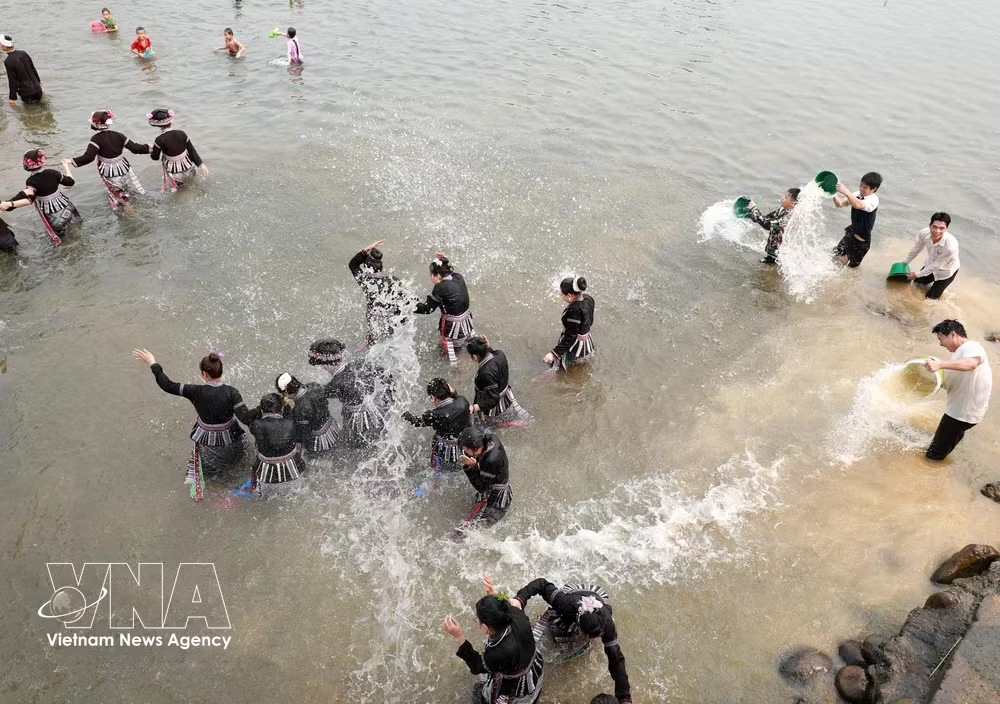
Bun Voc Nam (Water Splashing) is a unique festival of the Lao ethnic people in Lai Chau. (Photo: VNA)

Bun Voc Nam (Water Splashing) is a unique festival of the Lao ethnic people in Lai Chau. (Photo: VNA)

Looking ahead, Lai Chau has adopted a new resolution on tourism development. It aims to attract more than 2.4 million visitors and generate over 2.7 trillion VND in tourism revenue by 2030. More than 15 villages are expected to be recognised as community-based tourism destinations while Sin Suoi Ho is striving to earn recognition as the Best Tourism Village by the United Nations World Tourism Organisation.

The province also plans to attract strategic investors for large-scale ecotourism projects, diversify tourism products ranging from mountain trekking and wellness retreats to agricultural and cross-border tourism, and strengthen digital promotion efforts.

According to Hung, Lai Chau’s greatest challenge is not a lack of resources but the need to address bottlenecks in infrastructure, human resources and destination marketing while preserving cultural identity. With strong policy support, community engagement and improved transport connectivity, the province is positioning itself as an attractive destination under the brand “Lai Chau – Majestic and Authentic,” with sustainable tourism catalysing long-term development./.


VNA

See more

Located about 200 km from Hanoi, Ta Xua in Son La province is widely regarded as one of the most spectacular cloud-hunting destinations in northern Vietnam. (Photo: VNA)

Ta Xua sets sights on sustainable tourism

Ta Xua is rolling out a campaign titled “Bringing Ta Xua to the world” and aims to establish the image of “Ta Xua - a sea of clouds, majestic nature and Mong cultural identity” during the 2028-2030 period.

The fireworks display by the Portuguese team at the final night of the Da Nang International Fireworks Festival (DIFF) 2026 on July 11, 2026. The Portuguese team claims the championship title. (Photo: VNA)

Da Nang greets over 2.72 million visitors during DIFF 2026

On July 11, the day of the DIFF 2026 finale, accommodation establishments in the city served about 131,000 visitors, an increase of 16% from a year earlier. International visitors totalled 52,400, up 27% year-on-year, while domestic visitors reached 78,600, an increase of nearly 10%.

Under the proposal prepared by the VRC, the tourist train will travel approximately 190 km, connecting Hue, Dong Ha, My Trach, Dong Hoi and Tho Loc stations. (Illustrative photo: VNA)

Hue–Phong Nha tourist train to be launched on September 1

The central province of Quang Tri is working with the Vietnam Railways Corporation (VRC) to complete the project, which is expected to create a distinctive railway tourism product linking major heritage sites and scenic destinations across Vietnam's north-central region while strengthening regional tourism connectivity.

At a working session with the Vietnamese Embassy in Moscow (Photo: VNA)

Quang Ninh targets Russian travellers as arrivals surge

Quang Ninh is looking to build partnerships to steer more Russian visitors to Ha Long Bay and other local attractions. Beyond the UNESCO World Heritage Site of Ha Long Bay, the province holds diverse advantages in marine tourism, cultural attractions, luxury resorts and wellness services.

A ferry boat is carrying passengers in Phu Quoc (Photo: VNA)

Ministry orders tighter ferry safety after Phu Quoc boat capsize

The Vietnam Maritime and Waterway Administration, Vietnam Register, and provincial construction department were instructed to coordinate with the Border Guard, Coast Guard, public security and local authorities to determine the cause of the accident, deal with its aftermath, identify and fix any state management lapses, offer support to victims and their families, and report regularly on the investigation’s progress.

Bac Ninh's tourist attractions draws large crowds after the release of the hit music video Bac Bling. (Photo: VNA)

Beyond the trend: From viral hits to lasting tourism appeal

Across Vietnam and around the world, travel inspired by music and film has become an increasingly influential trend. Cultural blockbusters can provide destinations with extraordinary visibility and a level of publicity that money alone often cannot buy. But attracting visitors is only the beginning.

Vietnamese Ambassador to Bulgaria Nguyen Thi Minh Nguyet (L) and Bulgarian Minister of Tourism Ilin Dimitrov. (Photo: VNA)

Vietnam, Bulgaria seek more substantive, sustainable tourism cooperation

Both sides considered tourism as one of the most promising areas of bilateral cooperation, noting its role not only in promoting economic growth but also in enhancing people-to-people exchanges, mutual understanding and broader collaboration in trade, investment, education and culture.

Russian tourists experience the glass bridge at the TTC World – Valley of Love tourist site in Da Lat, Lam Dong province. (Photo: VNA)

Russian tourist arrivals to Vietnam nearly triple in first half

The Association of Tour Operators of Russia (ATOR) reported that Vietnam ranked fourth among the best-selling package tour destinations in the Russian market in July, capturing a 7.8% market share, up 3.2 percentage points year-on-year. The country overtook Thailand (4.7%) and China (4.3%).

At the award ceremony (Photo: VNA)

VITA Awards 2026 honour 106 winners

The winners were recognised for breakthrough and innovative tourism policies in 2025, best tourism villages, leading destinations, top attractions and parks, standout new tourism products, top travel companies, and best-in-class lodging and dining, among others.

A visitor enjoys hands-on farming activities, including preparing the soil, planting vegetables and watering crops, in Tra Que Vegetable Village in Hoi An Tay ward, Da Nang city. (Photo: VNA)

Vietnam invites travellers on multi-sensory journey

Vietnam's appeal lies not in a single attraction but in the seamless combination of authentic experiences rooted in local culture. From colourful highland markets and traditional festivals to centuries-old craft villages, all remain an integral part of everyday life.

UAE Ambassador to Vietnam Bader Almatrooshi speaks at the conference, themed "Vietnam: A New Destination of Halal Tourism", held in Khanh Hoa province on July 8, 2026. (Photo: VNA)

Vietnam emerging as new destination for Halal tourism

Vietnam will continue to improve institutional frameworks and standards, develop human resources, expand Halal-certified services, strengthen international cooperation, promote business partnerships, and build the country's brand as a new destination for Halal tourism.

Thung Nham Ecotourism Area adopts green tourism practices. (Photo: VNA)

Vietnam pushes circular tourism to drive green growth

Unlike conventional sustainable tourism, circular tourism goes beyond reducing environmental impacts. It embraces a regenerative approach in which every journey contributes to restoring ecosystems, preserving cultural heritage and strengthening the resilience of local communities.