Phu Tho (VNA) – Following the mergence with former Vinh Phuc and Hoa Binh provinces on July 1, 2025, the northern midland province of Phu Tho now boasts one of Vietnam’s most diverse tourism ecosystems, providing a strong foundation for the locality to emerge as a major tourism hub in both the region and the country.
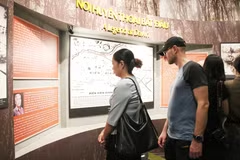
Located at the gateway to the northern midland and mountainous region, with convenient connectivity to Hanoi and the Red River Delta, Phu Tho possesses abundant tourism resources. The province is home to nearly 1,000 ranked historical and cultural relic sites, six national treasures and five UNESCO-recognised cultural heritage elements.
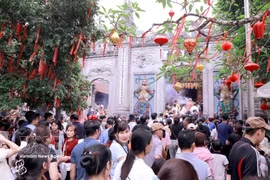
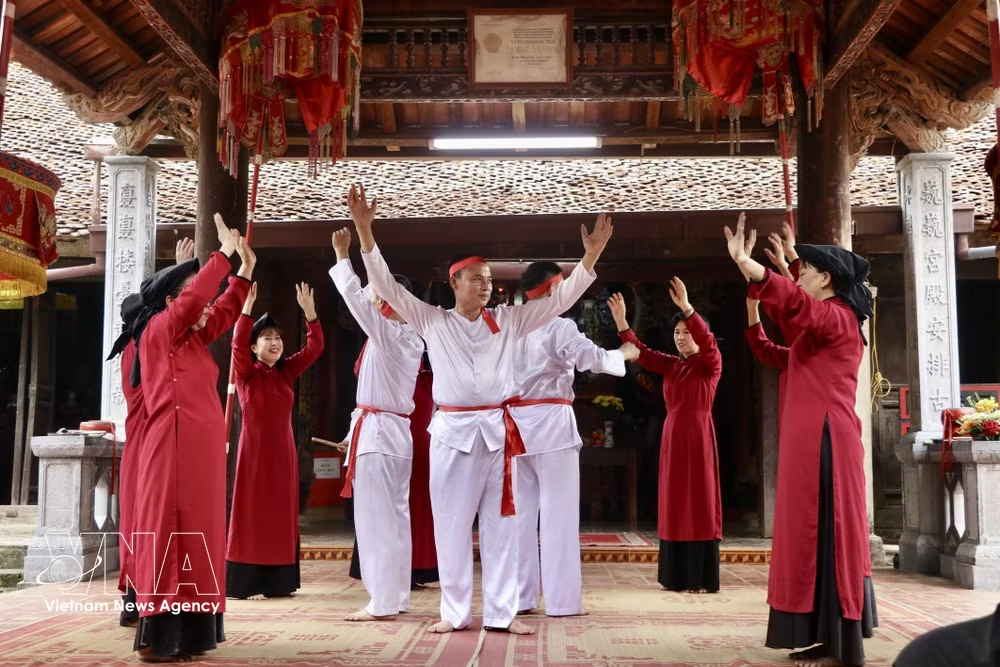
As the ancestral land of the Vietnamese people, Phu Tho is renowned for the Hung Kings Temple Historical Site, where the UNESCO-recognised Worship of the Hung Kings and Xoan Singing are preserved. The province also features a rich tapestry of traditional festivals, craft villages and ethnic cultural traditions that contribute to its unique identity.
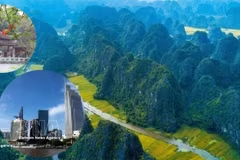
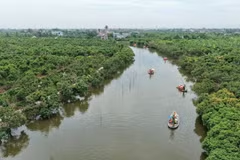
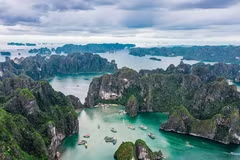
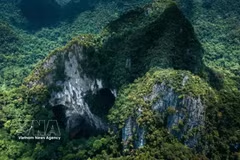
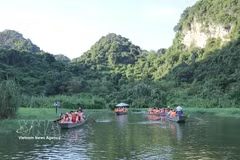
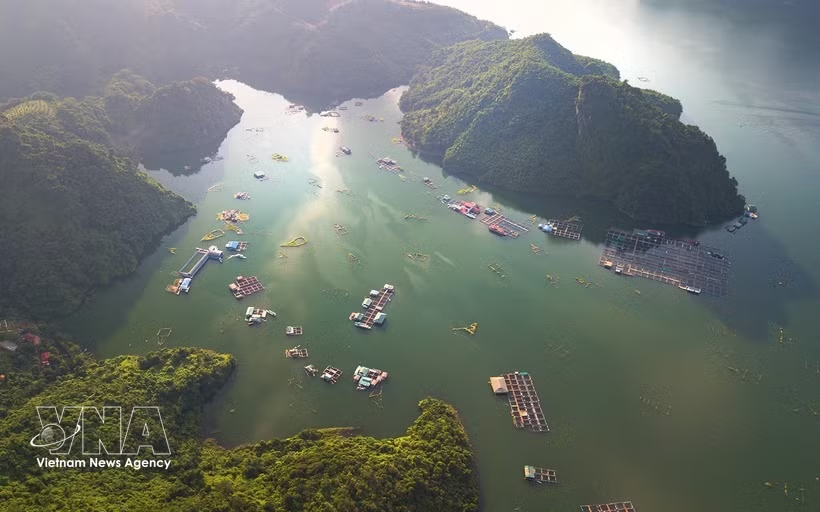
Beyond its cultural heritage, Phu Tho offers diverse natural attractions. Tam Dao, often referred to as the “Da Lat of northern Vietnam,” enjoys a year-round temperate climate, while Xuan Son National Park is known for its pristine forest ecosystem. Hoa Binh lake, frequently dubbed the “Ha Long Bay in the mountains,” and the picturesque Long Coc tea hills further enrich the province’s tourism portfolio.
According to Duong Hoang Huong, Director of the provincial Department of Culture, Sports and Tourism, the administrative mergence has created a rare and diverse tourism landscape that offers exceptional opportunities for the province to develop its integrated tourism routes and products capable of meeting the demand of both domestic and international visitors.
The province is seeing strong growth in high-end resort tourism. Major resorts such as Flamingo Dai Lai Resort, Serena Resort Kim Boi, Mai Chau Hideaway and FLC Vinh Phuc, together with internationally standard golf courses, are attracting visitors with high spending power.
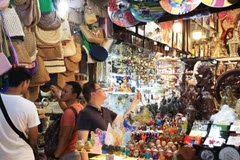
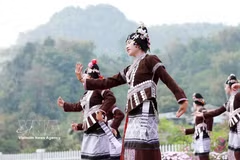
Community-based tourism is also emerging as a highlight, with traditional Muong hamlets, the highland communities of Xuan Son, and a rich network of craft and ancient villages, and indigenous cultural traditions.
Alongside efforts to diversify tourism products, the province has continued to invest in and upgrade its accommodation facilities and tourism services, enabling it to better meet the growing demand of visitors.
As a result, tourist arrivals have risen steadily in recent years. In 2025, Phu Tho welcomed approximately 14.5 million visitors and generated nearly 14.8 trillion VND (562.5 million USD) in tourism revenue. During the first six months of 2026, the province is estimated to receive more than 10.5 million visitors, including over 3.2 million overnight guests and around 74,000 international arrivals. Total tourism revenue during the period is estimated at 10.7 trillion VND.
Despite these advantages, tourism development has yet to fully match the province’s potential. Infrastructure remains uneven, service quality requires improvements, and the sector still lacks highly distinctive and competitive products.
Recognising tourism as a strategic economic sector, Phu Tho has rolled out a series of breakthrough measures aimed at transforming tourism into a spearhead economic sector and a new driver of growth for the 2026–2030 period. The province aims to build a comprehensive and competitive tourism ecosystem, positioning itself as a national centre for cultural and festival tourism and a leading destination for spiritual, ecological and resort tourism in northern Vietnam.
By 2030, it targets at least 20 million tourist arrivals, including 7.8 million overnight visitors, with tourism revenue reaching 26.5 trillion VND. The sector is expected to support approximately 30,000 direct and indirect jobs.
To achieve these goals, Secretary of the provincial Party Committee Pham Dai Duong said Phu Tho has prioritised attracting strategic investors, upgrading transport and digital infrastructure, developing smart tourism services, and diversifying tourism products. In addition to cultural and spiritual tourism, the province plans to expand wellness, golf, MICE, community-based, waterway and adventure tourism.
It also aims to digitise all recognised tourist sites, develop integrated tourism databases, and deploy digital maps, QR-code services, automated tour guides and virtual reality applications to enhance visitors' experiences.
With coordinated efforts in planning, infrastructure development, product diversification, human resources training, digital transformation and destination branding, Phu Tho is well-positioned to transform tourism into a spearhead economic sector and a new engine of sustainable growth in the years ahead./.