Lao Cai (VNA) – Craft villages and traditional occupations in the northern mountainous province of Lao Cai are increasingly contributing not only to local economic growth and job creation but also to cultural tourism development, thanks to their unique identities and rich indigenous knowledge embedded in every product.
Among the province’s success stories is Ta Phin commune, one of Lao Cai’s earliest community-based tourism destinations and a locality renowned for its diverse traditional occupations that provide stable and sustainable livelihoods for ethnic minority communities.
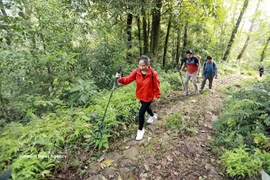
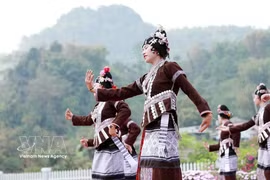
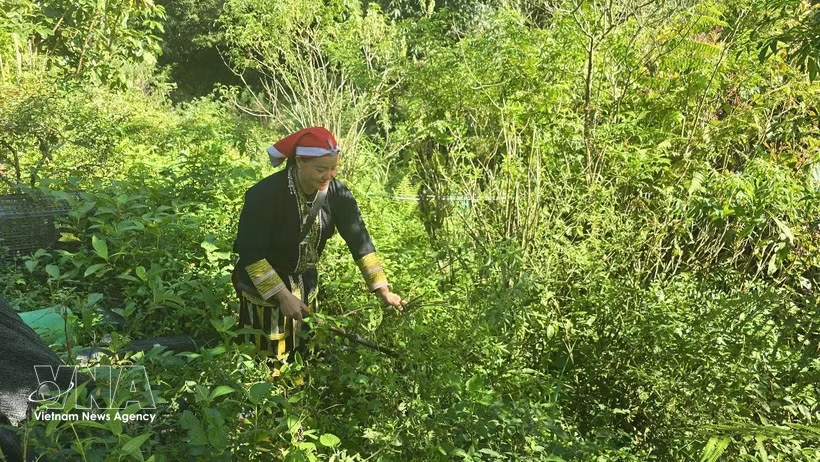
Visitors to Ta Phin can experience a range of traditional crafts, including harvesting medicinal plants and preparing herbal bath remedies, learning about the use of indigenous herbs, exploring brocade weaving and embroidery techniques of the Dao and Mong ethnic minority groups, and experiencing traditional blacksmithing, linen weaving, and beeswax batik printing.
A notable example of turning traditional knowledge into economic opportunity is the Red Dao Community Cooperative. In 2015, Tan Ta May and 120 Red Dao women joined hands to establish the cooperative with the dual objective of preserving traditional herbal bath remedies and creating local employment opportunities for women.
Unlike many ethnic groups that primarily use medicinal herbs for drinking or topical treatment, the Red Dao people have developed unique bathing remedies using more than 200 varieties of leaves, stems, and bark.
The cooperative’s first product, marketed under the May Dia brand, was a concentrated herbal bath extract made from locally sourced medicinal plants supplied daily by cooperative members. Positive feedback from visitors helped the product gain wider recognition through word-of-mouth recommendations.
After a decade of development, the cooperative has expanded to include 30 herbal bath facilities and more than 80 homestay rooms operated by member households. On average, it welcomes between 30 - 50 visitors each day. Its product range has also diversified to include herbal baths for postpartum women and children, foot-soak products, herbal shampoos, medicinal soaps, essential oils, massage balms, and therapeutic massage wine. Annual revenue reaches approximately 4 billion VND (152,000 USD), while members earn an average monthly income of 5–6 million VND.
Traditional brocade products and embroidery experiences have also become popular tourism attractions. More than 100 local women participate in sewing and embroidery groups that create innovative handicrafts appealing to both domestic and international visitors.
According to Chairman of the People’s Committee of Ta Phin commune Vu Xuan Quy, traditional crafts have evolved into distinctive tourism products that attract growing numbers of visitors. Developing craft village tourism is an effective way to boost economic growth, diversify tourism products, and preserve ethnic cultural heritage.
Lao Cai currently has 66 officially recognised craft villages and traditional occupations. Beyond serving as sources of income, these communities function as “living museums” preserving the valuable indigenous knowledge of the province’s ethnic groups.
The province’s experience demonstrates that preserving traditional occupations today requires more than safeguarding cultural practices. It also involves improving product quality, responding to market demand, and creating sustainable livelihoods.
Lao Cai aims to restore and preserve 32 craft villages and 20 traditional occupations during the 2026–2030 period, while developing 12 craft villages associated with tourism. By 2030, the province targets having 75% of craft villages linked to rural tourism, 70% operating effectively, and 80% of workers receiving vocational training.
To achieve these goals, it will focus on preserving traditional craftsmanship and cultural values while encouraging innovation, digital transformation, scientific applications, product branding, quality certification, and environmental protection. Training programmes involving artisans and skilled craftspeople will also be expanded to ensure that traditional knowledge continues to be passed on to future generations./.