Sci-tech is key to reaching developed nation status by 2045: PM

On Vietnam’s twin priorities of digital transformation and green transition, Prime Minister Pham Minh Chinh stressed that success hinges on turning awareness into concrete, feasible, and effective actions. He called for converting policy mechanisms into competitive advantages, building green and digital infrastructure, developing skilled workforce and smart governance, and above all pooling massive financial resources.

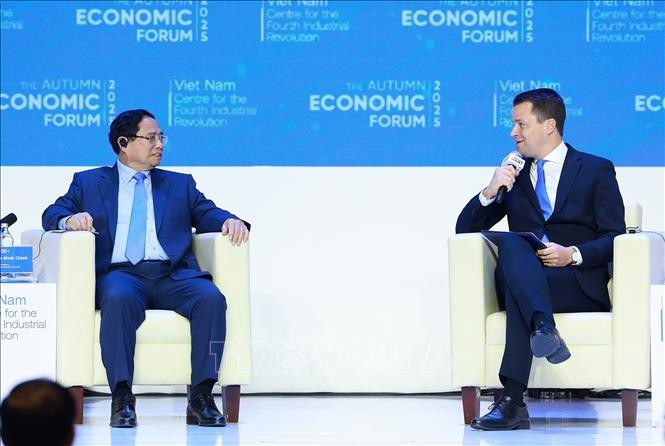
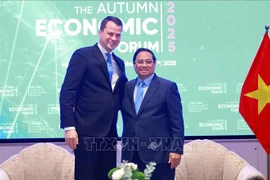
PM Pham Minh Chinh (L) and WEF Managing Director Stephan Mergenthaler (Photo: VNA)

HCM City (VNA) - Prime Minister Pham Minh Chinh told a World Economic Forum (WEF)’s session in Ho Chi Minh City on November 26 that sci-tech will be the primary driver behind Vietnam’s ambition to become a developed, industrialised nation by 2045.

Speaking in a “60 Minutes with the Prime Minister” dialogue with WEF Managing Director Stephan Mergenthaler at the 2025 Autumn Economic Forum, PM Chinh said the country has overcome past challenges through the Party’s strong leadership, national unity, the resilience of its people and businesses, the combination of domestic strengths and global trends, and a consistent policy of independence, self-reliance, and the path toward socialism.

On Vietnam’s twin priorities of digital transformation and green transition, he stressed that success hinges on turning awareness into concrete, feasible, and effective actions. He called for converting policy mechanisms into competitive advantages, building green and digital infrastructure, developing skilled workforce and smart governance, and above all pooling massive financial resources. State resources will play a guiding and activating role, he said, while new mechanisms must leverage all social resources, especially public–private partnerships and both domestic and foreign capital.

Asked about the role of small-and medium-sized enterprises (SMEs) and startups, he noted that SMEs make up 95-97% of Vietnamese businesses, contribute considerably to the State budget, and employ the majority of workers. He highlighted the Politburo’s Resolution 68, which provides robust support for the private sector, and said startups are now a national priority backed by annual innovation events, improved legal frameworks, resources, and mentoring. Entrepreneurial spirit, he added, is surging among Vietnamese youth.

Looking at ASEAN’s long-term vision for development in the global economy, the PM urged the bloc to preserve unity, deepen connectivity, leverage each member’s strengths, embrace sci-tech and innovation as core growth engines, fully uphold cultural diversity, and expand partnerships with other regions, while contributing to global peace, cooperation, and development.

Regarding Vietnam’s role in fostering global dialogue, he reaffirmed the country’s foreign policy of independence, self-reliance, diversification, and multilateralisation; being a good friend, trustworthy partner of all countries, and a responsible member of international community for the sake of global peace, cooperation and development. He also welcomed the theme of the upcoming WEF Davos meeting.

On the youth’s future in the technology era, he pledged continued support through supportive mechanisms, education, startup and innovation programmes, talent cultivation, risk protection, and global connectivity.
hq.jpg
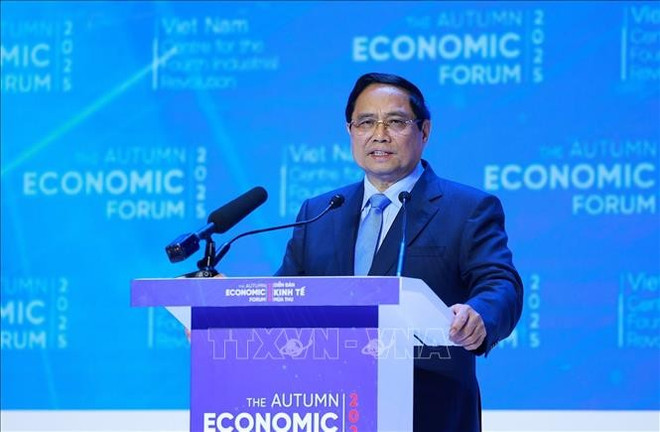
PM Pham Minh Chinh delivers the closing speech. (Photo: VNA)

As the dialogue closed to warm applause, the Vietnamese leader hailed the two-day Autumn Economic Forum, themed “Green Transformation in the Digital Era” as a success, with more than 1,500 delegates, nearly 100 foreign delegations, 10 Fourth Industrial Revolution centres, and over 75 global sci-tech and innovation centres taking part.

He directed ministries and agencies to consider the forum’s recommendations, accelerate the overhaul of legal and institutional frameworks, and promptly roll out bold incentive packages to spur investment in green and digital technologies. More administrative reforms must create the most investor-friendly environment possible.

HCM City was asked to swiftly issue a detailed action plan to deliver on the forum’s commitments and instructed other localities to craft appropriate green transition roadmaps tailored to their strengths, forming green linkages and economic corridors.

The business community, whom he described as a pioneer in development, must accelerate innovation, change business models, ramp up investment in research and development, and adopt new economic models. They must also bolster governance capacity, align with international green standards, and actively engage with the Government in policymaking.

To international partners and the WEF, he called for deeper, results-oriented cooperation, including support for Vietnam to host future forums, establish itself as a regional “green-digital laboratory”, and gain access to concessional finance, advanced technology transfer, and technical assistance./.
VNA

See more

Melons labelled with traceability codes on display at the Song Van agricultural produce store in Ninh Binh city, Ninh Binh province. (Photo: VNA)

Tracing origins hindered by fragmented data systems

As the Government accelerates the digital economy, establishing a unified national traceability system has become a crucial move to end data fragmentation and disconnection among ministries, sectors and localities.

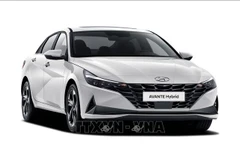
Hyundai unveils its new Avante Hybrid model in Seoul, the Republic of Korea, on August 13, 2020. (Photo: Yonhap/VNA)

Tax cuts poised to ignite Vietnam’s hybrid vehicle boom from 2026

Experts forecast that 2026-2030 will mark a period of strong growth for hybrid vehicles in Vietnam, a trend that will invigorate the automotive sector while supporting national objectives on emissions reduction, sustainable development and the broader transition to green mobility.

Illustrative image (Photo: VNA)

Vietnam targets 1 billion USD in banana exports

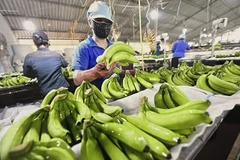
Bananas have been identified as a priority product under the Project for the Development of Key Fruit Crops to 2025, with a vision to 2030, approved in October 2022. Under the plan, banana acreage is projected to reach 165,000–175,000ha by 2030, with output of 2.6–3 million tonnes.

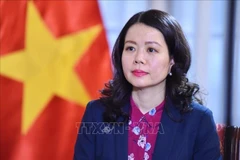
Deputy Minister of Foreign Affairs Nguyen Minh Hang (Photo: VNA)

Event connects Vietnamese businesses with African countries

Deputy Foreign Minister Nguyen Minh Hang held that to develop Vietnam – Africa ties more strongly and substantively, it is necessary to promote the engagement of businesses, and that the Government will create favourable conditions for them to enhance fruitful cooperation.

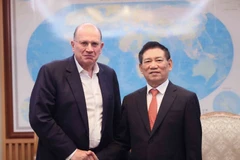
Deputy Prime Minister Ho Duc Phoc (R) and Independent Non-executive Chairman of AIA Mark Tucker at their meeting in Hanoi on December 12. (Photo: VNA)

AIA Group envisions long-term investment, cooperation in Vietnam

Over 25 years of operation in Vietnam, AIA has achieved positive results. Its premium revenue ranks among the top five life insurers, reaching nearly 14.83 trillion VND (563.71 million USD) in 2024 and an estimated 15.73 trillion VND in 2025, equivalent to around 10% of the market share.

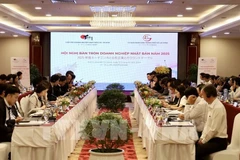
A view of the 2025 Japan business roundtable in HCM City on December 12. (Photo: VNA)

Ho Chi Minh City courts Japanese investment with growth blueprint

Ha underscored the pivotal contributions of Japanese firms, which have long supported local socio-economic progress through major infrastructure projects, industrial zones and workforce training courses. To date, Japanese companies have invested more than 15 billion USD in over 2,200 projects, reflecting sustained confidence and commitment to the market.

Deputy Prime Minister Bui Thanh Son receives Kounlaphanh Vongnathy, Vice President of Phongsupthavy Group, in Hanoi on December 12, 2025. (Photo: VNA)

Lao group urged to deepen energy ties with Vietnam

Deputy Prime Minister Bui Thanh Son has commended Phongsupthavy Group as one of Laos’ leading investors supplying electricity to Vietnam, noting its pledge to ramp up power exports and actively contribute to the implementation of energy cooperation agreements endorsed by senior leaders of the two Parties and States.

An Giang OCOP product booth at the fair (Photo: VNA)

Vietnam–Cambodia OCOP fair expected to boost cross-border trade

The fair offers an opportunity for Vietnamese and Cambodian enterprises to meet and promote their brands and speciality products to both domestic and international visitors, he added, noting that it also serves as a platform for trade connections, helping businesses seek partners, expand distribution networks and access the promising border market.

Vietnamese Ambassador to Argentina and Paraguay Ngo Minh Nguyet (third from left), Paraguayan Minister of the Secretariat of Linguistic Policies Javier Viveros (second from left), and Vietnam's Honorary Consul in Paraguay María Del Carmen Pérez (C) pose for a photo with delegates. (Photo: VNA)

Ample room remains for Vietnam-Paraguay economic ties: Ambassador

Addressing a ceremony marking the 30th anniversary of the establishment of the bilateral diplomatic ties on December 11, Vietnamese Ambassador to Argentina and Paraguay Ngo Minh Nguyet affirmed that Vietnam, one of the fastest-growing economies in Asia, can become a strategic partner to help Paraguay expand its presence in the regional market.