Scientific research capacity – a cornerstone to elevate higher education’s quality

The Government set a target of having 40% of lecturers to hold doctorate by 2030. For universities offering doctorate programmes, that figure must reach at least 50% from 2030 onward.

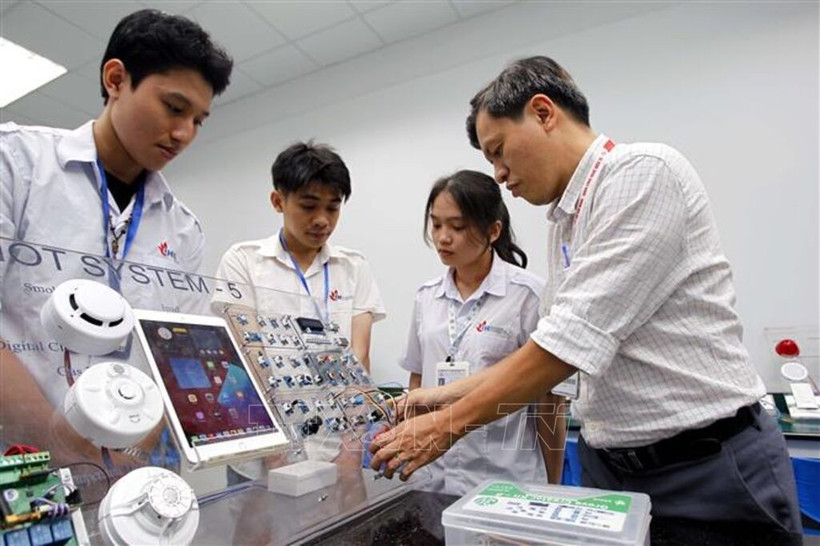
A lecturer from the Faculty of Electronics Technology at the Industrial University of Ho Chi Minh City guides students in study and research at the IoT and AI laboratory. (Photo: VNA)

Hanoi (VNA) - As Vietnam strives to climb higher in global university rankings under the Politburo’s Resolution No.71-NQ/TW on breakthroughs in education and training, the country’s higher education institutions need to develop a pool of excellent lecturers with strong scientific research capacity while linking training, innovation, businesses and market.

Resolving faculty challenges

According to the Ministry of Education and Training, Vietnam had around 91,300 university lecturers as of 2024. Among them, roughly 30,000 hold doctorates, representing 33% of the total faculty, while nearly 58% possess master's degrees. Every year, the country appoints some 600 professors and associate professors, with the majority at major universities offering postgraduate programmes.

The Government set a target of having 40% of lecturers to hold doctorate by 2030. For universities offering doctorate programmes, that figure must reach at least 50% from 2030 onward. The challenge is formidable, given the five- to seven-year doctorate training programme and the ongoing “brain drain” with doctorates retiring or leaving academia.

Multiple measures to attract talent both inside and outside the countries have been carried out at higher education estabishments.

Under its “VNU 350” programme, the Vietnam National University, HCM City aims to lure 350 outstanding young scientists, offering funding of up to 200 million VND (8,000 USD) in the first years, a budget of 1 billion VND in the third year, and up to 10 billion VND (379,000 USD) in lab support in the fourth year. However, smaller universities struggle to recruit qualified doctors due to limited resources and less competitive income.

Director of the Ministry of Education and Training (MoET)’s Teachers and Educational Managers Department Vu Minh Duc affirmed that lectures are the centre of the higher education system, adding they are not only educators but also mentors, researchers, and bridges between academia and society.
142414-img-9599.jpg
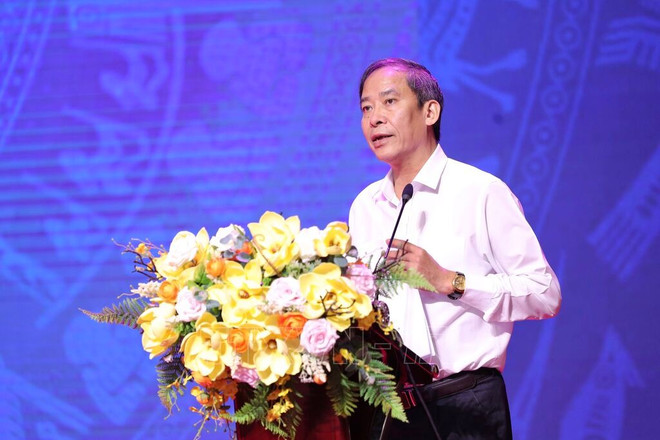
Director of the Ministry of Education and Training’s Teachers and Educational Managers Department Vu Minh Duc (Photo: VNA)

Resolution No.71 underscores the need for preferential policies and special mechanisms to mobilise high-quality human resources for the sector, encourage experts and scientists to engage in higher education. It targets recruitment of at least 2,000 overseas lecturers. According to Duc, the ministry is drafting new salary and allowance frameworks to make academic careers more attractive, alongside regular health care, training and regional incentive packages.

Improving quality of scientific research


Director of the MoET’s Information Technology Department Pham Quang Hung revealed that the number of publications in reputable international journals rises 12–15% annually. Between 2018 and 2022, Vietnam produced over 76,600 Scopus articles. Vietnamese international publications span 27 specialties across four main fields of natural sciences, engineering – technology, life sciences – medicine, and social sciences.

The Vietnam National University, HCM City took the lead with more than 3,000 articles last year, followed by the Hanoi University of Science and Technology and the Vietnam National University, Hanoi, with around 1,500-1,600 each. Private universities such as Ton Duc Thang, Phenikaa, and Duy Tan, are also making their mark, contributing hundreds of international papers annually.

Despite the progress, the commercialisation of the research results remains limited. While universities contribute the majority of Vietnam’s international publications, research revenues are modest, with many State-funded projects failing to reach the market due to legal barriers and weak business linkages. The Vietnam National University, HCM City earned just 241.2 billion VND from science and technology services in 2024 as compared to 319 billion VND in 2022 and 288 billion VND in 2023.

To strengthen the role of science, technology, and innovation in higher education, Hung stressed the need for a new funding model for sci-tech activities based on research capacity and priority sectors.

He underscored that that amidst university autonomy, diversifying revenue sources, especially through partnerships with business and society, with be the most breakthrough driver of innovation.

The State, he added, must play an enabling role by issuing support policies and mechanisms, investing in infrastructure for cooperation activities, and selecting universities and enterprises with potential to pioneer effective cooperation models that could be scaled up later./.

VNA

See more

Adrien Jean (right) introduces his photos at the exhibition (Photo: VNA)

Vietnam - France friendship captured through photographs

The “Lyon – Ho Chi Minh City” exhibition showcases 14 large-format photographs by Adrien Jean, a French photographer living in Ho Chi Minh City, and Tony Noel, a French-Vietnamese photographer based in Lyon. The works are displayed along the exterior wall of the French Residence at 6 Le Duan street, making art accessible to a wide public - from passers-by to photography enthusiasts.

VNA General Director Vu Viet Trang (second from right) and Permanent Vice Chairman of the Vietnam Journalists Association Nguyen Duc Loi (fourth from right) present the A Prize to the winners. (Photo: VNA)

VNA Press Awards 2025 inspire professional commitment, innovation in digital era

A notable feature of this edition is the significant rise in both the number and diversity of entries across all categories. These figures reflect not only growing engagement but also a more coordinated and professional approach among editorial departments and domestic and overseas bureaus, forming a consistent and multi-dimensional flow of information.

Glenn Mathews and his wife hand over the diary of Vietnamese martyr Vo Van Cong to Minister Counsellor Nghiem Xuan Hoa, representing the Embassy of Vietnam in Australia. (Photo: VNA)

Australian veteran’s son returns diary of Vietnamese martyr

Entries in the diary show that Vo Van Cong was born in 1944 in the former Phuoc Tho commune, Nhon Trach district, Bien Hoa province, now Dong Nai province. He joined the revolutionary movement in April 1961 and was admitted to the Communist Party of Vietnam in May 1962.

A number of youth union members at the Vietnam Academy of Social Sciences visit the exhibition space showcasing books and materials on culture. (Photo: VNA)

Book week underscores role of knowledge in policymaking

The highlight is a series of activities on April 21, including a book and document exhibition on culture, the launch of a special publication titled “Special scientific information for leadership” and initiatives promoting reading culture, including a book donation programme and a book review contest.

Hanoi has over 1,100 libraries and numerous cultural and educational spaces in the community. (Photo: VNA)

Spreading value of books, building foundations of learning society

Each weekend in Hanoi, the “Reading with Children” Club brings together students to practise reading, explore language, and express ideas creatively. According to founder of the club Nguyen Thuy Anh, the club encourages children to reflect, retell stories, and connect books with personal experiences, making reading more vivid and meaningful.

Automated ticketing system is used on the urban railway Cat Linh-Ha Dong line in Hanoi. (Photo: VNA)

Digital transformation powers Hanoi metro expansion

Beyond convenience, stable fares and the elimination of fuel, parking and maintenance costs have made urban rail increasingly attractive. The growing preference for metro travel is also contributing to a greener, more modern urban lifestyle.

Delegates cut the ribbon to inaugurate the operation of electric bus route No. 43. (Photo: VNA)

Hanoi accelerates shift to green buses, targets 100% by 2030

In the 2027–2030 period, the city will accelerate the transition towards the complete phase-out of fossil fuel-powered buses. The share of electric and green energy-fueled buses is projected to reach 79–89% by 2029 and 100% by 2030.

At the second session of the Ho Chi Minh City People’s Council (Photo: VNA)

Ho Chi Minh City greenlights central square, administrative centre in Thu Thiem

The new central city square and administrative centre will create a modern, centralised political-administrative complex for Ho Chi Minh City, designed to house around 8,000 officials, civil servants, and employees. It will also handle daily traffic of 1,500- 2,000 citizens and business representatives through a unified one-stop-shop administrative service system.