Seminar debates peaceful settlement of territorial, border disputes

The border is not only the endpoint of one country but also the starting point of another country, serving as a bridge for cooperation and development between nations. Vietnam has stood out as a model for effectively resolving border and territorial matters in recent times.

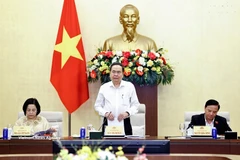
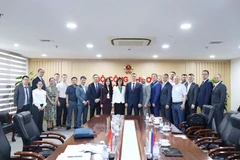
Participants at the seminar (Photo: VNA)

Hanoi (VNA) – An international seminar on resolving territorial border disputes in a changing world was held by the Ministry of Foreign Affairs' National Boundary Commission in Hanoi on October 21, gathering leading international law experts along with representatives from Vietnamese government agencies, research institutes, and universities.

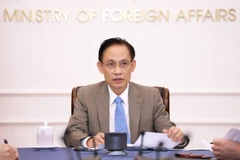
In his opening remarks, Permanent Deputy Foreign Minister Nguyen Minh Vu highlighted the crucial importance of maintaining peace and stability, and settling territorial and border disputes through peaceful measures based on international law in the context of non-traditional security challenges, such as climate change and emerging technologies.

He affirmed that the border is not only the endpoint of one country but also the starting point of another country, serving as a bridge for cooperation and development between nations.

Experts and scholars from France, Singapore, India, Belgium, Canada, Australia, the US, the Republic of Korea (RoK), and Vietnam discussed legal and practical issues in resolving border and territorial disputes; the impact of climate change and new technologies on international legal frameworks on land and sea borders; and the role of international cooperation in managing and handling these challenges.

There are various mechanisms and measures available to address border and territorial disputes, but they must comply with international law, scholars said, noting that Vietnam has stood out as a model for effectively resolving border and territorial matters in recent times.

Regarding the role of emerging technologies in managing and resolving border and territorial disputes, experts noted that many legal issues remain concerning the use of monitoring and data collection devices in land border areas and maritime zones under the sovereignty and sovereign rights of coastal states. Delegates also shared experience in border security management, suggesting that instead of using maritime identification systems as tools of restraint or competition among nations, these technologies should be leveraged to promote international cooperation in maritime governance.

Scholars said that climate change, particularly sea-level rise, not only affects baselines and maritime boundaries established under the UN Convention on the Law of the Sea (UNCLOS) 1982 but also poses legal challenges for some small island nations whose territories could be completely submerged.

This situation requires the international community to soon reach a consensus on ensuring legal stability of declared baselines and maritime boundaries to prevent new disputes from arising, they noted.

Many participants emphasised the importance of applying provisional arrangements under Articles 74 and 83 of UNCLOS during the delimitation of exclusive economic zones and continental shelves between countries with overlapping claims, to maintain peace and stability while facilitating the conclusion of final agreements.

This approach also aligns with the ongoing negotiations on the Code of Conduct in the East Sea (COC), contributing to building confidence, enhancing cooperation, and preventing conflicts at sea.

Trinh Duc Hai, Chairman of the National Boundary Commission, stressed that the event not only shed light on the legal and practical aspects of resolving territorial and border issues but also suggested appropriate and effective solutions.

He called for perseverance, determination, and unified cooperation from the entire international community, with respect for international law as the key factor, to address border and territorial disputes.

The seminar was held as part of the celebration of the 50th founding anniversary of the National Boundary Commission (1975–2025), reaffirming its key role in establishing, managing, and firmly safeguarding Vietnam’s independence, sovereignty, and territorial integrity, contributing to peace, stability, and sustainable development in the region and the world./.

VNA
See more

NA Chairman Tran Thanh Man speaks at the meeting (Photo: VNA)

NA Chairman chairs meeting on preparations for 16th NA’s first session

The 16th National Assembly’s first session will elect finalise key state leadership positions, including the State President, Prime Minister, NA Chairman, NA vice chairpersons, Deputy PMs, Cabinet members, members of the NA Standing Committee, head of the NA Council for Ethnic Affairs and heads of NA committees.

Vietnamese PM Pham Minh Chinh (standing, left) and his Russian counterpart Mikhail Mishustin (standing, right) witness the signing of the agreement between the two governments on cooperation in building a nuclear power plant on the territory of Vietnam. (Photo: VNA)

PM’s Russia visit yields substantive outcomes: Deputy FM

During Prime Minister Pham Minh Chinh’s official visit to Russia on March 22-25, Vietnam and Russia reached strong consensus on deepening political trust and mutual understanding, building on their long-standing traditional friendship.

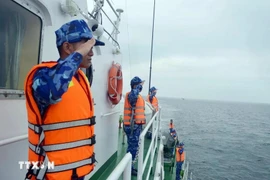
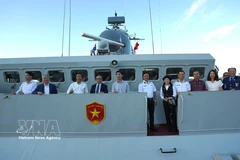
Vietnamese mission staff and overseas Vietnamese in Australia visit Ship 016–Quang Trung (Photo: VNA)

Vietnamese naval ship completes mission at Kakadu Exercise 2026

Ship 016–Quang Trung of Brigade 162 under Naval Region 4 departed Sydney Harbour on the morning of March 25 for home after successfully completing activities within the framework of the Exercise Kakadu Fleet Review 2026 marking the 125th anniversary of the Royal Australian Navy and the multilateral naval exercise Kakadu 2026.

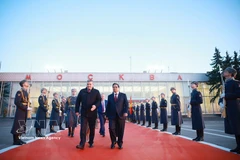
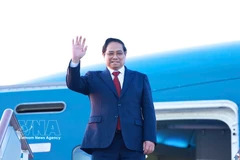
Prime Minister Pham Minh Chinh has wrapped up the official visit to Russia from March 22 to 25. (Photo: VNA)

PM arrives in Hanoi, concluding official visit to Russia

With the outcomes achieved and strong implementation efforts by both sides, the Vietnam – Russia Comprehensive Strategic Partnership is expected to grow further, contributing to socio-economic development in each country as well as to peace, friendship and cooperation in the region and the world.

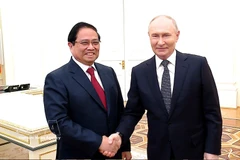
Vietnamese Prime Minister Pham Minh Chinh (left) meets with Russian President Vladimir Putin in Moscow on March 25. (Photo: VNA)

Vietnamese Prime Minister meets Russian President in Moscow

President Putin said Vietnam remains a sincere friend and an important partner of Russia in the Asia-Pacific, stressing that Russia attaches importance to further deepening the comprehensive strategic partnership between the two countries.

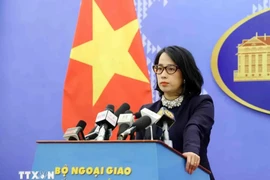
Minister of Foreign Affairs Le Hoai Trung (Source: MoFA)

Vietnamese, Philippine foreign ministers hold phone talks

They agreed to further elevate cooperation across all areas, including politics, diplomacy, defence, security, economy, and people-to-people exchanges, contributing to the celebration of the 50th anniversary of the establishment of diplomatic relations between the two countries (July 12, 1976 – 2026).

Deputy Prime Minister Mai Van Chinh (R) receives Chay Borin, Minister of Cult and Religion of Cambodia, in Hanoi on March 25 (Photo: VNA)

Deputy PM receives Cambodian Minister of Cult and Religion in Hanoi

Deputy PM Mai Van Chinh welcomed Cambodian Minister of Cult and Religion Chay Borin and his entourage on their working visit to Vietnam to implement the cooperation agreement between Vietnam’s Ministry of Ethnic and Religious Affairs and Cambodia’s Ministry of Cult and Religion for the 2026–2030 period.

Vietnamese Ambassador to Laos Nguyen Minh Tam (R) and Thongly Sisoulith, member of the Lao Party Central Committee and Secretary of the Central Committee of the Lao People’s Revolutionary Youth Union at a photo exhibition held as part of the ceremony marking he 95th anniversary of the Ho Chi Minh Communist Youth Union in Vientiane on March 25. (Photo: VNA)

95th anniversary of Ho Chi Minh Communist Youth Union marked in Laos

Vietnamese Ambassador Nguyen Minh Tam described Vietnamese and Lao youth as the “architects” of the future of bilateral ties and called on young Vietnamese in Laos to strengthen their political awareness, pioneer digital transformation and entrepreneurship, and act as ambassadors of friendship between the two countries' people.

Vietnamese Ambassador to Cambodia Nguyen Minh Vu pays a New Year visit to the Royal Cambodian Armed Forces (Photo: VNA)

Vietnam, Cambodia foster friendship, solidarity

At a meeting on March 25 at the headquarters of the Royal Cambodian Armed Forces High Command, Vietnamese Ambassador to Cambodia Nguyen Minh Vu conveyed his best New Year wishes to General Vong Pisen and all officers and soldiers of the Royal Cambodian Armed Forces.