Hanoi (VNA) – The fast-moving consumer goods (FMCG) and food industries are not only pillars of the economy, they are also a direct reflection of people’s living standards. As the digital economy and omnichannel commerce reshape global value chains, strengthening competitiveness has become an urgent, even vital, necessity for domestic businesses in this sector.
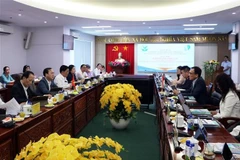
This was the core message delivered at a seminar on enhancing the competitiveness of FMCG and food businesses in the context of digital transformation and omnichannel trade, hosted by Cong Thuong (Industry and Trade) newspaper in Hanoi on June 25.
Rapid turnover
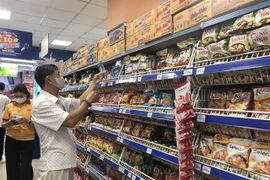
FMCG refers to essential items such as food, beverages, and personal hygiene products – goods that consumers purchase quickly and frequently. They have short usage cycles and fast inventory turnover, allowing businesses and retailers to maintain a constant cash flow. Their inherent market sensitivity also makes them effective indicators of consumer behaviour shifts.
Tran Dieu Huong from the Ministry of Industry and Trade (MoIT)’s Agency for Domestic Market Surveillance and Development, said that from 2021 to 2024, Vietnam’s FMCG retail sales posted average annual growth of 10%. Meanwhile, the GDP expanded 7.09% in 2024, with projections suggesting it may rise by 8% in 2025. Simultaneously, modern retail systems and e-commerce have seen sharp growth. E-commerce increased over 22% last year and is expected to account for 10% of total retail sales this year.
The MoIT highlighted that the FMCG sector contributes significantly to overall retail sales and directly affects social stability and consumption security. A robust market of this kind, it said, helps secure stable and high-quality supply for the population.
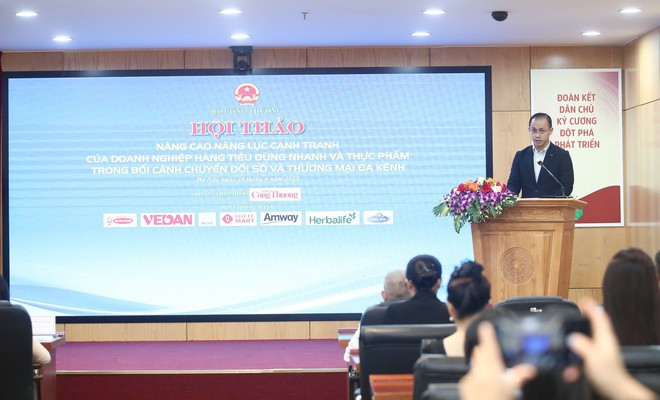
Nguyen Tien Cuong, Deputy Editor-in-Chief of Cong Thuong, noted that several macro trends are shaping today’s consumption landscape, including a marked shift towards “green-clean-healthy” products, rising demand for traceability and quality assurance, and the boom of e-commerce.
To remain competitive, he stressed, enterprises must embrace new technologies, foster innovation in management, invest in digital transformation, and build modern distribution systems.
The pitfall of short-term thinking
In 2024, Vietnam counted 1,293 supermarkets and 276 commercial centres nationwide. Traditional markets, numbering 8,274, continue to play a crucial role in retail, especially in rural and remote areas, serving as the primary channel for everyday commerce.
At the same time, the omnichannel retail model integrated with cashless payment systems are being adopted widely by FMCG firms. Consumers can now shop across multiple platforms – physical stores, websites, and mobile apps.
For modern retailers, e-commerce is no longer just an emerging sales channel but a core component of business strategy, said Dao Thanh Tung, Director of e-commerce at LOTTE Mart Vietnam. He noted that the country now ranks second in Southeast Asia for e-commerce growth, with digital user penetration exceeding 60%.
Tung underscored retailers must not only build a solid technological foundation but also overhaul their entire operational ecosystems. This includes long-term investment cycles (a minimum of 3–5 years), end-to-end synchronisation of enterprise resource planning (ERP), logistics, customer management, and data. Just as crucial is human capital; staff must be trained not only in technical skills but also in digital-era customer service mindset.

Sharing her insights at the event, Doan Trang Ha Thanh, Chief Operating Officer of eCommerce platform Lazada Vietnam, highlighted the importance of sustainable operations on digital platforms, greater digitalisation in logistics and the scaling-up of livestream sales.
Digital distribution not only shortens processing times and reduces operating costs but also expands market reach, especially for perishable items like fresh food. This, she explained, enhances competitiveness and enables businesses to grow at scale.
To support the sector, the MoIT and other relevant government bodies are working to refine legal frameworks for livestreaming and multi-platform e-commerce. They are also pushing for targeted policies to assist small enterprises and rolling out training programmes on digital technologies and business management./.