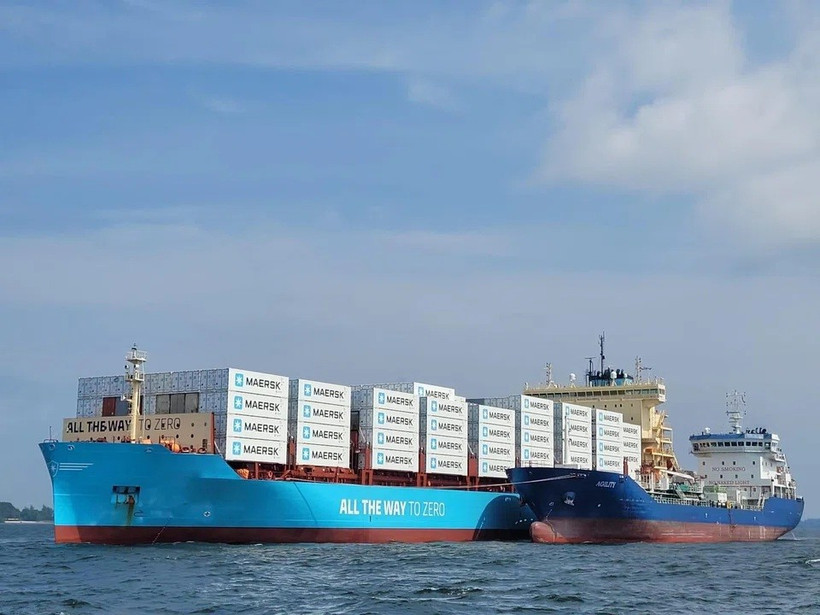
Singapore (VNA) - The Maritime and Port Authority of Singapore (MPA) will issue licences to supply methanol as marine fuel in the Port of Singapore from January 1, 2026, following the Call for Applications launched in March 2025.
This marks an important step towards establishing methanol bunkering at large scale and driving Singapore’s ambition to become a sustainable multi-fuel bunkering hub.
Licences will be awarded to Global Energy Trading Pte Ltd, Golden Island Pte Ltd, and PetroChina International (Singapore) Pte Ltd. The three companies were selected from a total of 13 applicants through a comprehensive evaluation process that assessed supply chain reliability, operational readiness, safety systems, and the sustainability certification of the methanol volume to be supplied. The strong interest reflects the sector’s growing focus on lower-emission marine fuels.
The licences will be valid for a five-year period, from January 1, 2026 to December 31, 2030, subject to successful applicants meeting relevant licensing conditions. The five-year period supports the early development of methanol bunkering by giving licensees sufficient scope to build capabilities, strengthen supply chains, and anchor initial investments as the market develops.
The MPA will continue to review the licensing framework, incorporating operational experience, technological developments, and evolving international standards so that the framework remains demand-responsive, practical, robust, and aligned with global standards and development.
Green methanol, or bio-methanol, is produced from captured carbon and “green hydrogen” – hydrogen generated using renewable energy through water electrolysis. Compared with conventional marine fuels, green methanol has a significantly lower carbon footprint and can cut emissions by up to 65%, according to shipping companies. Under International Maritime Organisation (IMO) guidelines, the shipping sector must reduce emissions by at least 40% by 2030 and reach net zero around 2050 to meet the targets of the 2015 Paris Agreement on climate change./.
Singapore proposed guidelines to manage AI risks in financial sector
To enhance oversight and risk management, financial institutions will need to establish clear processes for identifying AI usage across the organisation, maintain accurate and up-to-date AI inventories, and conduct risk materiality assessments that consider impact, complexity and reliance, it said.