Stronger planning decentralisation must go with coordination mechanisms: NA session

The draft law amending and supplementing several articles of the Law on Urban and Rural Planning represents an important step forward in perfecting a unified, modern and transparent planning framework, aligned with the two-tier local administration model and the trend towards green, smart and sustainable urban development.

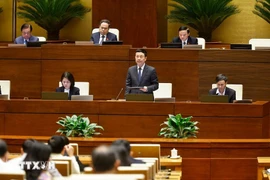
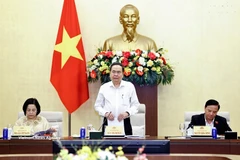
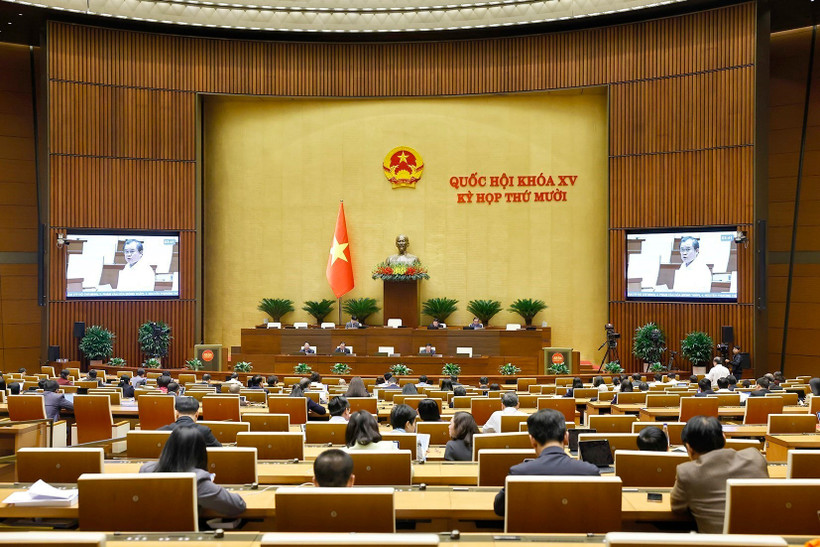
Lawmakers discuss the draft law amending and supplementing several articles of the Law on Urban and Rural Planning during the National Assembly's ongoing 10th session on the afternoon of November 28. (Photo: VNA)

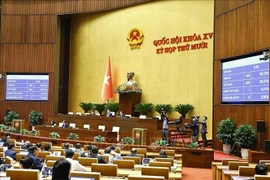
Hanoi (VNA) – The National Assembly (NA) discussed the draft law amending and supplementing several articles of the Law on Urban and Rural Planning during its ongoing 10th session on the afternoon of November 28.

Agreeing on the necessity of amending and adding certain provisions to the existing law, Nguyen Tam Hung, a deputy from Ho Chi Minh City, noted that the draft represents an important step forward in perfecting a unified, modern and transparent planning framework, aligned with the two-tier local administration model and the trend towards green, smart and sustainable urban development.

Hung suggested that the drafting body consider adding a mechanism for identifying a “dominant planning unit” in cases of conflict between layers of planning. Such a mechanism would help resolve legal inconsistencies early in the process of formulation, appraisal, approval and implementation. Deputy Nguyen Hoang Bao Tran, also from the southern economic hub, argued that the draft should incorporate more flexible mechanisms for project groups with highly specialised technical characteristics.

This would not weaken State management; on the contrary, it would remove overlapping procedures and help ensure project progress, Tran said.

Thach Phuoc Binh of Vinh Long province highlighted that the draft law strongly devolves and delegates powers from provincial-level People’s Committees to commune-level ones, allowing communes to formulate and approve certain types of detailed planning. However, he stressed that strong decentralisation must be accompanied by effective coordination mechanisms to avoid fragmented or inconsistent planning.

Deputy Nguyen Thi Suu of Hue city proposed that the draft clearly define the conditions for decentralising planning authority to communes, such as having a specialised administrative apparatus, personnel holding professional practice certificates, and adequate digital infrastructure to serve planning tasks. She also recommended adding a requirement for provincial-level specialised agencies to appraise plans before they are approved at commune level, among other measures./.
VNA

See more

Minister of Foreign Affairs Le Hoai Trung receives Non-Resident Ambassador of Nepal to Vietnam Dhan Bahadur Oli in Hanoi on December 13, 2025. Photo courtesy of the Ministry of Foreign Affairs.

Vietnam, Nepal seek to promote deeper, substantive cooperation

Nepalese leaders attach great importance to relations with Vietnam and wish to learn from its experience and development models in socio-economic development and international integration, said Non-Resident Ambassador of Nepal to Vietnam Dhan Bahadur Oli.

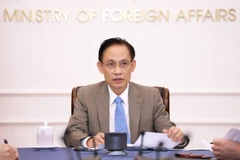
Vietnamese Minister of Foreign Affairs Le Hoai Trung (Photo: VNA)

Vietnamese, Lao foreign ministers hold online talks

The two ministers agreed to maintain close coordination in the time ahead and to expand cooperation under the new framework and orientation, underscoring the significance of the two countries’ “great friendship, special solidarity, comprehensive cooperation, strategic cohesion”.

State President Luong Cuong (fourth from left, first row) and newly-appointed foreign ambassadors in Hanoi on December 12, 2025. (Photo: VNA)

State President receives newly-appointed foreign ambassadors

Receiving Egyptian Ambassador Hany Mostafa Mohamed Mostafa Hassan, President Cuong affirmed that Vietnam highly evaluates Egypt’s role, position, and contributions to regional peace and stability. He also congratulated the African country on its achievements in implementing the 2030 Vision.

An overview of the seminar on the Party’s leadership in ensuring macroeconomic stability, renewing the growth model, restructuring the economy and promoting international integration (Photo: VNA)

Vietnam, Cuba exchange theoretical views on Party’s leadership in macroeconomic stability

The two sides explored in depth the Party’s role in leadership, orientation, oversight and strategic coordination in economic management; approaches to implementing economic restructuring programmes alongside the renewal of the growth model; measures to respond to global economic volatility, inflationary pressures and shifts in global trade; and the building of effective strategic advisory bodies to ensure the Party’s comprehensive leadership in a changing context.

Vietnam’s Ambassador to Australia Pham Hung Tam (Photo: VNA)

Australia–Vietnam Policy Institute serves as bridge for bilateral relations

Established in 2022, AVPI serves as a forum for exchanging ideas among businesses, government agencies, non-profits, universities, and scholars in Australia on Vietnam. The institute acts as a platform for policy dialogue, focusing on research and insights on strategic relations and bilateral economic ties.

General Secretary and Chairman of the NA Office Le Quang Minh chairs the press conference announcing the results of the NA's 10th session (Photo: VNA)

10th session helps strengthen public trust in personnel work, NA’s supreme oversight

Personnel consolidation carried out at the NA's 10th session helps ensure continuous, unified, effective, and efficient leadership of the state apparatus; guarantee smooth and uninterrupted direction and governance; and prevent any leadership gaps in critical areas. All positions elected or approved by the legislature meet the key criteria required within the organisational structure.