Tourism - a growth driver for remote, highland areas

Tourism investment now focuses more on enhancing experiences, upgrading infrastructure, and developing skills for local communities. Projects only generate sustainable development when investment is tied closely to local life and livelihoods.

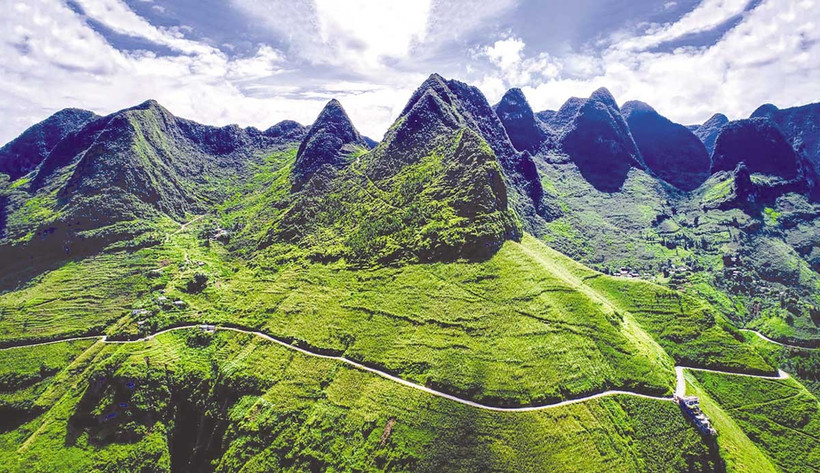
A view of Ma Pi Leng Pass located in Dong Van Karst Plateau Global Geopark (Source: baodautu.vn)

Hanoi (VNA) - Thanks to efforts of local communities and more structured capital inflows, tourism development is emerging as a new growth driver for remote and mountainous areas where indigenous experiences have become a key asset.

Investment flows revitalise mountain tourism

Following a subdued period in 2024 due to natural disasters, tourism in many upland localities has rebounded.

The Dong Van Karst Plateau Global Geopark in Tuyen Quang province was named Asia’s Leading Cultural Destination at the World Travel Awards 2025, providing a major boost to northern mountain tourism. Earlier, the former Ha Giang province, now part of Tuyen Quang, won Asia’s Leading Emerging Tourism Destination (2023) and Asia’s Leading Cultural Destination (2024). These titles, together with administrative boundary adjustments, are helping shape Tuyen Quang as the “ heart of cultural and experiential tourism” of the region.

International awards are seen as a guarantee of credibility and long-term investment potential. As destination brands strengthen, investors have more confidence to commit capital, authorities have grounds to prioritise infrastructure, and communities are encouraged to preserve cultural identity and enhance services.

Tourism investment now focuses more on enhancing experiences, upgrading infrastructure, and developing skills for local communities. Projects only generate sustainable development when investment is tied closely to local life and livelihoods.

The UNESCO-recognised Dong Van Karst Plateau Geopark is viewed as a model of balancing conservation with authentic cultural experiences.

According to Hoang Xuan Don, Director of the Management Board, the area maintains its ethnic identity through everyday life rather than staged displays. Investment, he noted, should allow culture to “continue breathing” through training in professional tourism services and preserving traditional lifestyles - key elements that draw visitors back.

After the natural disasters in 2024, many businesses supported local communities through charitable tourism programmes. Travellers combined exploration with contributions, such as donating school supplies, purchasing OCOP products, and using local services. Each homestay, woven item, and local meal created sustainable micro-investments that supported local livelihoods.

When authorities, schools, social organisations and travel companies coordinated their efforts, assistance became more effective, avoiding fragmentation. This approach was not only humanitarian but also a simple and scalable model of sustainable social investment, helping local communities build confidence and turn tourism into a bridge between goodwill and development.

Infrastructure, tourism skills, and cultural identity – key to tourism growth

As recognition and capital flow into upland destinations, the key question is how investment is used to generate real value. In mountainous areas, where conditions remain challenging, tourism development relies on practical improvements rather than large-scale constructions.

Priority is given to visitor infrastructure, including widened access roads, compact parking areas, safe viewpoints, bilingual signage, Wi-Fi coverage and standardised waste and wastewater treatment to protect the environment.

Equally important is “soft infrastructure”. Homestay owners join training on hygiene, cuisine and safety, intercultural communication for international guests, OCOP products receive support in packaging and traceability, and local youth are guided in digital storytelling to promote regional products.

Developing diverse experiences is another focus. Visitors can trek, ride motorbikes along the “Ha Giang Loop” (now within Tuyen Quang), explore caves, join evening cultural activities or attend workshops on traditional crafts. Each activity conveys local stories, allowing travellers to immerse themselves in culture.

Sustainable development also requires effective destination management, including safety and hygiene indicators, benefit-sharing mechanisms and a cultural preservation fund supported by accommodation revenue, entrance fees and experience services./.
VNA

See more

A performance at the year-end review programme in Sydney on December 14, co-organised by the Vietnam-Australia Scholars & Experts Association and Vietnam-Australia Cultural Exchange Organisation. (Photo: VNA)

Gathering honours knowledge, culture, community spirit of OVs in Australia

Addressing the gathering that drew more than 300 guests, Vietnamese Consul General in Sydney Nguyen Thanh Tung highlighted contributions of the Vietnamese community in Australia, particularly intellectuals and professionals, to the host society as well as cooperation between the two countries.

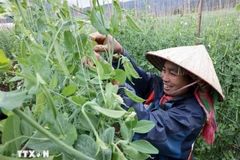
Agricultural production models help farmer access modern technology to improve output. (Photo: VNA)

Three national target programmes basically meet, exceed 2021-2025 goals

A report from the Central Steering Committee for National Target Programmes for the 2021–2025 period showed that poverty reduction in ethnic minority-inhabited areas averaged 3.2% per year. Per capita income among ethnic minorities is estimated to reach 45.9 million VND (1,760 USD) in 2025, a 3.3-fold increase from the 2020 level, well surpassing the goal of more than doubling.

Illustrative image (Photo: VNA)

Noi Bai Airport to operate expanded int’l terminal with comprehensive automation

The upgrade follows directives from the Prime Minister and the Ministry of Construction and is designed to ease pressure on existing infrastructure by lifting the terminal’s annual capacity from 10 million to 15 million passengers. For the first time, a full suite of automated technologies has been deployed across the terminal, giving travellers greater control over their procedures from check-in to boarding.

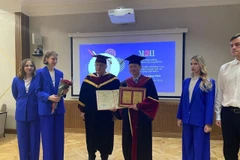
Professor Dr. Tran Hong Thai receives the honorary doctorate title and certificate from Professor Nikolay Rogalev of MPEI. (Photo published by VNA)

Vietnamese professor awarded honorary doctorate by Moscow institute

Professor Dr. Tran Hong Thai, Standing Vice President of the Vietnam Academy of Science and Technology (VAST) was granted an Honorary Doctorate by The Moscow Power Engineering Institute (MPEI) for his outstanding contributions to scientific development, education and international cooperation in the energy sector.

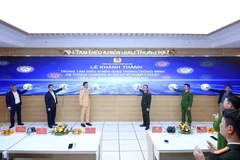
Delegates perform the inauguration protocol for the Hanoi smart traffic control centre in the capital on December 13. (Photo: VNA)

Hanoi officially launches smart traffic control centre

Equipped with 1,837 AI-powered cameras installed at 195 key intersections, the centre serves as the “brain” for real-time monitoring of traffic conditions and urban order. Through the system, police officers can observe traffic on major roads and junctions, promptly detect congestion, violations, accidents and incidents, and take timely response measures.

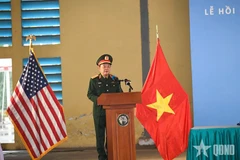
Vietnamese Deputy Minister of National Defence Sen. Lieut. Gen. Hoang Xuan Chien speaks at the event. (Photo: VNA)

Vietnam repatriates remains of US MIA servicemen

Vietnamese Deputy Minister of National Defence Sen. Lieut. Gen. Hoang Xuan Chien voiced his confidence that sustained goodwill and joint action would allow both sides to tackle lingering war consequences while broadening cooperation across other domains, which, he described as the best way to heal physical, emotional, and societal scars and fostering the stronger Vietnam - US relationship.

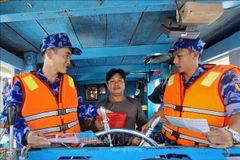
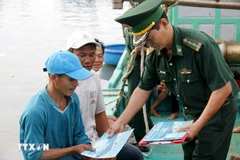
Law enforcement forces at sea in Ho Chi Minh City are working to raise awareness among fishermen about combating illegal, unreported, and unregulated (IUU) fishing (Photo: VNA)

HCM City tackles fishing violations at roots

As of December 9, all of the 4,475 fishing vessels in HCM City had registered and updated in the VNFishbase database, of them 4,268 licensed. The remainder, classified as ineligible, are strictly monitored and kept moored locally, with no permission to put to sea.

Vice Chairman of the municipal People’s Committee Hoang Nguyen Dinh addresses the event (Photo: VNA)

HCM City takes tough measures to curb IUU fishing violations

Ho Chi Minh City is mobilising its entire political system to intensify the fight against illegal, unreported and unregulated (IUU) fishing, aiming to join the national effort to have the European Commission’s “yellow card” removed.

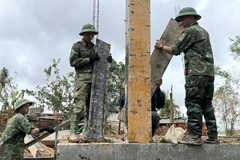
Soldiers of Division 315 helping build a house for a flood-hit family in Dak Lak (Photo: VNA)

Dak Lak launches all-out, rapid “Quang Trung Campaign”

The central province of Dak Lak is mobilising all resources to swiftly rebuild and repair houses damaged by Storm Kalmaegi (Storm No. 13) and the historic floods in November, under the “Quang Trung Campaign” directed by the Prime Minister.