VNA


Addressing the first meeting of the National Steering Committee on Data linked virtually with all 34 cities and provinces nationwide, PM Pham Minh Chinh, who is also head of the committee, stressed that the Party’s policies and guidelines and the State’s laws have long articulated a strategic vision for data development. He cited Resolution No. 57-NQ/TW and the recently enacted Law on Data, both of which designate data as a “new means of production” and a strategic resource that must be transformed into high-value assets.

In 2026, monetary policy will continue to be implemented in a proactive, flexible, timely and effective manner to help stabilise the macroeconomy, keep inflation under control, support economic growth and advance the restructuring of banks under compulsory transfer.

The closer coordination between the Vietnamese Business and Entrepreneurs Association in the UK (VBUK) and the Vietnam Business Association in Belgium (VBAB) would help enhance the standing of the Vietnamese business community in Europe.
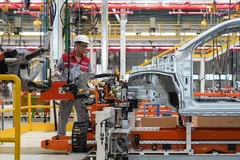
Despite a volatile global environment, Vietnam recorded solid gains in 2025. With flexible and proactive policies under the leadership of the Communist Party of Vietnam and the Government, all 15 key socio-economic targets were met or exceeded, while GDP expanded by about 8.02%, surpassing expectations.

In 2025, Da Nang implemented targeted promotion campaigns to attract Muslim travellers from Indonesia, Malaysia, CIS countries and the Middle East, welcoming more than 617,000 visitors from these markets, supported by newly opened direct and charter air routes.

The CIS region, which includes Eastern Europe and Central Asia, has potential for gaming developers from Vietnam as this market displays user behaviour patterns that are highly favourable for mobile gaming growth, particularly around major holiday periods.
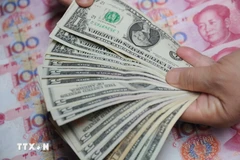
With the current trading band of +/- 5%, the ceiling rate applicable for commercial banks during the day is 26,385 VND/USD, and the floor rate 23,873 VND/USD.

As the Lunar New Year (Tet) approaches, financial and banking scams in Vietnam are showing a sharp upward trend, prompting banks and law enforcement agencies to issue repeated warnings.
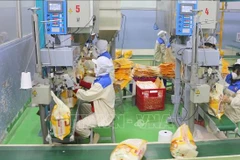
Vietnam exported more than 8.06 million tonnes of rice in 2025, earning over 4.1 billion USD.

VASEP forecasts that pangasius export turnover could reach around 2.3 billion USD in 2026, supported by tightening global whitefish supplies and improving demand in several key markets.
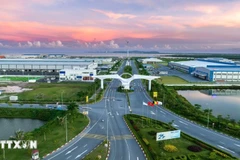
Hai Phong’s investment appeal is underpinned by a rapidly expanding development space, including the Southern Coastal Economic Zone covering more than 20,000 hectares, a planned free trade zone, deep-water ports at Lach Huyen, and 12 industrial parks newly established in 2025.
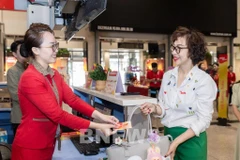
During the recent New Year 2026 holiday peak, Vietjet added 380 flights, equivalent to nearly 78,000 additional seats, on many key domestic routes linking Hanoi and Ho Chi Minh City with destinations such as Vinh, Thanh Hoa, Hai Phong, Da Nang, Phu Quoc, Nha Trang and Da Lat.

According to the State Bank of Vietnam (SBV), by the end of November 2025, outstanding green credit was estimated at around 750 trillion VND (28.55 billion USD), with an average growth rate exceeding that of overall credit in the economy.

Traceability data are evolving into a critical layer of protection, helping exporters reduce tariff risks, shorten inspection times and strengthen proof of origin, thereby avoiding exclusion from formal distribution networks.
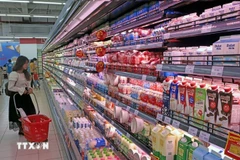
According to a report on recently released by the Ministry of Industry and Trade’s Agency for Domestic Market Surveillance and Development, the size of the market reached more than 7 quadrillion VND (about 266 billion USD) in 2025, up around 10% compared with 2024.
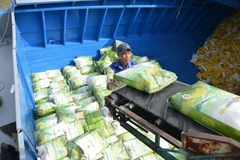
The Vietnam - Israel Free Trade Agreement (VIFTA), which took effect in late 2024, is poised to provide a fresh boost to agricultural exports, with rice at the forefront.
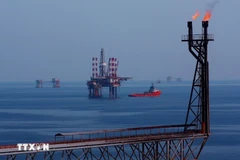
Resolution 79 is described as a “clear action declaration” by the Politburo, saying the state economy is not only responsible for maintaining macroeconomic stability, but must also become the force leading a new growth model that is green and sustainable.
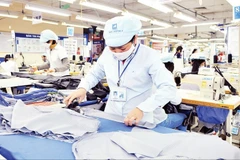
In 2025, seafood exports to China alone exceeded 2.2 billion USD, up about 33% compared to 2024. Shipments to Japan fetched nearly 1.7 billion USD, a year-on-year increase of 14.6%, while those to the Republic of Korea and Australia grew by 9.6% and 3.2%, respectively.
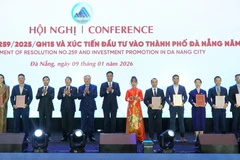
According to Chairman of the Da Nang People’s Committee Pham Duc An, the city prioritises building sustainable economic ecosystems and focuses on key breakthrough sectors with strong spillover effects, including high technology and digital transformation, logistics, urban infrastructure, finance, processing and manufacturing industries, high-tech agriculture, and the pharmaceutical and medicinal herb industry.
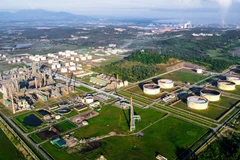
Resolution 79 is not only about SOEs. At a deeper level, it is about how Vietnam reorganises its development drivers in a world that is changing at breakneck speed.