Hanoi (VNA) – Tuyen Quang’s state budget revenue was estimated at more than 5.55 trillion VND (210.8 million USD) in the first 10 months of 2025, reaching 91% of the target assigned by the Prime Minister and 62.5% of the plan set by the provincial People’s Committee.
Of the total, collection from domestic sources totalled nearly 4.94 trillion VND, achieving 84.4% of the PM’s target and 58% of the provincial target, up 5.3% compared to the same period in 2024.
The positive results have played a key role in securing resources for socio-economic development in the northern mountainous locality.
Several revenue items have shown strong progress, achieving over 85% of the target assigned by the provincial People’s Committee, including collections from state-owned enterprises managed by central and local authorities, the non-state economic sector, personal income tax, car registration fees, charge and fee collections, land and water surface rental, sales or lease of state-owned housing, lottery operations, dividends and shared profits, and state capital recovery.
Some revenue items saw slow progress, including revenues from foreign-invested enterprises, environmental protection tax, land use fees, and mineral exploitation fees.
Dang Tran Phuong Lien, deputy head of the professional, budgetary, legal, and tax affairs division of Tuyen Quang, stated that in 2025, the National Assembly and the Government have continued to introduce many fiscal support policies to help address difficulties for production and business. As a result, Tuyen Quang province’s state budget revenue was also impacted during the reviewed period.
Deputy head for taxation of the province Vu Hong Diep said that to meet the budget collection target, the local tax authority will strengthen coordination with relevant departments and all-level administrations in collection management, with a particular focus on reviewing untapped revenue sources and preventing losses in high-risk areas.
Special attention will be paid to land-related revenue, the acceleration of land-use rights auctions in urban and residential areas, as well as sales of assets attached to land and other public properties in the province, she said.
From now until the end of 2025, the provincial taxation sector will strictly implement directives from the provincial Party Committee, the Ministry of Finance, and the provincial People’s Committee, assigning specific revenue targets for the last quarter to each unit to ensure the fulfilment of targets.
In parallel, the department will continue to strengthen communications about new tax policies such as the amended Law on Value Added Tax and the revised Law on Corporate Income Tax, while guiding taxpayers on completing administrative procedures via the sector’s online portal.
Efforts will be focused on assisting business households and individuals in transitioning to the new tax declaration and payment methods starting January 1, 2026.
The sector will also continue to ensure the effective use of e-invoices generated from cash registers, standardise individual tax codes and organisation identification numbers, and promptly handle electronic administrative procedures via the sector’s online portal and the National Public Service Portal.
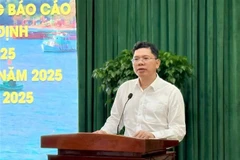
At a working session with representatives from local departments and sectors to review the 10-month state budget collection and discuss measures to better the performance in the remaining months of the year, Standing Vice Chairman of the provincial People’s Committee Nguyen Manh Tuan urged all sectors to strengthen coordination and address obstacles to ensure the budget revenue targets for 2025 are met.
He requested timely advice be submitted to the provincial People’s Committee to strengthen budget management, prevent revenue loss, ensure accurate and timely collection, and fully tap into potential revenue sources such as land, e-commerce, and mineral extraction. He also underlined the need to enhance tax, fee, and cost inspections, implement administrative reforms, and speed up digital transformation and e-invoicing.
He asked departments and local authorities to accelerate the disbursement of public investment, especially for key projects, review the projects with land allocation and leasing decisions to remove obstacles, and promote public asset and mining rights auctions to increase the local budget.
Tuan also stressed the importance of ensuring efficient payment and fund management, and budget execution to exceed the province’s socio-economic targets for this year./.