Two-tier local government – A historic reform: Chinese scholar

The adoption of the two-tier local government model marks the beginning of a new era in Vietnam, as envisioned by its leaders. Although simple in appearance, this step represents a major leap forward in the nation’s development journey, promising benefits not only for current generations but also for those to come, a Chinese expert has said.

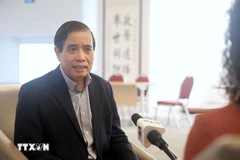
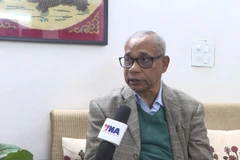
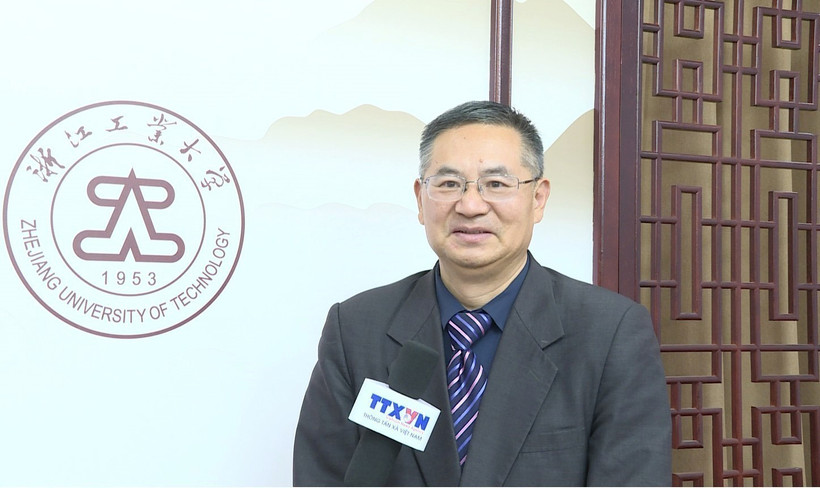
Prof. Dr Cheng Hanping, Executive Director of the Regional and Country Research Institute and Director of the Vietnam Research Centre at Zhejiang University of Technology. (Photo: VNA)

Beijing (VNA) – Vietnam’s sweeping administrative reform, which came into effect on July 1 with the merger of its 63 provinces and centrally-run cities into 34 units and the official transition to a two-tier local government model comprising provincial and communal levels, has drawn widespread attention in Chinese public and academic circles.

In an interview with the Vietnam News Agency correspondent in Beijing, Prof. Dr Cheng Hanping, Executive Director of the Regional and Country Research Institute and Director of the Vietnam Research Centre at Zhejiang University of Technology, described the move as a historic reform. He noted that the change reflects the strong resolve of the Central Committee of the Communist Party of Vietnam (CPV) and the bold vision of its leadership for the country’s future.

Professor Cheng highlighted that the adoption of the two-tier system demonstrates the CPV’s strong implementation capacity across all levels.

This marks the beginning of a new era in Vietnam, as envisioned by its leaders, he said, elaborating that although simple in appearance, this step represents a major leap forward in the nation’s development journey, promising benefits not only for current generations but also for those to come.

He further assessed that such a strong reform will have a significant impact on Vietnam’s future development in several key areas. It will reduce bureaucratic redundancy, ease the burden on taxpayers, and help streamline policy implementation, ensuring that all sectors focus on serving the people and advancing national development.

Importantly, Cheng noted, the reform sends a clear political message: public officials are accountable and can be removed if they fail to perform.

Commenting on the two-tier local government model, the Chinese scholar called it a valuable example for the world, especially for neighbouring China, which shares similar conditions. Vietnam, he said, has taken bold and courageous measures to eliminate overlapping institutions, cut unnecessary civil servants, reduce the burden on government agencies, and lower taxes for the people.

This reform is also a message that civil servants must prove their competence and make a real difference in their work, Cheng added./.
VNA

See more

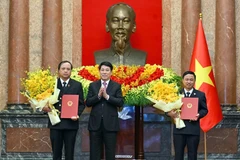
State President Luong Cuong (middle) hands over appointment decisions to new Deputy Chief Justices Le Tien (left) and Nguyen Bien Thuy on January 7. (Photo: VNA)

State President appoints two deputy chief justices

President Luong Cuong described the appointees as highly trained legal experts with strong qualifications who have advanced through the ranks while accumulating substantial hands-on experience in the judicial system.

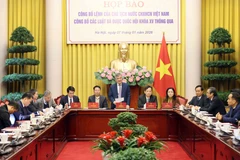
The January 7 press conference to announce the State President’s orders promulgating 12 laws adopted at the 10th session of the 15th National Assembly (Photo: VNA)

State President’s Orders promulgating 12 newly-adopted laws announced

The Press Law comprises four chapters and 51 articles and will take effect from July 1, 2026. The law reaffirms the revolutionary nature and historical role of Vietnam’s press, promoting the development of professional, humane and modern journalism. It also strengthens citizens’ rights, including the right to request corrections.

Secretary-General Rachel Nguyen Isenschmid (in pink). (Photo: VNA)

14th National Party Congress: High hopes for breakthrough decisions

Clear strategies on sustainable and self-reliant development, coupled with continued investment in strategic infrastructure, especially digital, energy, and logistics, are expected to provide a solid foundation for Vietnam’s long-term advancement and deeper international integration by 2045.

Professor Vu Minh Khuong of the Lee Kuan Yew School of Public Policy in Singapore (Photo: VNA)

Vietnam shines on global stage amid challenges: expert

From minor shocks such as the global minimum tax to vaccines, tariffs, and other fluctuations, Vietnam has maintained steady composure, with the Vietnamese people growing even more united in support of their leadership during difficult times.

Prime Minister Pham Minh Chinh (R) receives Canadian Secretary of State for International Development Randeep Sarai (Photo: VNA)

Prime Minister suggests Vietnam, Canada advance new growth drivers

The Vietnamese Government highly values Canada’s official development assistance (ODA) projects implemented in Vietnam in recent years, which, PM Chinh affirmed, have delivered tangible and practical results, making an important contribution to the implementation of Vietnam’s Socio-Economic Development Plan for the 2021–2025 period and its National Development Strategy for 2021–2030.

Politburo member and Standing member of the Party Central Committee’s Secretariat Tran Cam Tu (C) inspects preparations for the upcoming 14th National Party Congress at the National Convention Centre. (Photo: VNA)

Senior official inspects preparations for 14th National Party Congress

Tu therefore urged all relevant units to strengthen coordination, uphold a strong sense of responsibility, and complete ceremonial decorations, sound and lighting systems in strict accordance with approved designs and updated instructions, ensuring harmony, solemnity and protocol compliance.

Professor and Academician Boviengkham Vongdara, President of the Lao–Vietnam Friendship Association, in an interview with the Vietnam News Agency (VNA)'s resident correspondents in Vientiane. (Photo: VNA)

Lao scholar highlights Laos-Vietnam ties with “strategic cohesion”

The bilateral ties have long been defined as “great friendship, special solidarity and comprehensive cooperation”. Introducing “strategic cohesion,” he said, represents a timely and natural evolution, reflecting new requirements placed on the bilateral ties amid rapid, complex and unpredictable changes in the global and regional landscapes.

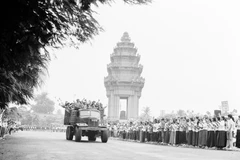
Participants in the ceremony marking the 80th anniversary of the first General Election to elect the Vietnamese NA (January 6, 1946–2026) in Hanoi on January 6, 2025 (Photo: VNA)

National Assembly embodies national intelligence, aspirations: top legislator

The success of the first general election firmly testified to the people's right to mastery as the nation rose from a history of subjugation to claim independence and establish its own state with a full legal basis to represent all citizens at home and internationally, becoming the first democratic state in Southeast Asia, said Chairman Tran Thanh Man.

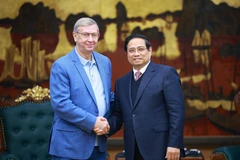
Prime Minister Pham Minh Chinh (R) and founder of AFK Sistema Vladimir Petrovich Evtushenkov (Photo: VNA)

PM woos Russian conglomerate on tech, energy ties

PM Chinh emphasised that Vietnam deeply values its long-standing friendship with Russia and is committed to strengthening it. He commended AFK Sistema’s swift growth and its collaboration with leading Vietnamese groups and enterprises to enhance broad cooperation, following the direction set by Party General Secretary To Lam during his May 2025 visit to Russia.