Vietnam, India aim to advance comprehensive strategic partnership: Ambassador

According to the diplomat, innovation, critical and emerging technologies, renewable energy, and healthcare present tremendous opportunities for bilateral cooperation.

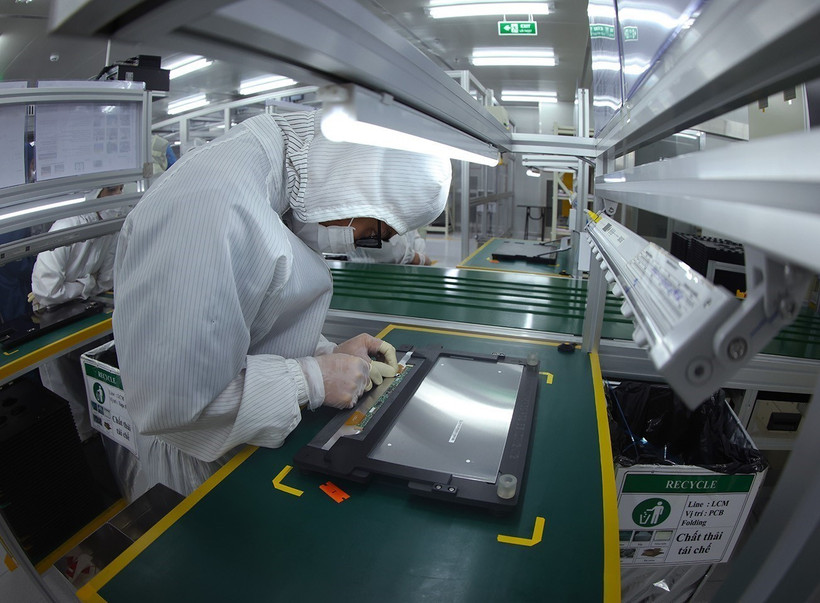
A worker assembles laptops at the factory of the Heesung Electronics Vietnam Co. Ltd in the Trang Due Industrial Park, Hai Phong city. Electronic devices are among Vietnam's main exports to India. (Photo: VNA)

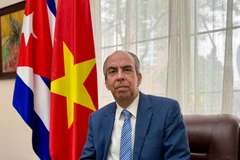
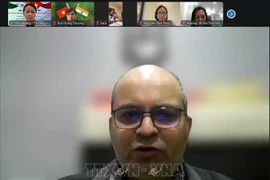
Hanoi (VNA) – Vietnam and India should set a clear direction to further elevate their bilateral relationship as they approach a decade of their Comprehensive Strategic Partnership, Indian Ambassador to Vietnam Tshering W. Sherpa has said.

In a recent interview with the Vietnam News Agency on the occasion of the 2026 New Year, the diplomat emphasised the need to further strengthen the traditional pillars of the India – Vietnam relationship, anchored in strategic trust, long-standing cultural and historical ties, and growing cooperation in emerging areas.

India was among the first countries to establish a Comprehensive Strategic Partnership with Vietnam in 2016, building on a long-standing friendship and close ties that predated the formal establishment of diplomatic relations in 1972.

“What has stood out most in bilateral relations is the expansion and deepening of engagements,” Ambassador Sherpa stressed. He said he was pleased that Vietnam is an important partner in India’s “Act East Policy” and in the Indo-Pacific region, grounded in their shared interest in promoting regional peace, stability, and prosperity.

Recapping the achievements Vietnam and India have made across various fields — from political engagement, development partnership, defence and security, trade and investment to extensive people-to-people exchanges — Ambassador Sherpa expressed his belief that the bilateral relationship will continue to be nurtured and further strengthened in the future.

According to the diplomat, innovation, critical and emerging technologies, renewable energy, and healthcare present tremendous opportunities for bilateral cooperation. Within these priority areas, artificial intelligence (AI), quantum computing, next-generation chip design, rare-earth processing, advanced manufacturing, space technologies, digital solutions for good governance, as well as data and cybersecurity stand out as particularly promising.
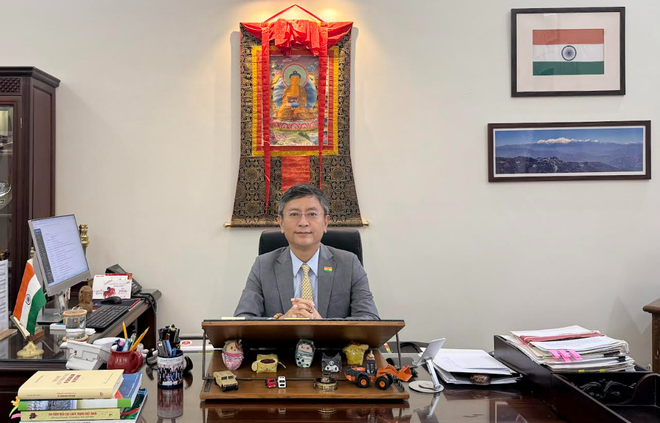
indian-ambassador-to-vietnam-tshering-w-sherpa.png
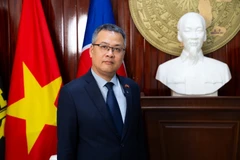
Indian Ambassador to Vietnam Tshering W. Sherpa (Photo courtesy of the Indian Embassy)

However, he noted that trade and commercial ties between India and Vietnam have yet to reach their full potential to match the depth of their diplomatic relationship; therefore, promoting and strengthening linkages between the two countries’ business communities should be a top priority.

Besides notable progress in cooperation in digital infrastructure, fintech, electric vehicles, automotive manufacturing, pharmaceuticals, and electronics, financial innovation and digital payments were also identified as promising areas of cooperation, offering sustainable benefits for both countries, he added.

He revealed that India is working with Vietnam and other ASEAN countries to update and review the 2009 ASEAN – India Trade in Goods Agreement (AITIGA) to align it with contemporary developments. The review aims to enhance trade and business resilience amid market fluctuations in an increasingly uncertain world and to ensure supply chain stability, he said, expressing hope for Vietnam’s continued constructive support throughout the process.

Moving forward, the two countries should also further strengthen cooperation in new areas, including renewable and low-carbon energy, science and technology, and innovation, identifying these as key priority areas in the time to come.

Regarding cultural and educational cooperation, Sherpa affirmed India’s commitment to offering more scholarships to Vietnam under the Indian Technical and Economic Cooperation (ITEC) framework./.

VNA

See more

Assaf Talgam, a historian and a journalist of Zo HaDerekh, the official newspaper of the Communist Party of Israel. (Photo: VNA)

CPV's leadership - central factor shaping Vietnam’s enduring stability, impressive achievements: Israeli historian

Talgam said that from a comparative and historical perspective, the CPV’s leadership has been the central factor underpinning the country’s enduring political stability and impressive development trajectory. In a world marked by rapid and unpredictable changes, few political organisations have been able to maintain continuity of leadership while simultaneously adapting their governance approach as effectively as the CPV.

Prime Minister Pham Minh Chinh presents Certificates of merit from the Government’s Party Committee to individuals with outstanding achievements. (Photo: VNA)

Prime Minister outlines five specific strategies for Government’s Party Committee

PM Chinh noted that the Government’s Party Committee exercised comprehensive leadership over the Government's operations, proactively and effectively responded to emerging issues, with a particular focus on socio-economic development. As a result, 2025 witnessed high economic growth, sustained macroeconomic stability and ensured major balances.

Politburo member, Standing member of the Party Central Committee’s Secretariat Tran Cam Tu attends the rehearsal. (Photo: VNA)

Security forces stage rehearsal for 14th National Party Congress

The People’s Public Security forces have been praised for their core role in closely working with the army and relevant ministries and agencies, with success in thwarting hostile plots at an early stage, drastically combating fake news and disinformation surrounding the 14th National Party Congress.

Senior Lieutenant General Le Quoc Hung (L), member of the Communist Party of Vietnam (CPV) Central Committee and Deputy Minister of Public Security, and General Vilay Lakhamfong, Politburo member and permanent member of the Secretariat of the Lao People’s Revolutionary Party (LPRP) Central Committee. (Photo: VNA)

Deputy Minister of Public Security congratulates Lao officials following succesful 12th National Party Congress

Deputy Minister of Public Security Senior Lieutenant General Le Quoc Hungconveyed the warmest congratulations of the Central Public Security Party Committee, the Ministry of Public Security leadership, and the Vietnamese People’s Public Security Forces to Lakhamfong and other Lao public security leaders on the congress’s success and their election to key leadership positions for the new term.

A session of the National Assembly Standing Committee. (Photo: VNA)

NA Standing Committee's key work agenda for 2026 approved

A major focus will be preparations for the election of deputies to the 16th NA and to People’s Councils at all levels for the 2026–2031 term. The NASC will coordinate with the National Election Council, the Government, the Vietnam Fatherland Front Central Committee, and relevant agencies and organisations to continue implementing the election plan, organise oversight of the electoral process, and carry out its duties and powers as prescribed.