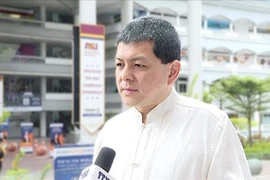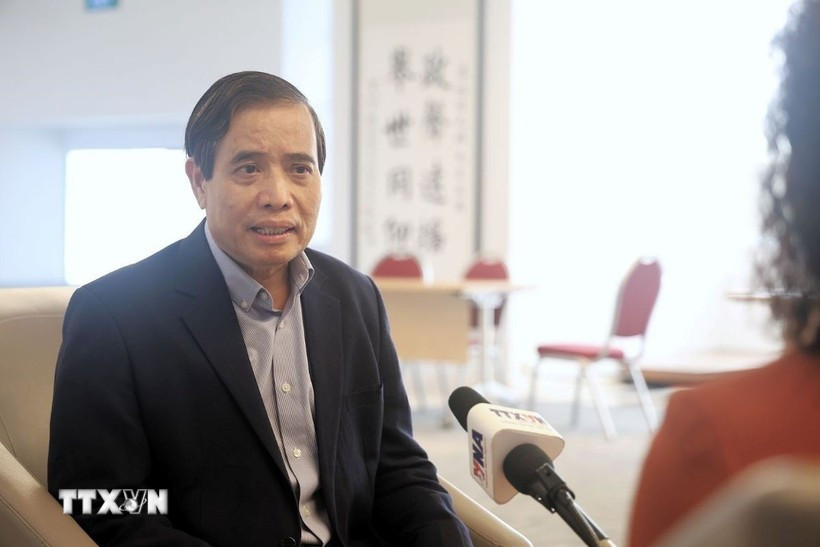
Singapore (VNA) – Vietnam, under the leadership of the Communist Party of Vietnam (CPV), has overcome many challenges and emerged as a bright spot in the global panorama, laying a solid foundation for a new period of development, according to Professor Vu Minh Khuong of the Lee Kuan Yew School of Public Policy in Singapore.
In an interview granted to the Vietnam News Agency on the thresholds of the 14th National Party Congress, Khuong noted the word “resolute” to describe the CPV’s leadership and Vietnam’s trajectory during the turbulent 2020–2025 term. He expressed his belief that the country can overcome any challenges.
According to the expert, although Vietnam may face temporary challenges, the country will emerge stronger and more resilient—a fact recognised by the world. From minor shocks such as the global minimum tax to vaccines, tariffs, and other fluctuations, Vietnam has maintained steady composure, with the Vietnamese people growing even more united in support of their leadership during difficult times.
This has been a long-standing cultural trait of the Vietnamese people—truly supportive and united in times of hardship, Khuong said, noting that this distinctive characteristic has shone particularly brightly over the past five years.
Reflecting on the COVID-19 pandemic at the start of the 13th tenure, he pointed out that Vietnam’s resilience depended not only on available resources but also on domestic and international support. He said the principles of "Vietnam befriends all countries" and "people help one another" proved invaluable, demonstrating the nation’s strength to overcome obstacles and continue progressing despite challenges.
The expert observed that over the past five years, the global economy did not enter a recession but experienced slower growth, and Vietnam clearly stood out as a bright spot during this period.
He said the country is pursuing a clear vision of becoming a industrialised and developed nation, with the momentum of this vision propelling the country forward.
The expert highlighted Vietnam’s strong digital infrastructure and widespread online accessibility, adding that the high usage of the Internet, mobile phones, and tools like ChatGPT reflects the country’s ability to embrace new technologies and innovations to drive progress.
The construction of 3,000 km of roads connecting most provinces and cities nationwide has been widely recognised as a major success. Khuong highlighted the impressive speed of infrastructure development—from airports and highways to 500kV power lines. He expressed the hope that this progress will soon extend to the subway systems in Hanoi and Ho Chi Minh City.
The professor also highly valued the anti-corruption efforts during the five years, holding that Vietnam has made significant progress, with no “off-limits zones” and all violations being addressed, regardless of rank./.