Hanoi (VNA) – The two-tier local government model, to become operational from July 1, will bring the government closer to the people and enable it to deliver better public services, Permanent Deputy Prime Minister Nguyen Hoa Binh told the press on the thresholds of this historic milestone.
According to the Deputy PM, while Vietnam’s existing political system has proved effective over several decades, it has also revealed certain inefficiencies. He pointed to structural issues, including a cumbersome administrative hierarchy and overstaffing, making it it difficult to implement salary reform and streamline governance.
Given this, the Party Central Committee and the Politburo decided to conduct an organisational revolution to launch the two-tier local government model. The new model, he explained, is designed to simplify the administrative structure, eliminate the intermediary district level, and bring government closer to the people. Under the restructuring, the number of provinces and centrally run cities will be reduced from 63 to 34, and the number of communes will fall from over 10,000 to 3,321.
To enable the transition, a broad legislative reform process has been carried out, including amendments to the Constitution, the Law on Organisation of Local Governments, and the Law on Organisation of the Government. In addition, 40 Government decrees have been issued, with 28 of them focusing specifically on the decentralisation and delegation of power.
Deputy PM Binh said the reform is expected to create an opportunity to restructure the public workforce. Officials who are nearing retirement, struggling with health problems, or performing poorly may opt for early retirement. This, he noted, will allow space to bring in younger and better-qualified professionals as many recent graduates are well-trained and technologically adept.
He also stressed that the reform was part of a broader vision to establish larger and integrated economic regions by linking their strengths. Most of the newly merged provinces will have populations of over 2–3 million and diverse economies encompassing mountainous, lowland, and coastal areas.
Some of these new regions, he said, will be competitive on a regional scale. For example, Binh Duong and Ba Ria - Vung Tau are to be merged into Ho Chi Minh City, The merger of Binh Duong is expected to create a major industrial hub while Vung Tau—already an industrial and tourist centre—is planning a free trade zone modelled after Da Nang. These changes are intended to support national economic restructuring, alongside major initiatives in infrastructure, science and technology, digital transformation, high-speed rail, atomic energy, and financial centre development.
Preparations for the transition have been extensive, he said, noting that the Politburo has dispatched 19 working groups led by senior members to provide direct oversight at the local level. These groups have supported provinces and communes in managing the logistics of administrative mergers, preparing leadership appointments, and drafting Party congress documents.
He said weekly progress reports have been submitted to the Politburo, which scheduled official announcements of the resolutions and decisions on administrative unit reorganisation, the establishment of new Party organisations, and personnel appointments for June 30, 2025. From July 1, the newly structured governments at provincial and commune levels will begin operations. Party and State leaders are expected to attend local events to mark the occasion.
The Deputy PM said that local authorities and Party Committees have shown a strong sense of responsibility throughout the process. Public surveys have yielded overwhelmingly high levels of support, with some areas reporting unanimous approval and most others registering agreement rates at 98–99%.
Ceremonial preparations for June 30 were finalised, with several localities and private businesses proposing celebratory activities, including fireworks displays, to mark what many see as the foundation of new administrative entities. The Vietnam Buddhist Sangha announced plans for a symbolic bell-ringing ceremony on July 1.
According to Deputy PM Binh, public and business communities have broadly welcomed the reforms. Foreign leaders, he said, have also expressed admiration for the bold and clear-sighted move, describing it as a strong and forward-thinking decision by the Vietnamese Party and State.
Infrastructure development has been a particular focus of the preparatory phase. He cited the example of the newly approved Quy Nhon – Pleiku Expressway, a 125-kilometre route connecting Binh Dinh and Gia Lai provinces, which will significantly improve connectivity and facilitate development in the Central Highlands.
He added that the Government intends to simultaneously start work on 80 new infrastructure projects on August 19, underscoring the emphasis on transport connectivity. He emphasised that while administrative unit mergers will create new economic spaces, infrastructure connectivity is critical to unlocking their potential – whether through national highways, coastal roads or high-speed rail links.
Deputy PM Binh expressed confidence that with the thorough preparations in all fields, the new model will lead to stronger economic momentum and improved public service delivery.
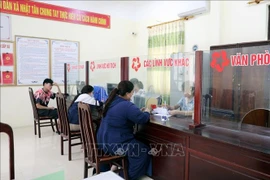
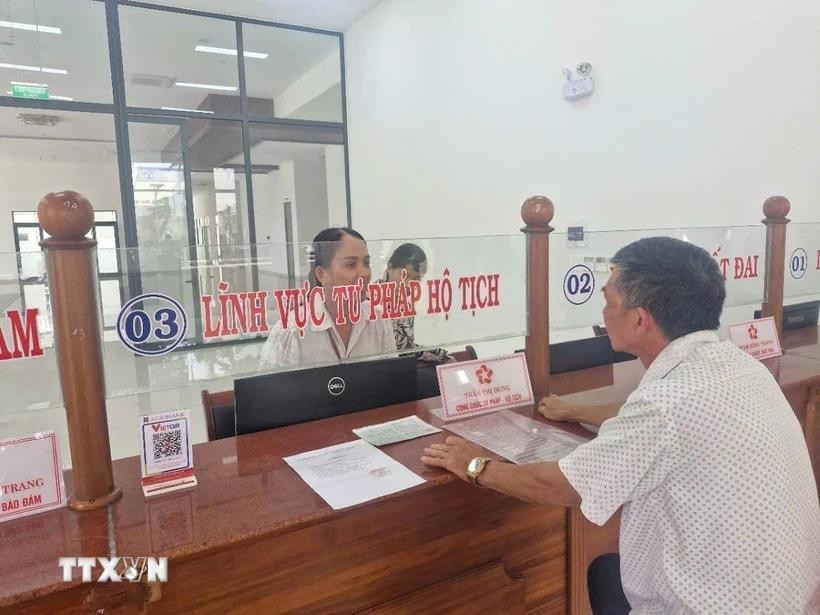
Each commune, he said, will host a public service centre where citizens can access administrative services. Most procedures have already been digitised and made available online.
The Government has tasked telecoms service providers VNPT and Viettel with developing AI-powered virtual assistants to support digital service delivery. Initial trials in Ho Chi Minh City have reportedly been successful, with more than 10,000 daily users. The virtual assistant is currently capable of handling 1,800 administrative services and guiding citizens through the necessary procedures.
The Deputy PM said that in the near future, many services such as marriage registration, birth and death certification, vehicle registration, passport applications, and building permits could be carried out from home via digital platforms.
He concluded by emphasising that national innovation and digital transformation will not only better service delivery and transparency but also allow citizens to monitor government activities more closely, helping to reduce corruption and eliminate administrative delays./.