Vietnam advances creative, adaptive socialism for new era: Indian Communist Party leader

The 14th National Congress of the CPV comes at a critical juncture, as the world faces profound upheavals marked by escalating geopolitical tensions, economic instability, and deep structural crises within global capitalism. Against this backdrop, Vietnam’s decision to pursue a new growth model driven by science, innovation, and digital transformation reflects strategic vision, confidence, and a clear grasp of the requirements of the times.

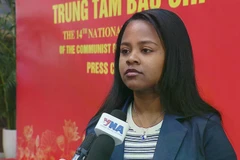
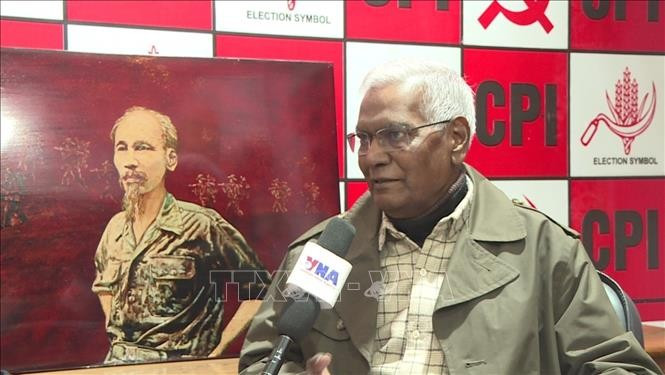
General Secretary of the Communist Party of India (CPI) Doraisamy Raja (Photo: VNA)

New Delhi (VNA) - General Secretary of the Communist Party of India (CPI) Doraisamy Raja has lauded the Communist Party of Vietnam (CPV)’s capacity for self-renewal, summarising practical experience, and continuous learning as the country seeks to achieve breakthrough development and embed the “Doi moi” (renewal) theory into the Party’s ideological foundation.

In a recent interview granted to the Vietnam News Agency correspondent in India on the occasion of the 14th National Congress of the CPV, Raja noted that the ability to confront shortcomings honestly and adjust policies in line with reality, without abandoning socialist principles, is a hallmark of a mature revolutionary party.

According to Raja, the feasibility of the development commitments outlined in the draft documents of the 14th National Party Congress is underpinned by Vietnam’s major achievements over recent decades in poverty reduction, social stability, and national development. He stressed that the Party’s strong grassroots foundation, mass-oriented approach, and tight organisational discipline remain vital sources of strength for translating these goals into reality.

He said that the 14th National Congress of the CPV comes at a critical juncture, as the world faces profound upheavals marked by escalating geopolitical tensions, economic instability, and deep structural crises within global capitalism.

Against this backdrop, Vietnam’s decision to pursue a new growth model driven by science, innovation, and digital transformation reflects strategic vision, confidence, and a clear grasp of the requirements of the times.

Moving beyond a growth model built on cheap labour and resource exploitation, Vietnam is transitioning toward knowledge- and technology-driven development underpinned by national planning to better the quality of the productive forces, Raja said.

Crucially, the transition is guided by a socialist orientation that prioritises science and technology for national development and social progress. It affirms that socialism in Vietnam is a dynamic and adaptive process, capable of creatively responding to new historical conditions while consistently placing people’s welfare and national sovereignty at its core.

He noted that integrating environmental protection with socio-economic development in the draft documents of the 14th National Party Congress demonstrates Vietnam’s growing awareness of the ecological limits of unchecked growth and the imperative to safeguard people’s livelihoods in the context of climate change.

Enhancing the role of diplomacy and international integration reflects Vietnam’s rising standing in a multipolar world, while underscoring the importance of an independent and principled foreign policy that both safeguards national interests and contributes to international peace and cooperation, he added.

Raja also noted that the renewed emphasis on culture, people, and the private sector reflects Vietnam’s holistic approach to development, in which culture serves as the foundation of social cohesion and national strength, people are taken as the subject and centre of development, and the private sector is recognised pragmatically within a framework where the socialist state retains its strategic guiding role.

According to the Indian official, these priorities establish a coherent roadmap for Vietnam to become an upper-middle-income country with a modern industrial base by 2030 and realise its vision of becoming a developed, prosperous, and socially equitable nation by 2045.

Looking ahead to the next five years, Raja emphasised that Vietnam’s top priority is consolidating its transition to a knowledge-based economy, ensuring that advances in science, technology, and innovation benefit society as a whole. Strengthening public education, skills development, and research systems is seen as key to driving innovation without increasing inequality, while supporting sustainable development linked to environmental protection.

He also highlighted the importance of promoting social justice and socialist democracy through the active participation of workers, farmers, youth, and women in policymaking and enforcement.

Regarding the foreign policy, Vietnam’s steadfast commitment to peace, cooperation, and independent multilateralism will remain a key pillar of its development strategy, he stated.

Raja also underscored the significance of the CPV’s 14th National Congress for Vietnam’s development as well as leftist and progressive movements worldwide. He said that the success of the important political event will ultimately be measured by how effectively its directions and commitments translate into tangible improvements in the lives and social welfare of the Vietnamese people, thus further affirming Vietnam’s credibility and role in the global progressive and peace movements./.

VNA
See more

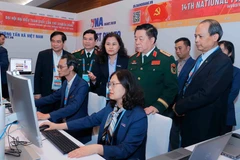
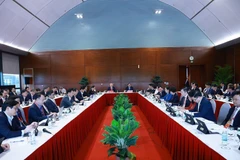
Delegates join group discussions at the ongoing 14th National Party Congress (Photo: VNA)

14th National Party Congress: Delegates eye reforms in new era

During the discussions, Prime Minister Pham Minh Chinh summed up key lessons drawn from the Government’s management during the previous term, stressing the need to turn Party resolutions into laws and renewing growth drivers for the next development phase.

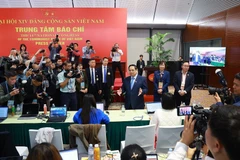
PM Pham Minh Chinh visits the press centre serving the 14th National Party Congress (Photo: VNA)

PM urges media to spotlight key outcomes of 14th Party Congress

During a visit to the press centre amid a break in proceedings, PM Pham Minh Chinh met with reporters and inquired about their working conditions. He described the press as a hardworking and vital force, so that all possible support should be offered to them, including adequate infrastructure, reliable internet connectivity, and a conducive work environment to enable timely, comprehensive, accurate, diverse, and engaging coverage.

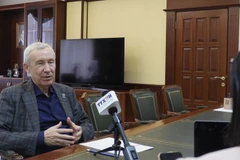
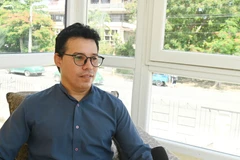
Andrey Klimov, member of the Presidium of the Supreme Council of the United Russia Party (UR), grants an interview to the Vietnam News Agency. (Photo: VNA)

14th National Party Congress: Russian political party expresses confidence in future of comprehensive cooperation

Andrey Klimov, member of the Presidium of the Supreme Council of the United Russia Party (UR), emphasised that the Communist Party of Vietnam (CPV) holds a vital role in every aspect of national life. Therefore, the 14th National Congress will not only set the main course for Vietnam’s development but also influence the country’s governance style and administrative approach.

☕ Afternoon briefing on January 20

☕ Afternoon briefing on January 20

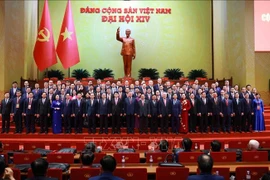
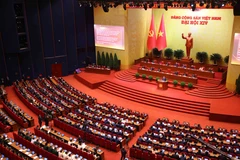
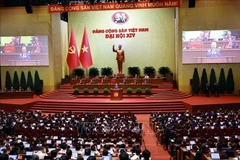
The 14th National Congress of the Communist Party of Vietnam (CPV) solemnly opened at the National Convention Centre in Hanoi on January 20 morning.

A panoramic view of the opening session of the 14th National Congress of the Communist Party of Vietnam. (Photo: VNA)

Political parties, int'l organisations, friends, OV send congratulatory messages to 14th National Party Congress

These messages constitute a significant source of encouragement and support for Vietnam’s renewal process initiated and led by the CPV. They also vividly reflect the increasingly deep and substantive relations of friendship and cooperation between the CPV and political parties, organisations and friends around the world, as well as the growing attachment of overseas Vietnamese communities to their homeland.

Vietnam - An exemplary model of development for Cuba: Cuban journalist

Vietnam - An exemplary model of development for Cuba: Cuban journalist

Wennys Díaz Ballaga, a special correspondent of Granma - the official newspaper of the Communist Party of Cuba - has highly praised the professional organisation of the 14th National Congress of the Communist Party of Vietnam, affirming that Vietnam’s socio-economic development model serves as an important reference for Cuba and other socialist countries.

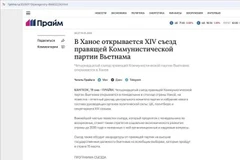
Russia’s financial and economic news portal at https://1prime.ru/news/ reported that the congress will focus on discussions and approve Vietnam's socio-economic development strategy through 2030. (Photo: screenshot)

14th Party National Congress draws international attention

The international media stressed that the 14th National Congress of the CPV is not only a major political event for the country but also marks the beginning of a new development period, shaping Vietnam’s vision and motivation for the decades ahead.

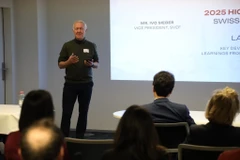
Ivo Sieber, former Swiss Ambassador to Vietnam, speaks at an event in Zurich. (Photo: VNA)

14th National Party Congress comes at pivotal moment for Vietnam: Swiss expert

On Vietnam–Switzerland relations, which were established in 1971 and upgraded to a comprehensive partnership in January 2025, Ivo Sieber, a member of the Swiss–Vietnamese Economic Forum (SVEF) and former Swiss Ambassador to the country, expressed confidence that, as the two countries mark the 55th anniversary of diplomatic ties this year, existing links and cooperation will be further strengthened.

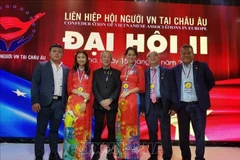
Nguyen Hai Nam (far right) attends the second Congress of the Union of Vietnamese Associations in Europe. (Photo: VNA)

14th National Party Congress: New momentum from reform, integration, OV resources

The 14th National Party Congress is expected to continue to expand and further specify policies aimed at attracting overseas Vietnamese, particularly the Vietnamese community in France—one of the largest and longest-established communities in Europe, numbering around 350,000 people and exceeding 600,000 when including French citizens of Vietnamese origin.