Vietnam advances two-tier, citizen-centred governance

The implementation of Vietnam’s two-tier local government system marks not only a streamlining of administrative structures but also a fundamental shift in state management thinking.

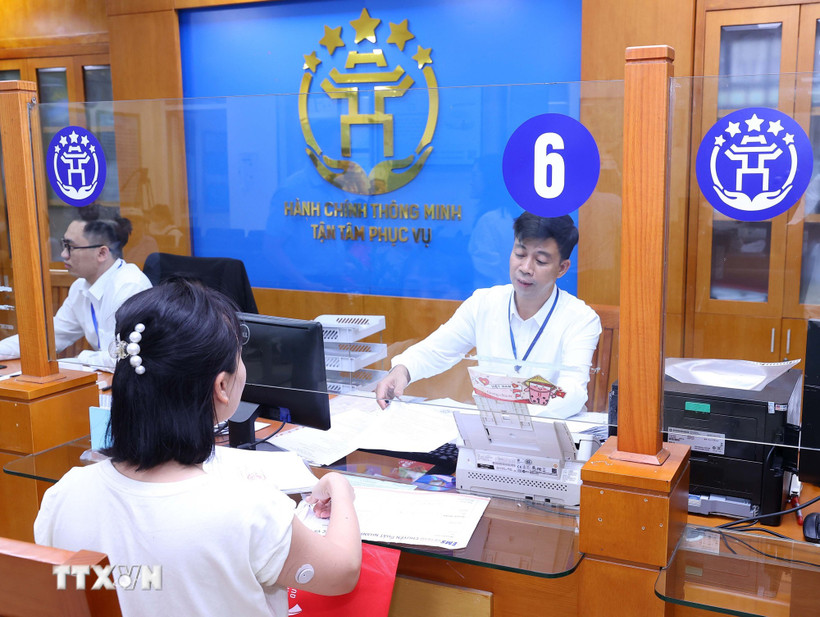
A citizen comes to handle administrative procedures at the Hanoi Public Administrative Service Centre (Photo: VNA)

Hanoi (VNA) – The implementation of Vietnam’s two-tier local government system marks not only a streamlining of administrative structures but also a fundamental shift in state management thinking.

The reform aims to create a transparent, efficient, and citizen-oriented administration via 28 government decrees on decentralisation issued to reduce over 10,000 commune-level administrative units to 3,321.

Minister of Home Affairs Pham Thi Thanh Tra emphasised that the two-tier local administration is designed to empower each level of government with decision-making authority and accountability while ensuring better services for citizens.

She described each level as a “growth-enabling hub” for both the locality and the country in a new development era.
thu-tuc-hanh-chinh.jpg
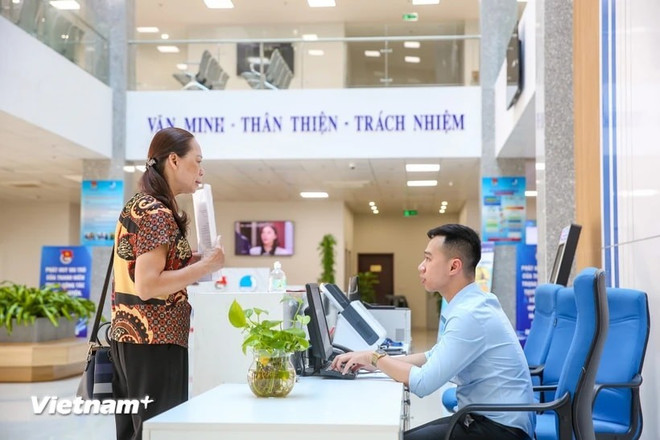
Illustrative image (Photo: VietnamPlus)

Dr. Nguyen Si Dung, former Vice Chairman of the National Assembly Office, said that in a complex and fast-changing world, governments must be agile, responsive, and effective. He highlighted the principle of subsidiarity, empowering the level closest to the people to make decisions as an approach successfully applied in advanced administrative systems, such as Japan.

Former Deputy Minister of Home Affairs Nguyen Tien Dinh noted that commune-level authorities are best positioned to handle citizens' needs quickly and efficiently. Eliminating unnecessary intermediaries ensures policies reach the people faster, reinforcing the principle of “putting citizens at the centre”.
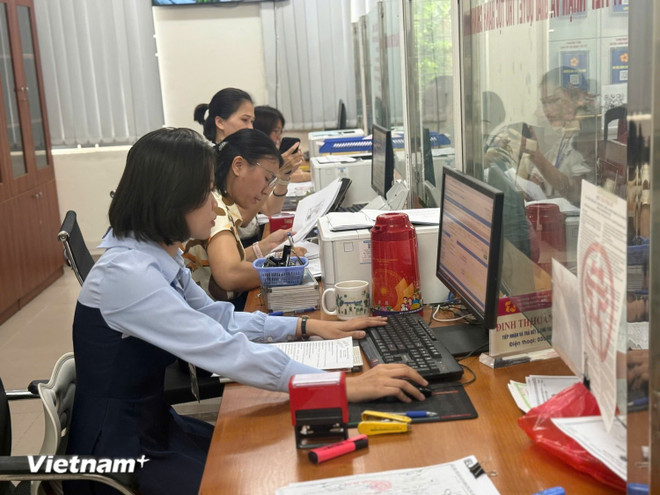
hanh-chinh1.jpg
Illustrative image (Photo: VietnamPlus)

Ramla Khalidi, UNDP Resident Representative in Vietnam, added that restructuring local governments aligns with the constitutional principle of “a state of the people, by the people, and for the people,” enhancing both accountability and citizen participation.

A key feature of the reform is the empowerment of commune-level People’s Committees, which now have clearer legal mandates, broader functions, and greater flexibility in implementation. Their responsibilities have doubled compared to previous regulations, with over 1,060 tasks transferred from district-level authorities and additional tasks delegated from central and provincial levels.
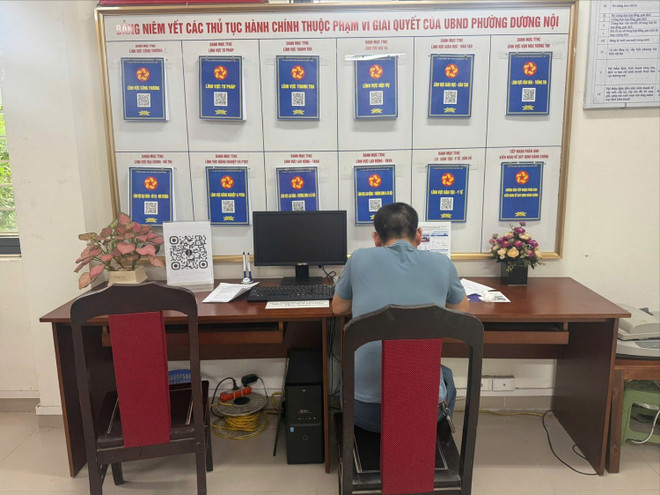
hanh-chinh4-222.jpg
Illustrative image (Photo: VietnamPlus)

Minister Tra described commune-level authorities as “the daily touchpoint of government for citizens,” shifting from being merely an administrative extension to becoming the “operational brain” of local governance.

The revised Law on Local Government Organisation elevates the role of provincial People’s Committees, positioning them as unified management centres that coordinate development strategies and law enforcement from provincial to commune levels. This represents a move from collective decision-making to clearly defined personal responsibility, particularly for provincial chairpersons.

The number of independent duties of provincial chairpersons has increased from 11 to 23, covering areas such as law enforcement, administrative oversight, delegation of authority, and rapid response to local challenges.

The minister stressed that this approach allows more decisive leadership and better coordination across levels of administration.

Dr. Nguyen Si Dung underlined that decentralisation is not just an administrative adjustment but a declaration of trust in local authorities, their capacity, and the country’s resilience.
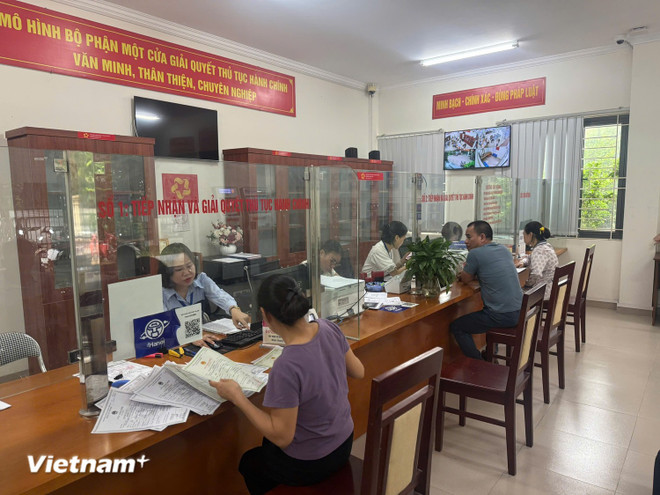
hanh-chinh-2.jpg
Illustrative image (Photo: VietnamPlus)

He said that empowering local governments creates a responsive, citizen-focused public service that delivers timely and sustainable results.

At a ceremony announcing the National Assembly’s resolution on the merger of provinces and cities, Party General Secretary To Lam highlighted the strategic significance of this reform. He described the restructuring as a historic step toward building a modern, citizen-centric, and service-oriented administration, ensuring that “all benefits belong to the people”.

By redefining roles, responsibilities, and accountability across the provincial and commune levels, Vietnam’s two-tier local government model aims to foster stronger, more efficient state management.

It is envisioned as a foundation for national development, with local governments empowered to act decisively, engage with citizens directly, and drive socio-economic growth./.
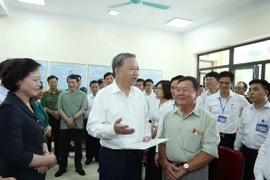
VNA

See more

Vietnamese Ambassador to Brazil and Guyana Bui Van Nghi speaks at the event. (Photo courtesy of the Vietnamese Embassy in Brazil)

Vietnam highlights diplomatic gains, growing ties with Brazil, Guyana

On the occasion of the 50th anniversary of Vietnam – Guyana diplomatic ties, Ambassador Bui Van Nghi described the milestone as an opportunity for both sides to deepen political trust, broaden cooperation in potential areas, and make positive contributions to peace, cooperation and sustainable development in the regions and beyond.

Prime Minister Pham Minh Chinh addresses the third National Forum on Digital Economy and Digital Society in Hanoi on December 20. (Photo: VNA)

Digital economy as driver, digital society as foundation of growth: PM

The forum, themed “Developing an inclusive and comprehensive digital economy and digital society to achieve double-digit GDP growth in the 2026–2030 period,” brought together leaders of ministries and localities, technology enterprises, research institutions, experts and representatives of international organisations in Vietnam.

Deputy Minister of Foreign Affairs Le Thi Thu Hang (R) and Benoit Guidée, Director of the Asia–Oceania Department at the French Ministry for Europe and Foreign Affairs meet in Hanooi on December 19. (Photo: VNA)

Deputy FM meets French official

Deputy Minister of Foreign Affairs Le Thi Thu Hang stressed that Vietnam attaches great importance to its relationship with France, the first European Union country with which Vietnam has established a Comprehensive Strategic Partnership, noting that the two sides enjoy a solid foundation and significant potential for further cooperation.

Politburo member and permanent member of the Party Central Committee’s Secretariat Tran Cam Tu speaks at the event in Hanoi on December 19 (Photo: VNA)

Senior Party official reviews preparations for 14th National Party Congress

Politburo member and permanent member of the Party Central Committee’s Secretariat Tran Cam Tu expressed his belief that relevant agencies will continue to make efforts to basically complete organisation- and service-related preparations by December 31, ensuring readiness for the final rehearsals ahead of the opening of the 14th National Party Congress.

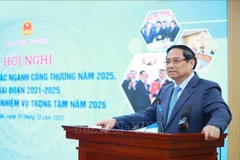
Prime Minister Pham Minh Chinh addressing the conference of the the Ministry of Industry and Trade on December 19 (Photo: VNA)

PM urges industry, trade sector to pioneer in six key areas

Prime Minister Pham Minh Chinh stressed that to make a substantive contribution to national development, the industry and trade sector must also achieve double-digit growth, generate new jobs, strengthen traditional growth drivers such as export and consumption, and accelerate emerging engines of growth, including the green, digital, circular, knowledge-based and sharing economies.

State President Luong Cuong (middle) presents congratulatory flowers to the two promoted officers (Photo: VNA)

Two military officers promoted to rank of Senior Lieutenant General

Lieutenant General Do Xuan Tung, Vice Director of the General Department of Politics of the Vietnam People’s Army (VPA), and Lieutenant General Do Van Banh, Political Commissar of the National Defence Academy were promoted to the rank of Senior Lieutenant General at a ceremony in Hanoi on December 19.

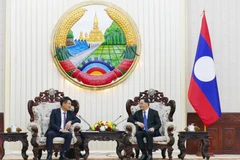
Lao Prime Minister Sonexay Siphandone (R) hosts a reception for Prosecutor General of the Supreme People’s Procuracy of Vietnam Nguyen Huy Tien. (Photo: VNA)

Vietnam–Laos step up cooperation in procuracy sector

They highly valued the effective and substantive cooperation results achieved by the Supreme People’s Procuracies of Vietnam and Laos in recent years, and called on both sides to continue enhancing coordination, stepping up exchanges of delegations at all levels, sharing professional and technical experience, and maintaining and expanding training and capacity-building programmes for officials.