Brussels (VNA) - Half a century after the end of the war in Vietnam, the consequences of Agent Orange/dioxin still leave severe legacies for both humans and the environment. In efforts to overcome the war's aftermath, the country has been receiving active cooperation and support from the international community, including Belgium – a partner with great goodwill and responsibility.
At a research facility of Haemers Technologies SA (Belgium), experts are focusing on researching and perfecting the technology for treating dioxin-contaminated soil using high-temperature pyrolysis. In this process, contaminated soil is fed into a closed-loop treatment system where dioxin is completely decomposed without generating solid, liquid, or gaseous waste into the environment.
Jan Haemers, CEO at Haemers Technologies, stated that the company’s exclusive technology is based on an intensive thermal treatment method (thermal desorption). The system heats the soil to high temperatures to vaporise harmful compounds, which are then collected and burned at temperatures up to 1,200 degrees Celsius, completely destroying the dioxin.
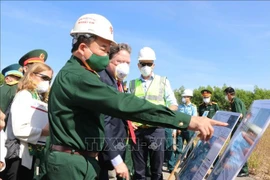
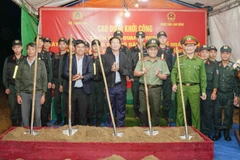
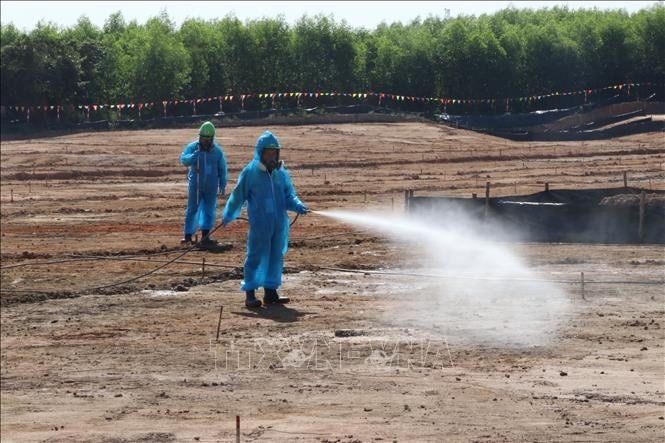
This technology has been tested at Bien Hoa Airbase, under the supervision of the Ministry of Defence and relevant Vietnamese authorities. The project has received financial support from the Aquitara Impact Fund I (Belgium). It successfully completed the testing phase in 2022 and is now awaiting approval for scaling up.
Haemers emphasised that, in addition to providing the technology, the company focuses on transferring technical expertise to Vietnamese engineers, helping them master the process and ensuring long-term sustainability.
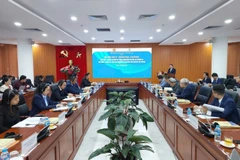
This spirit of cooperation was clearly demonstrated at the seminar “Soil remediation technologies in Vietnam”, organised by the Belgian-Vietnamese Alliance (BVA) in Brussels in late September. At the event, experts, businesses, and investment funds shared experiences and discussed solutions for expanding the project.
According to Haemers, the company's technology not only completely treats contaminated soil in Bien Hoa but also has the ability to regenerate soil, turning polluted land into a resource that can be used for agriculture, contributing to dual value creation for both the environment and the economy.
Representing the Aquitara Impact Fund I, Franc Bogovic stated that the fund aims for a dual goal, both environmental cleanup and the promotion of socio-economic development. A notable model is An Vui Mart in Dong Nai province, where families of AO victims directly participate in its operation. This model helps create stable livelihoods and supports their reintegration into the community. After eight weeks of operation, An Vui Mart has shown positive results, proving the potential for a harmonious combination of environmental restoration and human development.
In addition to the contributions of businesses, many Belgian individuals have also made meaningful contributions to Vietnam. Over the past more than 10 years, Chris Geyskens, President of the Belgian branch of the Vietnam Association for Victims of Agent Orange/Dioxin in Hoi An (VAVA Hoi An), has organised the annual charity golf tournament "Vietnam Ambassador's Cup in Belgium," raising funds to build homes and create livelihoods for families of AO victims. She expressed her hope that these activities will help the younger generation in Europe better understand the consequences of the war in Vietnam, and thereby spread the spirit of compassion and social responsibility.
On the Belgian government’s side, Andries Gryffroy, First Vice President of the Senate and President of the BVA, stated that Belgium was the first country in the world to recognise the victims of Agent Orange in Vietnam. He highly valued the cooperation process, emphasising that both sides are currently finalising financial conditions and negotiating land use rights to expand the project's scale.
Thanks to the close coordination between the governments, businesses, and social organisations of both countries, the dioxin soil remediation projects in Vietnam are gradually transitioning from the testing phase to practical implementation. Many heavily contaminated areas are being recovered, while livelihood support models for AO victims are providing new opportunities for thousands of families.
These efforts not only showcase the effectiveness of advanced technology and the spirit of international cooperation but also pave the way for a sustainable future, where the environment, economy, and people are all being restored. From lands once stained with sorrow, new sprouts of hope are gradually rising, symbolising the resilience of Vietnam and its strong friendship with Belgium./.

Vietnam, US join efforts in dioxin cleanup, disability aid
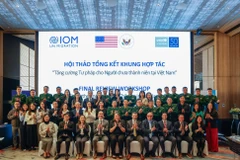
Launched in 2021 across six provinces and cities, the Bien Hoa Air Base Dioxin Remediation Project has already supported more than 32,000 people with disabilities, including AO/dioxin victims, meeting over 60% of its targets. It will soon be extended to Ca Mau and Quang Ngai provinces.