Vietnam determined to build transparent global trade system

The Government of Vietnam on November 6 updated the World Trade Organisation (WTO)’s Committee on Rules of Origin (CRO) on adjustments to the agencies and organisations authorised to issue certificates of origin (C/O), as well as on the application of QR codes in the C/O issuance process.

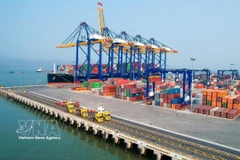
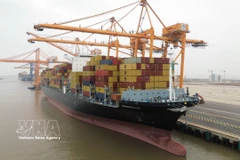
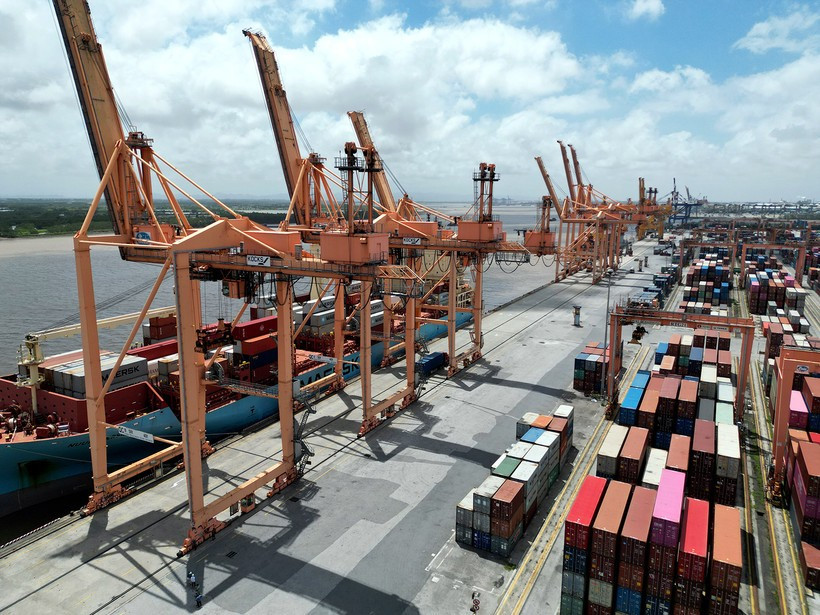
Goods at Hai Phong Port in northern port city of Hai Phong. (Photo: VNA)

Geneva (VNA) – The Government of Vietnam on November 6 updated the World Trade Organisation (WTO)’s Committee on Rules of Origin (CRO) on adjustments to the agencies and organisations authorised to issue certificates of origin (C/O), as well as on the application of QR codes in the C/O issuance process.

The move aims to enhance traceability and reaffirm Vietnam’s transparency in building and promoting a fair, reliable global trading system.

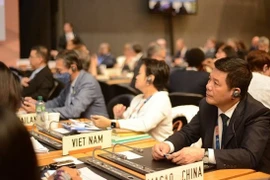
The Vietnamese delegation included representatives from the Agency of Foreign Trade under the Ministry of Industry and Trade (MoIT), who joined online from Hanoi, and officials from Vietnam’s Permanent Mission to the WTO, who attended the session in person.

Speaking at the meeting, Vice Director of the Agency of Foreign Trade Trinh Thi Thu Hien noted that Vietnam had submitted two notifications to the WTO Secretariat regarding the implementation of rules of origin under the WTO framework, in March and May (documents G/RO/N/291 and G/RO/N/293).

She also presented an example of Vietnam’s Form B certificate of origin featuring a QR code. The integration of QR codes and digital transformation in the issuance of certificates of origin facilitates origin verification, contributing to the effective and transparent implementation of Vietnam’s trade commitments, particularly amid the growing challenges to global trade and supply chains.

Vietnam also notified the list of authorised C/O-issuing bodies to ensure transparency for trading partners and to demonstrate its commitment to cooperation with other WTO members. The updated list reflects the country's ongoing decentralisation and delegation of authority in origin management. Pursuant to Government Decree No. 146/2025/ND-CP dated June 12, 2025 and MoIT Circular No. 40/2025/TT-BCT dated June 22, 2025, C/O issuance is now conducted by the MoIT’s Agency of Foreign Trade and by organisations designated by provincial People’s Committees.

Earlier, at the WTO Rules of Origin Committee’s 30th anniversary session on April 3 and its regular meeting on October 1 in Geneva, the Vietnamese delegation had shared the country’s experience in applying and notifying non-preferential rules of origin.

WTO members commended Vietnam’s efforts to maintain transparency and its active cooperation in preventing origin fraud. They recognised Vietnam’s proactive participation and commitment to the proper implementation of WTO commitments.

Vietnam’s consistent presence and contributions at WTO meetings underscore its determination to foster a transparent global trading environment while enhancing its role, voice, and international standing in multilateral mechanisms. This aligns with Resolution No. 59-NQ/TW dated 24 January 2025 on international integration in the new context.

The adoption of QR codes in C/O issuance also represents a crucial step in promoting digital transformation, technological innovation, and scientific advancement, in line with Resolution No. 57-NQ/TW dated December 22, 2024 on breakthroughs in science, technology, innovation, and national digital transformation.

Together, Resolutions No. 57-NQ/TW and No. 59-NQ/TW form key pillars guiding Vietnam’s entry into a new era of innovation-driven and globally integrated development./.

VNA

See more

In the Kim Long Motor Hue factory (Photo: VNA)

Hue courts capital to turn industrial zones into growth engine

The economic and industrial zones in Hue city host more than 200 active investment projects worth over 152 trillion VND (5.84 billion USD), with 139 already operational. Since the start of 2026, they have generated about 32 trillion VND, contributed 4.2 trillion VND to the state budget and brought in 730 million USD in exports, while employing more than 46,000 workers.

An overview of a meeting between Politburo member and Secretary of the Hanoi Party Committee Tran Duc Thang and representatives of Saint Petersburg businesses. (Photo: VNA)

Saint Petersburg’s metro expertise valuable for Vietnam

As Hanoi implements its master plan with a 100-year vision, in which metro lines are identified as the backbone of the capital city’s transport network, Secretary of the municipal Party Committee Tran Duc Thang met with representatives from several Saint Petersburg companies specialising in urban rail development.

An art performance at 2026 Dak Lak Durian Festival. (Photo: VNA)

Dak Lak Durian Festival seeks to elevate Vietnam’s agricultural brand globally

Dak Lak has about 41,000ha of durian, with this year’s output estimated at nearly 500,000 tonnes. The province has 280 growing-area codes covering around 7,500ha, along with 41 packing facilities approved for export. In 2025, Dak Lak’s durian sector contributed about 1.1 billion USD to the country’s export turnover.

Delegates cut the ribbon to inaugurate the Ho Chi Minh City-Shenzhen direct air route. Photo: baodautu.vn

Vietravel Airlines launches direct Ho Chi Minh City-Shenzhen route

Vietravel Airlines' new route connects Tan Son Nhat International Airport (SGN) in Ho Chi Minh City with Shenzhen Bao'an International Airport (SZX), meeting growing demand for travel between the two markets for investment, trade, tourism and visiting relatives.

Thanks to digital transformation among local officials, Tam Dao commune of Phu Tho province has achieved an almost 100% on-time rate for processing administrative applications, helping improve public services for residents. (Photo: VNA)

Institutional reform fuels private sector's growth in Phu Tho province

The private sector is increasingly emerging as a key growth engine of the economy. To unleash its potential and ensure sustainable development, the northern province of Phu Tho is stepping up institutional and administrative reforms to cut costs, shorten procedures, and build a more transparent, business-friendly investment climate.

Hoa Phat Wharf inside the Dung Quat Economic Zone (Photo: VNA)

Dung Quat EZ, Quang Ngai IPs draw nearly 19.4 bln USD

The Dung Quat Economic Zone and Quang Ngai industrial parks have so far attracted 441 projects worth around 19.4 billion USD, according to the Dung Quat Economic Zone and Quang Ngai Industrial Parks Authority (DEZA).

Processing cashew nuts for export at Nguyen Thong Co., Ltd. in Dak Lak province. (Photo: VNA)

Vietnam’s exports to New Zealand post strong growth

According to the Customs Department, two-way trade reached 844 million USD in the first half of 2026, of which Vietnam’s exports to New Zealand totaled 399.7 million USD, up 18.8% year-on-year, while imports stood at 444 million USD.

Starting from September 2026, agricultural products from the Mekong Delta are expected to be transported directly from Cai Cui Port to Guangxi, China. (Photo: VNA)

Investing in logistics to boost agricultural production and exports

Logistics is increasingly becoming a major bottleneck for exports as transport costs rise and requirements for data management, low emissions and supply chain transparency become more stringent, requiring coordinated investment in logistics infrastructure, data infrastructure and transport capacity.

Harvesting rice in the Mekong Delta (Photo: VNA)

Vietnam seen as gateway for Canadian farm produce to ASEAN

As Canada steps up trade diversification and seeks to reduce its dependence on the North American market, Vietnam could serve both as a market for Canadian goods and a base for Canadian businesses to build production capacity and expand operations in the region.