Vietnam develops strategic technology sectors to create new value: Deputy PM

Deputy PM Nguyen Chi Dung emphasised the need for mechanisms to attract “chief engineers” and “chief architects” for national technology projects, considering these two positions as crucial for steering foundational programmes.

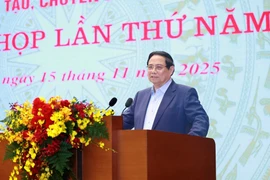
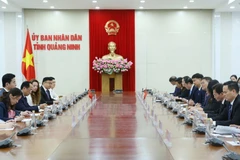
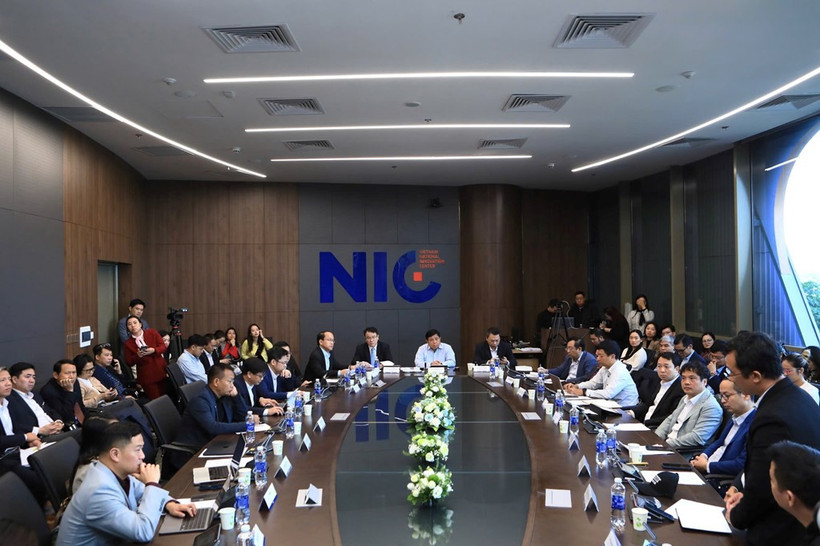
Deputy Prime Minister Nguyen Chi Dung (centre), officials of the Ministry of Finance and the Ministry of Science and Technology, representatives of research institutes and universities, and nearly 70 experts from 22 countries attend the event. (Photo: National Innovation Centre)

Hanoi (VNA) – Vietnam is entering a new stage of development in which innovation and strategic technologies will serve as the key driving force, Deputy Prime Minister Nguyen Chi Dung affirmed while addressing a working session with the Vietnam Innovation Network (VIN) and Vietnamese experts on November 26.

Dung noted that the Politburo’s Resolution No. 57-NQ/TW on making breakthroughs in science – technology development, innovation, and national digital transformation emphasises the requirement for strongly promoting science, technology, and innovation, considering them a key driving force for fast and sustainable growth, especially in strategic and leading-edge technology sectors capable of creating new value and long-term national competitiveness.

Based on this orientation, Decision No. 1131/QD-TTg of the Prime Minister details the targets, tasks, and measures for developing pioneering technologies, while identifying 11 strategic technology sectors and 32 strategic technological products of the country. This serves as an important stepping stone for building a strategic technology ecosystem, ensuring coherence from policies, mechanisms, human resources, and infrastructure to technology research, development, and commercialisation.

The Deputy PM affirmed that VIN, with over 2,000 experts worldwide, is a hub for Vietnamese knowledge and an important resource that will help the Government implement its strategy for developing pioneering technology sectors. In the new trend, continuing to expand the network and enhancing the quality of contributions from the expert community will play a key role in promoting the 11 strategic sectors, creating a new growth impetus for the economy.

However, he acknowledged that Vietnam is still struggling to identify major questions and design strong-enough programmes capable of leading the development of strategic sectors. Therefore, he expressed his hope that experts will propose practical, feasible, and breakthrough solutions instead of general analyses.

In particular, Dung emphasised the need for mechanisms to attract “chief engineers” and “chief architects” for national technology projects, considering these two positions as crucial for steering foundational programmes.

In the field of semiconductors, Vo Duc Thang, a representative of the VIN Network in Taiwan (China) and Co-Principal Investigator at the INTENSE Programme in Vietnam, highlighted the great potential for cooperation between the two sides. Over 40,000 Vietnamese students are currently studying in Taiwan, half of whom are in high-tech engineering fields. Specifically, the INTENSE Programme has trained more than 200 students and will offer an additional 880 STEM – semiconductor scholarships in 2026.

Training models that involve businesses, along with connection activities and cooperation offices in various localities, are creating a crucial foundation for Vietnam to build a high-quality semiconductor engineering workforce, he added.

Ngo Minh Hieu, Founder and Director of an anti-fraud project, emphasised that for Vietnam to develop AI, digital finance, or govtech, it must first establish a safe and reliable digital environment.

Experts also proposed establishing a national anti-fraud and cybercrime centre based on the Singapore model, connecting data from banking, telecommunications, social networks, and investigation agencies to provide real-time risk alerts. At the same time, it is necessary to implement a data sandbox that allows businesses and research institutes to use non-personal data to develop AI models and early warning systems.

In the field of AI and digital twins, Lo Van Ba, Country Director of Dassault Systèmes Vietnam, emphasised the great potential of Virtual Twin technology combined with AI in enhancing R&D capabilities, optimising production, and shortening the time to market. Ba believes that Vietnam is well-positioned with favourable conditions to directly adopt the new-generation digital industrial model, from digital infrastructure and a young workforce to the growing demand for modernisation in strategic sectors.

Dassault Systèmes proposed collaborating with the National Innovation Centre (NIC) to establish a Digital Twin and AI R&D Centre in Vietnam to develop pilot models in aerospace, semiconductors, smart transportation, robotics, and smart cities, and mobilising international resources to build a team of Digital Twin - AI engineers and strengthen the country’s innovation capacity./.

VNA
See more

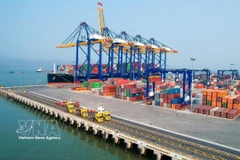
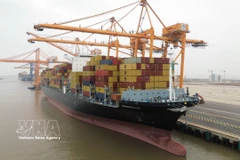
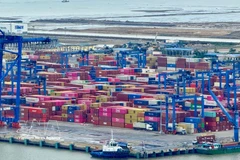
The vessel carrying the 2 millionth TEU arrives at Hai Phong Port. (Photo:VNA)

Hai Phong Port reaches 2-million-TEU milestone

Handling the 2 millionth TEU in 2025 not only demonstrates Hai Phong Port’s operational capacity and the collective efforts of its workforce, but also highlights its increasingly important role in regional and global supply chains, the confidence of shipping lines, logistics firms and the business community, and the effectiveness of policies to improve the investment climate and strengthen maritime infrastructure and services.

Melons labelled with traceability codes on display at the Song Van agricultural produce store in Ninh Binh city, Ninh Binh province. (Photo: VNA)

Tracing origins hindered by fragmented data systems

As the Government accelerates the digital economy, establishing a unified national traceability system has become a crucial move to end data fragmentation and disconnection among ministries, sectors and localities.

Hyundai unveils its new Avante Hybrid model in Seoul, the Republic of Korea, on August 13, 2020. (Photo: Yonhap/VNA)

Tax cuts poised to ignite Vietnam’s hybrid vehicle boom from 2026

Experts forecast that 2026-2030 will mark a period of strong growth for hybrid vehicles in Vietnam, a trend that will invigorate the automotive sector while supporting national objectives on emissions reduction, sustainable development and the broader transition to green mobility.

Illustrative image (Photo: VNA)

Vietnam targets 1 billion USD in banana exports

Bananas have been identified as a priority product under the Project for the Development of Key Fruit Crops to 2025, with a vision to 2030, approved in October 2022. Under the plan, banana acreage is projected to reach 165,000–175,000ha by 2030, with output of 2.6–3 million tonnes.

Deputy Minister of Foreign Affairs Nguyen Minh Hang (Photo: VNA)

Event connects Vietnamese businesses with African countries

Deputy Foreign Minister Nguyen Minh Hang held that to develop Vietnam – Africa ties more strongly and substantively, it is necessary to promote the engagement of businesses, and that the Government will create favourable conditions for them to enhance fruitful cooperation.

Deputy Prime Minister Ho Duc Phoc (R) and Independent Non-executive Chairman of AIA Mark Tucker at their meeting in Hanoi on December 12. (Photo: VNA)

AIA Group envisions long-term investment, cooperation in Vietnam

Over 25 years of operation in Vietnam, AIA has achieved positive results. Its premium revenue ranks among the top five life insurers, reaching nearly 14.83 trillion VND (563.71 million USD) in 2024 and an estimated 15.73 trillion VND in 2025, equivalent to around 10% of the market share.

A view of the 2025 Japan business roundtable in HCM City on December 12. (Photo: VNA)

Ho Chi Minh City courts Japanese investment with growth blueprint

Ha underscored the pivotal contributions of Japanese firms, which have long supported local socio-economic progress through major infrastructure projects, industrial zones and workforce training courses. To date, Japanese companies have invested more than 15 billion USD in over 2,200 projects, reflecting sustained confidence and commitment to the market.

Deputy Prime Minister Bui Thanh Son receives Kounlaphanh Vongnathy, Vice President of Phongsupthavy Group, in Hanoi on December 12, 2025. (Photo: VNA)

Lao group urged to deepen energy ties with Vietnam

Deputy Prime Minister Bui Thanh Son has commended Phongsupthavy Group as one of Laos’ leading investors supplying electricity to Vietnam, noting its pledge to ramp up power exports and actively contribute to the implementation of energy cooperation agreements endorsed by senior leaders of the two Parties and States.