Vietnam emerges as Asia’s rising economy: Thai newspaper

Vietnam is increasingly asserting its position as an emerging economy in Asia, with signs it may overtake Thailand on fronts, according to Thailand's newspaper The Nation.

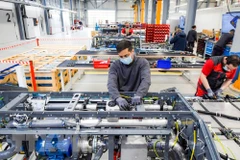
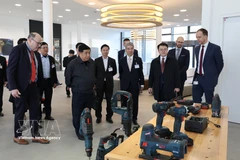
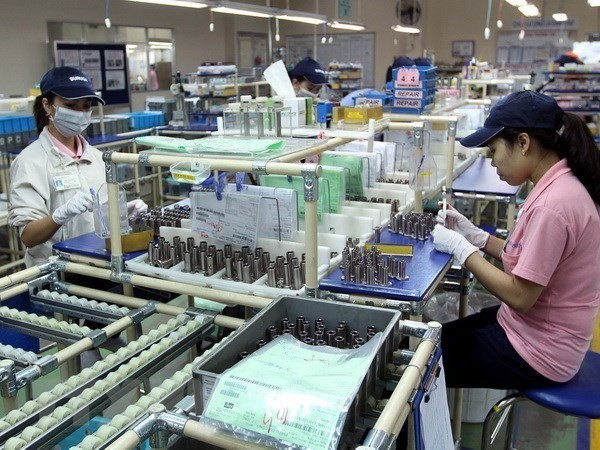
Workers produce mechanical components at Misumi Vietnam Company at Linh Trung Export Processing Zone in Ho Chi Minh City. (Photo: VNA)

Hanoi (VNA) – Vietnam is increasingly asserting its position as an emerging economy in Asia, with signs it may overtake Thailand on fronts, according to Thailand's newspaper The Nation.

The newspaper on August 19 reported that Vietnam has unveiled an ambitious national development plan to invest around 1.5 trillion THB (1.28 quadrillion VND or 48.7 billion USD) - in 250 infrastructure and housing development projects nationwide, aiming to achieve 8% GDP growth in 2025 and sustain double-digit growth in subsequent years. The ultimate target is to transform Vietnam into Asia’s next “tiger economy” and reach high-income status by 2045.

Growth drivers and challenges

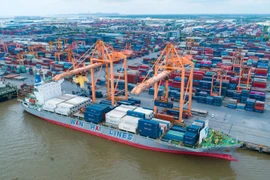
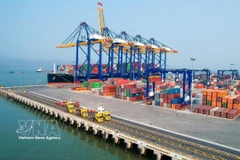
Vietnam’s economy has long relied on exports and foreign direct investment (FDI), leaving it vulnerable to external shocks such as the recently imposed retaliatory tariffs by US President Donald Trump.

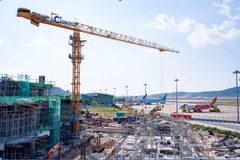
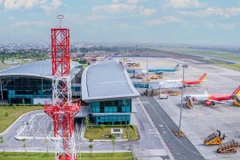
To reduce this risk, the Vietnamese Government is now stimulating domestic demand through massive infrastructure spending.

At the end of 2024, Party General Secretary To Lam announced the start of a “new era of development”, signalling Vietnam’s most sweeping economic reform in decades. The government’s strategic vision is to emulate the Republic of Korea (RoK) and Taiwan (China) by lifting millions out of poverty and joining the ranks of Asia’s most advanced economies.

Vietnam’s rapid rise is underscored by its income growth: per capita annual income in Hanoi has jumped from 1,200 USD in 1990 to 16,385 USD today, fuelled by the country’s transformation into a global manufacturing hub.

However, challenges remain. Vietnam’s traditional low-cost, export-driven growth model is slowing, forcing a shift towards high-tech industries, green energy, and private sector expansion.

From Thai perspective

Nonarit Bisonyabut, Senior Research Fellow at the Thailand Development Research Institute (TDRI), said that Vietnam is implementing evidence-based reforms, such as bureaucratic restructuring to improve efficiency, enabling rapid economic advancement.

He noted that China and the RoK are prioritising Vietnam over Thailand. Both nations are winners in the digital age — with China rising alongside the US as an AI leader.

“If Thailand fails to reform seriously, it risks losing competitiveness and may eventually fall behind Vietnam,” Nonarit concluded.

Kriengkrai Thiennukul, Chairman of the Federation of Thai Industries (FTI), told Thai-language daily newspaper Krungthep Turakij that Vietnam is undergoing a major adjustment, taking advantage of changes in US tariffs and global trade rules.

"Vietnam knows the world has changed, so it must rely more on itself and push through structural reforms,” Kriengkrai said.

“They’ve started with bureaucratic reforms, cutting ministries and expenses to reduce redundancy. They know if they don’t restructure, they’ll lose out in global competition. This is a good example Thailand should follow,” he said.

Poj Aramwattananont, Chairman of the Thai Chamber of Commerce, also highly appreciated Vietnam's strategy of expanding infrastructure investment, considering this a proactive step to maintain growth and cope with the impact of global trade policy.

“Vietnam is growing from exports and rolling out major infrastructure projects. We are too slow. We need faster execution, clear policies, and political stability,” he noted./.

VNA

See more

Officials visit a booth at the festival. (Photo: VNA)

Vietnam OCOP Festival 2025 opens in Hanoi

The festival functions as a space to bring together regional OCOP excellence, a forum connecting OCOP stakeholders with distributors, investors, experts and consumers, and a platform to spread pride in indigenous culture, local knowledge, and the aspiration for legitimate prosperity.

Prime Minister Pham Minh Chinh (third from right) and officials launch the Ministry of Construction’s new information technology systems at the conference on December 21. (Photo: VNA)

Modern, comprehensive infrastructure – a need for fast, sustainable development: PM

The Party and State continue to define infrastructure development as one of the three strategic breakthroughs, with priority given to building comprehensive and modern infrastructure, particularly transport facilities, technological infrastructure, and green – digital transition infrastructure, to help realise the national target of double-digit growth, the PM said.

Prime Minister Pham Minh Chinh addresses he third meeting of the National Steering Committee implementing the Politburo’s Resolution 68 in Hanoi on December 20. (Photo: VNA)

PM pushes trust, breakthroughs to accelerate private sector growth

Prime Minister Pham Minh Chinh noted that since the rollout of Resolution 68, alongside supporting resolutions from the National Assembly (NA) and Government, there has been a marked change in understanding the private sector’s critical position and role in Vietnam’s socialist-oriented market economy.

PM Pham Minh Chinh chairs the meeting (Photo: VNA)

Private sector thrives eight months after Resolution 68’s launch: PM

The private sector has shown marked progress eight months after the launch of Resolution 68, registering about 18,000 new enterprises monthly and pushing the nationwide total to nearly 1.1 million, Prime Minister Pham Minh Chinh told the third meeting of the National Steering Committee in Hanoi on December 20.

Phin Ho Tra – a national five-star OCOP product. (Illustrative photo: VNA)

Hanoi to host Vietnam OCOP Festival 2025

The festival is seen a practical activity celebrating the achievements made by the capital and the country in 2025, affirming OCOP’s role in rural economic development, contributing to realising Vietnam’s aspiration for strong economic growth in the context of deep integration.

The expanded Hoa Binh Hydropower Plant (Photo baochinhphu.vn)

EVN launches major power projects

Among the flagship projects inaugurated was the expanded Hoa Binh Hydropower Plant with a total installed capacity of 480MW per year and average annual output of about 488 million kWh.

An ultra-intensive shrimp farming model linked with environmental protection in Ca Mau province. (Photo: VNA)

Fisheries take the lead in the Mekong Delta’s green transition

Across the Mekong Delta, leading aquaculture producers, processors and exporters, along with suppliers of inputs, are transitioning to circular, high-tech and clean production models that cut greenhouse gas emissions and comply with international certification standards.

A perspective view of the Red River Landscape Boulevard project in Hanoi (Photo: VNA)

Works starts on Hanoi’s Red River Landscape Boulevard Axis project

The project is among the 234 key works and projects being launched, inaugurated or technically opened simultaneously across 34 cities and provinces nationwide to mark the 14th National Party Congress. Its launch contributes to implementing the country’s strategic development orientations while concretising Hanoi’s development goals in the new period.