Vietnam empowers local officials in governance overhaul

Vietnam’s transition to a two-tier local administration model marks a significant shift in the organisation of the State apparatus, redefining the role of grassroots officials as central figures in the delivery of public services and governance.

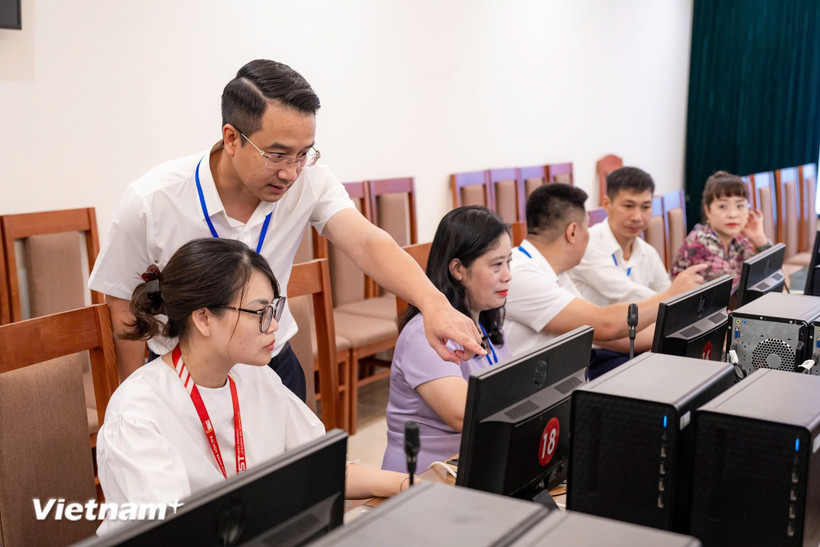
Vietnam strengthens local leadership in governance reform. (Photo: VNA)

Hanoi (VNA) - Vietnam’s transition to a two-tier local administration model marks a significant shift in the organisation of the State apparatus, redefining the role of grassroots officials as central figures in the delivery of public services and governance.

Under the new framework, commune-level governments, once considered limited in capacity and authority, have been empowered to take on expanded responsibilities and play a key role in implementing State policies at the local level.

The reform is being implemented in alignment with Resolution No. 18-NQ/TW and other decisions issued by the Party Central Committee on restructuring the political system. It aims to create a streamlined, efficient, and accountable administration through decentralisation, legal standardisation, and strengthened capacity at all levels.

In the process of comprehensive national renewal, to ensure the effective operation of the two-tier government model, officials, civil servants, and public employees is a decisive factor. Therefore, the National Assembly has passed the amended Law on Cadres and Civil Servants, which creates a solid legal framework for building a unified, interconnected, and synchronized civil service system from the central to the commune level. This is a historic step that eliminates the boundaries between officials at the commune and provincial levels, ensuring that all officials are evaluated and appointed based on their actual capabilities.
tong-bi-thu-to-lam-lam-viec-voi-dang-uy-mat-tran-to-quoc-cac-doan-the-trung-uong-8107810.jpg
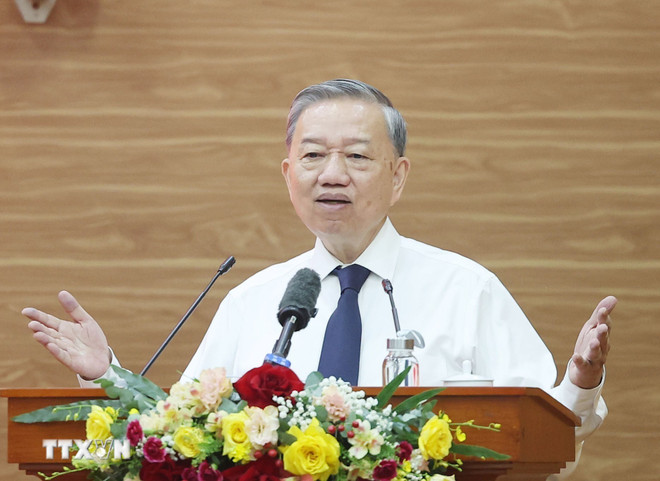
Party General Secretary To Lam has underlined that building a streamlined and effective state apparatus is a complex and challenging task, requiring unity, consensus, courage, and sacrifice of personal benefits from each official and Party member, along with strong determination from the entire Party and political system. (Photo: VNA)

Under the recently adopted revised Law on Local Government Organisation, commune-level chairpersons and their teams are now legally entrusted with 17 to 23 core tasks, depending on the scale and nature of the locality. These include managing civil status, social welfare, education, public health, land and construction affairs, local dispute resolution, and more. As such, they serve as the State’s first point of contact with the people and are essential in ensuring the effective implementation of national policies.

Minister of Home Affairs Pham Thi Thanh Tra stressed the need for commune officials to have a solid understanding of their administrative, legal, and social responsibilities. “In the new two-tier model, grassroots cadres must not only perform day-to-day functions but also manage a wider range of complex duties. Their capacity, integrity, and dedication will directly influence the quality of public services and citizen satisfaction,” she said.

To support this transformation, the Government has issued policies aimed at professionalising commune-level human resources. These include higher qualification requirements, career promotion pathways, performance-based evaluation systems, and clearer definitions of job responsibilities. Importantly, commune cadres can now be appointed to higher administrative roles based on merit, enabling upward mobility within the system.
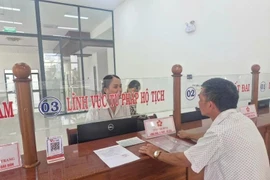
thu-tuc-hanh-chinh-29.jpg
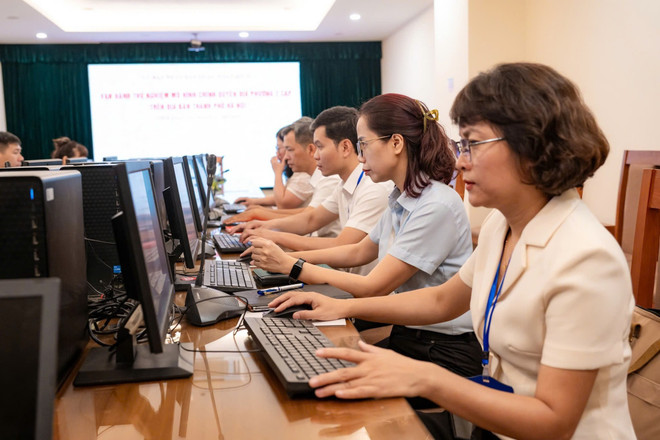
Illustrative Image (Photo: VietnamPlus)

Former Deputy Minister of Home Affairs Nguyen Tien Dinh observed that the reform addresses long-standing gaps in local governance.

He noted that previously, commune officials were treated differently in terms of recruitment, training, and career opportunities. The new framework provides them with a unified status, allowing for rotation and promotion across administrative levels.

The reform has also received support from international development partners. UNDP Resident Representative in Vietnam Ramla Khalidi emphasised the importance of investing in local human capital.
thu-tuc-hanh-chinh-30-1.jpg
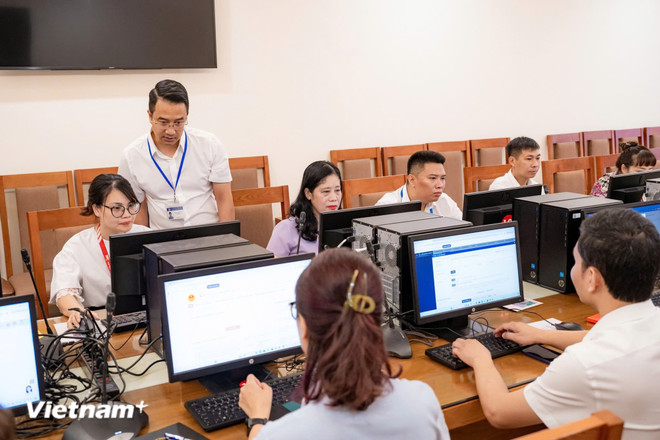
Illlustrative Image (Photo: VietnamPlus)

She stated that for successful decentralisation, commune-level officials must be adequately trained, fairly compensated, and clearly guided. Their role is crucial, particularly in rural and disadvantaged areas where they are the face of government for many citizens.

Beyond administrative capability, political education and staff management are considered vital in ensuring a smooth transition. At a recent Politburo meeting, Party General Secretary To Lam underlined the importance of cadre deployment and ideological training, especially for those affected by restructuring. He stressed the need to uphold internal unity and stability while carrying out reforms, calling on officials to place national interests above personal concerns.
thu-tuc-hanh-chinh-32.jpg
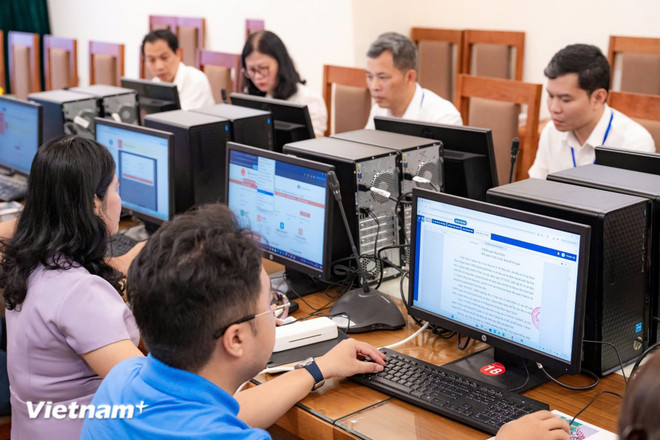
Illustrative Image (Photo: VietnamPlus)

In a published article on the topic, the General Secretary wrote that “building a compact, effective, and efficient administrative system requires strong leadership, collective effort, and the political will to overcome resistance to change.” He called on the entire political system to show determination in pushing forward with the reform process.

As Vietnam enters a new phase of state governance, commune-level officials are expected to shoulder greater responsibilities in service delivery, local planning, and administrative reform. Their evolving role marks a departure from a traditionally top-down governance model toward a more inclusive, responsive, and locally empowered system.

The two-tier model, while still in the early stages of implementation, offers a strategic foundation for long-term national development. By strengthening grassroots capacity and ensuring alignment across administrative levels, Vietnam aims to build a state that is both closer to the people and better able to serve them.

The success of this reform will depend not only on institutional design but also on the ability and commitment of commune-level cadres to rise to the occasion. As the nation continues on its path of renewal, grassroots officials are emerging not merely as administrators but as key contributors to the country’s vision of a modern, citizen-oriented public administration./.
VNA

See more

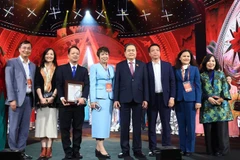
NA Chairman Tran Thanh Man and other leaders, former leaders at the 4th Dien Hong Awards honouring journalistic works on the NA and People’s Councils in Hanoi on December 18, 2025. (Photo: daibieunhandan.vn)

NA Chairman urges journalists to reflect legislature's strategic vision

The NA leader expressed his confidence that in 2026, journalists will continue to uphold their responsibility, report objectively and from multiple perspectives, accompany the NA in conveying its activities promptly and comprehensively, and identify shortcomings in law-making and legal enforcement to help people-elected agencies operate more effectively and efficiently.

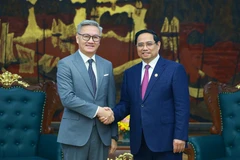
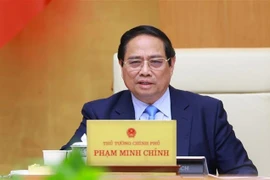
Prime Minister Pham Minh Chinh (R) receives Lao Minister of Foreign Affairs Thongsavanh Phomvihane in Hanoi on December 18, 2025. (Photo: VNA)

Prime Minister calls for stronger Vietnam–Laos economic connectivity

Receiving Lao Minister of Foreign Affairs Thongsavanh Phomvihane in Hanoi on December 18, Prime Minister Pham Minh Chinh proposed that the two sides further strengthen economic connectivity, coordinate closely and share development experience for the tangible benefit of the two peoples.

National Assembly Chairman Tran Thanh Man (R) and Lao Minister of Foreign Affairs Thongsavanh Phomvihane in Hanoi on December 18 (Photo: VNA)

Top legislator receives Lao foreign minister in Hanoi

The top legislator requested that the two sides continue to work closely together to effectively implement the Vietnam-Laos Joint Statement, the intergovernmental cooperation agreement, and bilateral cooperation programmes, thereby contributing to preserving and developing the bilateral special traditional friendship.

Vietnamese Foreign Minister Le Hoai Trung (R) and his Lao counterpart Thongsavanh Phomvihane at the 12th Vietnam–Laos political consultation at the foreign ministerial level in Hanoi on December 18, 2025 (Photo: VNA)

Vietnamese, Lao FMs co-chair 12th political consultation

During the consultation, in a spirit of special trust, the two officials reviewed recent cooperation between the two Parties, countries and foreign ministries. They also discussed future cooperation orientations and held in-depth exchanges on regional and international issues of common concern.

☕ Afternoon briefing on December 18

☕ Afternoon briefing on December 18

The introduction of special mechanisms for technology transfer in key railway projects, the opening of the Vietnam International Gifts and Housewares Expo 2025, and VinSpeed's deal on high-speed rail development with Siemens Mobility GmbH are among news highlights on December 18.

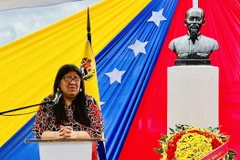
Venezuelan Vice Minister of Foreign Affairs Tatiana Pugh speaks at the ceremony on December 17. (Photo: VNA)

Vietnam, Venezuela mark 36th anniversary of diplomatic ties in Caracas

Venezuelan Vice Minister of Foreign Affairs Tatiana Pugh affirmed that over more than three decades, the bilateral solidarity, friendship, and cooperation have grown deeper despite complex and unpredictable global and regional developments, serving as a reliable mainstay for the interests of the two peoples and for peace, stability, cooperation, and development in their respective regions and worldwide.

☀️ Morning digest on December 18

☀️ Morning digest on December 18

The PM's urgent dispatch detailing key tasks to drive economic growth, Vietnam's endorsement of the joint statement to strengthen the global partnership against online scams, and the conclusion of a four-year partnership to strengthen child justice in Vietnam are among news highlights on December 17 evening.

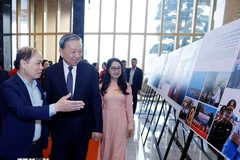
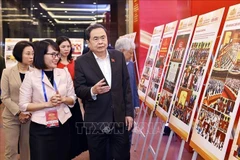
NA Chairman Tran Thanh Man checks photo display for the award ceremony (Photo: VNA)

NA Chairman attends rehearsal for fourth Dien Hong awards

More than 10 months after the competition’s launch, the organising board received 3,508 entries from 125 media outlets nationwide. After initial screening, 659 works proceeded to preliminary judging, from which a preliminary jury selected 91 entries for the final round. The final jury ultimately selected 64 works for awards.

Illustrative image (Source: VNA)

PM directs tasks to boost economic growth

To fully realise the 2025 socio-economic development plan, while creating momentum for 2026, PM Pham Minh Chinh urged ministers, heads of ministry-level agencies, and chairpersons of People’s Committees of provinces and centrally-run cities to strictly follow resolutions of the Party, the National Assembly and the Government, along with the Prime Minister’s directives.

At the meeting between the Dien Bien Party Committee’s Commission for Information, Education and Mass Mobilisation and the propaganda information and training commissions of the Party committees of the Lao provinces of Phongsaly, Oudomxay and Luang Prabang, held in Vietnam's northwestern mountainous province on December 17. (Photo: dienbientv.vn)

Dien Bien strengthens cooperation, exchanges with three northern Lao provinces

A meeting between the Dien Bien Party Committee’s Commission for Information, Education and Mass Mobilisation and the propaganda information and training commissions of the Party committees of the Lao provinces of Phongsaly, Oudomxay and Luang Prabang was held in Vietnam's northwestern mountainous province on December 17.

Politburo member and permanent member of the Party Central Committee’s Secretariat Tran Cam Tu speaks at the meeting with Lao Cai voters on December 17. (Photo: VNA)

Secretariat’s permanent member meets with Lao Cai voters

Lao Cai must continue to prioritise the building of a truly clean and strong Party and political system, advance the implementation of socio-economic development tasks, and ensure the mobilisation of all available resources to meet growth targets, the Secretariat’s permanent member emphasised.