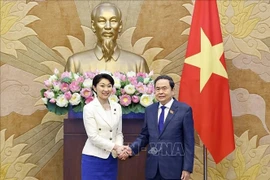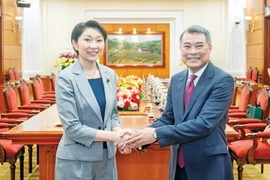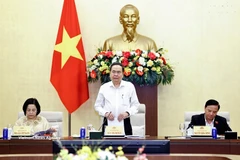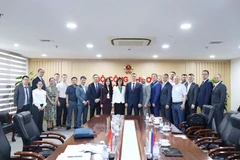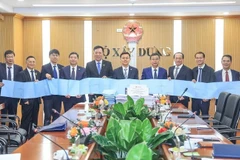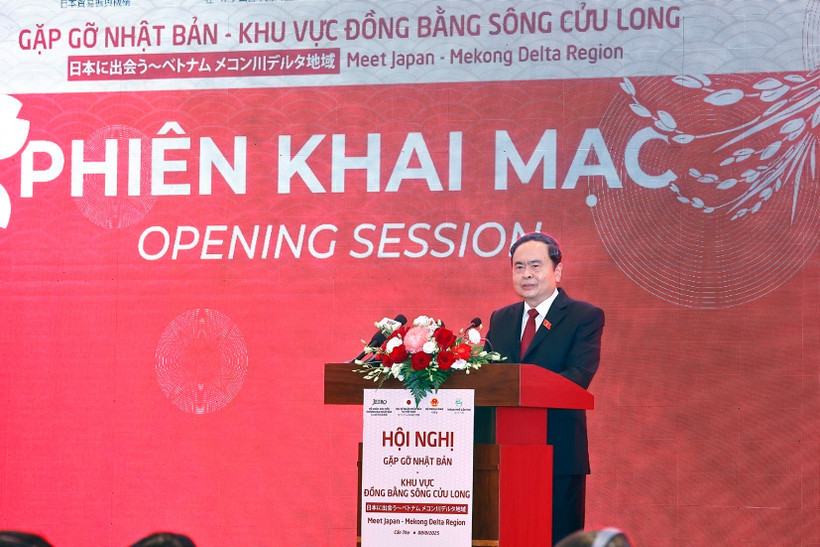
Can Tho (VNA) - National Assembly Chairman Tran Thanh Man has called on Japanese firms to invest in key sectors in Vietnam including supporting industries, high technology, digital transformation, clean energy, and smart agriculture.
Addressing the “Meet Japan – Mekong Delta region” event in Can Tho city on August 8, the NA leader highlighted that the relationship between Vietnam and Japan remains a model of successful bilateral cooperation, grounded in over 50 years of political trust, cultural affinity, and shared historical ties.
He noted that Japan is home to a thriving community of more than 600,000 Vietnamese nationals - the second-largest foreign community in the country, while over 2,500 Japanese enterprises are actively operating in Vietnam.
The leader underscored the strategic importance of the Mekong Delta, dubbed Vietnam’s "rice bowl" as it produces approximately half of the country’s total rice output and accounts for 95% of rice exports, 65% of aquaculture production, and 70% of national fruit yield.
Despite its vast potential, the region continues to face a series of critical challenges including the escalating impact of climate change, limited workforce, underdeveloped transport and logistics infrastructure, the absence of a supportive industrial ecosystem, and weak regional linkages, he said.
He reiterated Vietnam’s consistent view of Japan as a top-tier strategic partner, particularly in the fields of economy, investment, and technology transfer.
Expressing appreciation for Japan’s long-standing support through Official Development Assistance (ODA), the Chairman highlighted landmark projects such as the Can Tho Bridge - a powerful symbol of bilateral friendship, and the upgrade of Can Tho University, alongside numerous initiatives across other Mekong Delta localities.
NA Chairman Man urged both governments and business communities to deepen strategic cooperation.
Emphasising the need for sustainable, long-term collaboration, he called on Japanese investors not only to bring in capital but also to share expertise and modern technology, especially in areas such as green transformation, the circular economy, and advanced corporate governance.
He reiterated Vietnam’s ambition to become an upper-middle-income country by 2030 and achieve high-income status by 2045. In this journey, he affirmed, the Mekong Delta will play an indispensable role in the nation’s sustainable development strategy, particularly in the context of climate change adaptation.
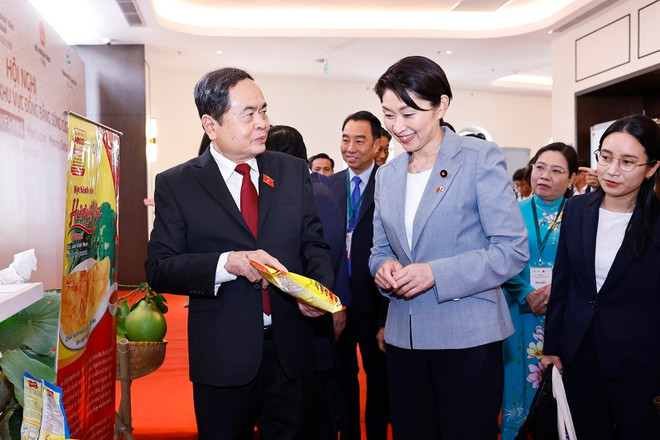
He welcomed alignment between Vietnam’s development goals and Japanese initiatives such as the Asia Energy Transition Initiative (AETI) and the Asia Zero Emissions Community (AZEC), noting that these frameworks could find strong partnerships within the Mekong Delta, especially in renewable energy and environmental protection projects.
The top legislator stressed that the NA and Government are committed to placing people at the centre of national progress, and will not trade off social equity or inclusive development for short-term economic growth.
He also expressed strong confidence that ongoing institutional reforms, including administrative streamlining, governance efficiency, anti-corruption measures, and comprehensive public sector reform, will provide a favourable environment for foreign investment, particularly from Japanese enterprises looking to expand in Vietnam and the Mekong Delta.
He called for Japanese businesses to take an active role in building sustainable value chains, thereby contributing to the shared prosperity of both nations.
Secretary of the Party Committee of Can Tho Do Thanh Binh said that the new city was officially established from July 1, merging the former Can Tho with the former provinces of Hau Giang and Soc Trang. This restructuring marks a transformative step in the development trajectory of the Mekong Delta, solidifying Can Tho’s role as a dynamic growth pole in the Southwest subregion, he said.
He underlined that Can Tho is ready for a new era of growth - more efficient, more transparent, and more deeply committed to working alongside investors and enterprises.
Meanwhile, Chairwoman of the Japan-Vietnam Parliamentary Friendship Alliance Obuchi Yuko commended Vietnam’s impressive economic performance, which continues to outpace its peers in ASEAN and affirms its growing importance in global supply chains. She noted that the two countries celebrated the 50th anniversary of diplomatic relations in 2023, and that the Vietnamese community in Japan continues to grow in both size and influence.
Obuchi Yuko also highlighted the success of recent cultural exchanges, particularly the Vietnam Festival in Tokyo, which drew over 140,000 attendees and brought the vibrancy of Vietnamese culture to the Japanese public in a lively and engaging manner. She added that the ongoing Expo 2025 in Osaka–Kansai, attracting around 10,000 visitors each day, reflects a strong and growing public interest in the cultures of both countries.
As head of the parliamentary friendship alliance, she pledged to continue fostering deeper ties between lawmakers in both nations, with the aim of elevating the Vietnam–Japan partnership to a new level.
Throughout the conference, leaders from provinces and cities across the Mekong Delta, along with representatives from Japanese and Vietnamese businesses and investment groups, engaged in discussions on the development potential of localities and identified practical pathways to enhance future collaboration./.