Hanoi (VNS/VNA) - Vietnam’s economy continued to show resilience and dynamism in the first four months of 2025, maintaining its position among the world’s fastest-growing economies, despite heightened global uncertainties.
With decisive policy actions, proactive diplomacy and strategic reform priorities, the country is now aiming for an ambitious GDP growth target of 8% or more this year - a goal lawmakers and experts believe is within reach, provided key breakthroughs are implemented effectively.
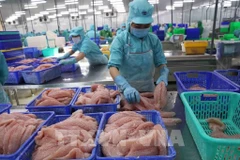
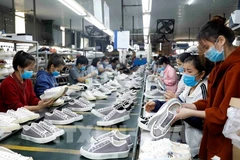
According to the Ministry of Finance, Vietnam’s socio-economic performance in April and the first four months of 2025 was marked by solid gains in domestic consumption, trade and investment. Total retail sales of consumer goods and services rose by 9.9% year-on-year to 2.28 quadrillion VND, with tourism and hospitality revenues increasing sharply by 24.5% and 14.9%, respectively. Total import-export turnover reached 275.18 billion USD, up 15% over the same period last year, contributing to a trade surplus of 5.02 billion USD.
Meanwhile, 47,881 Vietnamese workers went abroad under contract during this period, reinforcing the country’s labour export resilience. Social welfare programmes also advanced, with over 200,000 houses supported under national housing schemes and 78.3% of communes achieving new-style rural development standards.
These positive results came despite global headwinds - particularly the sudden announcement of reciprocal tariff measures by the US, which has affected business sentiment and trade flows around the world. Vietnam, however, responded swiftly and proactively. The Government held 11 high-level meetings to review negotiation strategies, and Party General Secretary To Lam engaged in direct dialogue with US President Donald Trump. As a result, Vietnam was included in a group of six economies prioritised for bilateral discussions with the US on tax policy.
These diplomatic efforts helped maintain investor confidence and macroeconomic stability. International institutions have issued upbeat growth forecasts for Vietnam in 2025, with the World Bank projecting 6.8%, AMRO 6.6%, and the UN 6.5%. However, domestic policymakers are aiming higher.
Strategic ambition: growth above 8%
Speaking on the sidelines of the ninth session of the 15th National Assembly on May 8, several lawmakers expressed confidence that Vietnam can meet, or even exceed, its 8% growth target for the year. Deputy Hoang Van Cuong of Hanoi noted that GDP growth in Q1 reached 6.93% - a strong start underpinned by a balanced performance across agriculture, industry and services, along with robust budget revenue.
Nevertheless, he acknowledged that Vietnam faces substantial external risks, particularly from US tariff policies that have already impacted export orders. The country’s Purchasing Managers’ Index (PMI) dropped to 45.6 points in April, reflecting subdued manufacturing activity.
“The ability to meet our growth goal depends greatly on the outcome of Vietnam–US negotiations in the next few months,” he said.
To counteract external pressure, Cuong stressed the need to restructure the economy and unleash domestic growth drivers, particularly investment.
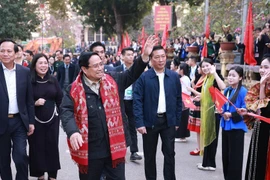
Recognising the vital role of public investment in achieving growth targets, the Prime Minister Pham Minh Chinh has recently issued strong directives to resolve bottlenecks in 2,212 stalled projects, with a total capital of up to 5.9 quadrillion VND. Along with public investment, domestic consumption also plays a vital role, with the boost to tourism during the recent national holiday showing evidence of untapped demand, he added.
National Assembly deputies and economists have agreed that Vietnam’s pursuit of 8% growth or higher must rest on three strategic breakthroughs: institutional reform, infrastructure development and human capital.
Dr Tran Hoang Ngan of Ho Chi Minh City said that reforms must focus on building a strong foundation for long-term development. “We need to go beyond headline growth figures and invest in the structures that will power a resilient, innovation-driven economy,” he said.
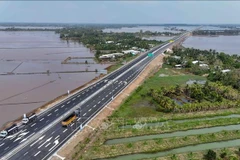
For institutional reform, he cited the importance of implementing Resolution 66-NQ/TW on improving legal frameworks to foster a more transparent and responsive regulatory environment. Regarding infrastructure, key national projects such as Long Thanh International Airport and the North–South high-speed railway must be accelerated to unlock regional connectivity and competitiveness.
In the area of human capital, Dr Ngan called for robust policies to develop a high-quality workforce in science, technology and public services.
The three breakthrough pillars are complemented by three strategic shifts in development thinking: streamlining public administration to serve citizens and businesses more efficiently; expanding science and technology innovation, including digital transformation and high-tech application in production; and strengthening the private sector’s role as a growth engine, particularly through support for start-ups and improved ease of doing business.
Long-term vision: toward double-digit growth
At a recent national conference organised by the Vietnam Institute of Economics, scholars and policymakers explored longer-term ambitions for Vietnam’s economy, including the possibility of double-digit growth in the coming decades.
Dr Dang Xuan Thanh, Vice President of the Vietnam Academy of Social Sciences, argued that Vietnam must radically transform its growth model to avoid the middle-income trap.
“Science, technology and innovation must become the core of our economic strategy,” he said, calling for a modern, transparent and accountable governance framework, a strong innovation ecosystem and a creative, adaptive labour force ready for the digital era.
Other experts proposed an expansionary fiscal policy, with public investment accounting for up to 9% of GDP, coupled with targeted tax incentives to stimulate spending and investment. Priority should also be given to high-tech industries, smart agriculture, logistics and sustainable tourism - areas where Vietnam holds significant competitive edge.
Vietnam’s growth outlook for 2025 remains optimistic, supported by solid economic fundamentals, decisive leadership, and a clear strategic vision. With continued reform, effective negotiation and collective determination from the Government, businesses and society, the nation is not only capable of achieving its 8% target, but also laying the groundwork for long-term, high-quality development./.
VNA