Vietnam faces non-tariff trade barriers as green, digital shifts become imperative

Vietnamese companies must master climate finance to fund technological upgrades, according to experts

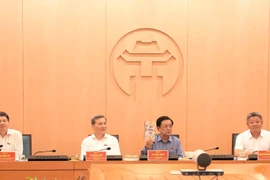
At the launch of the Green B2B Exchange (Photo: VNA)

Hanoi (VNA) – Rising non-tariff barriers in global trade are pushing green transition and digital transformation from optional to essential, experts warned, as Vietnam navigates an increasingly complex export landscape.

Vietnam’s exports reached 306 billion USD in the first eight months of 2025, exceeding the set target, driven by strong growth in key categories. The rebound reflects recovering global consumer demand, benefits from free trade agreements, and local firms pivoting to green practices, which are boosting market share and elevating the “Made in Vietnam” brand.

To sustain this momentum, Vietnamese companies must master climate finance to fund technological upgrades, according to experts. Training workforces to handle emissions tracking, reporting, and carbon credit markets is essential to capitalise on green opportunities and maintain sustainable exports.

The EU’s Carbon Border Adjustment Mechanism (CBAM), a core part of its Green Deal, will require importers to declare carbon emissions for production items, including steel, aluminium, cement, and fertilisers, starting in January 2026. Compliance with the CBAM could help Vietnamese enterprises diversify exports and solidify their presence in the European market, according to a representative from EuroCham’s Green Growth Sector Committee.

Alongside the CBAM, the EU’s Deforestation Regulation (EUDR) is reshaping global business practices. For Vietnam, this presents a chance to align production with EU standards while advancing its net-zero emissions goal by 2050.

The Ministry of Industry and Trade is releasing support measures to propel green trade and sustainable development, including sector-specific ecosystem models to help firms meet stringent market demands. Efforts are underway to shift business mindsets toward green supply chains, positioning Vietnam as a global green factory.
hp.jpg
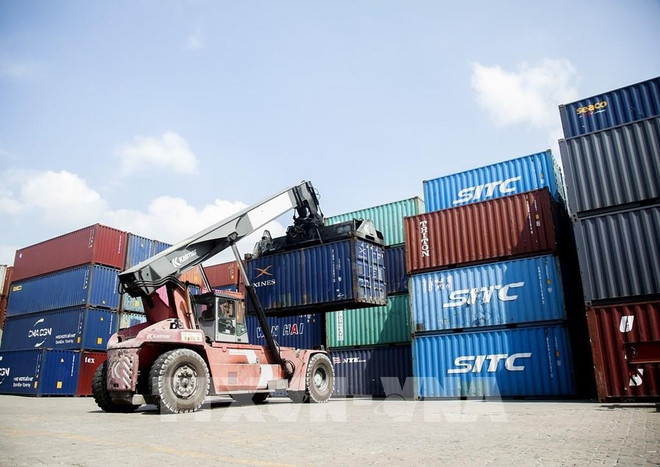
At Tan Cang Cat Lai port (Photo: VNA)

To help companies meet green standards, the Ministry of Industry and Trade has provided guidelines to boost green trade and sustainable development. In particular, the ministry is building sector-specific ecosystem models to help firms align production processes with increasingly stringent market demands.

The ministry is also cooperating with industry associations to train businesses in product design, branding, and packaging, ensuring exports thrive in global markets.

At the launching ceremony of the Green B2B Exchange in July, Deputy Minister of Industry and Trade Phan Thi Thang called the platform a vital tool for greening supply chains and fostering broader connections faster than traditional methods. This will give the Vietnamese business community an added competitive edge to join the global low-carbon supply chains, she said./.
VNA

See more

Chili peppers are on the list of essential goods in Indonesia (Photo: VNA)

Indonesia reduces imports of strategic food commodities

In 2026, Indonesia is expected to have approximately 12 million tonnes of rice carried over from the previous year, supported by annual production of around 34.7 million tonnes. With projected consumption of 31.1 million tonnes, national rice reserves could reach approximately 16 million tonnes by the end of the year.

Hanoi’s roadmap to implement low-emission zones from July is providing a strong boost to the electric two-wheeler market (Photo: VNA)

Low-emission zone roadmap drives electric two-wheeler boom in Hanoi

From July 1, Hanoi will introduce time-based or area-based restrictions on petrol-powered motorcycles within Ring Road 1, with plans to expand coverage across the entire zone by 2028 and extend to areas within Ring Road 3 by 2030. The policy is expected to reshape travel habits for millions of urban residents.

Delegates at the opening ceremony of the Made in Da Nang Expo 2026 (Photo: VNA)

Nearly 300 firms join Made in Da Nang Expo 2026

Speaking at the opening ceremony, Vice Chairman of the Da Nang People’s Committee Tran Chi Cuong said the exhibition is a large-scale trade promotion event aimed at showcasing products, connecting markets, and helping businesses enhance competitiveness while expanding domestic and export markets.

 Green production, standardised value chains key to fruit, vegetable sector growth

Green production, standardised value chains key to fruit, vegetable sector growth

Facing mounting pressure from increasingly stringent domestic and international standards, Vietnam’s fruit and vegetable sector is accelerating its shift toward green, safe, and sustainable production models. Beyond changing farming practices, localities and businesses are stepping up efforts to standardise value chains and build brands to achieve growth targets for 2026.

Hiep Phuoc Industrial Park in Ho Chi Minh City. (Photo: VNA)

Southern industrial real estate enters strategic growth phase

Key industrial hubs in the south, including Ho Chi Minh City, Dong Nai and Tay Ninh, are transitioning from a period driven largely by supply expansion and rising land prices to a more refined growth model. This new phase is shaped by infrastructure upgrades, supply chain restructuring, product improvement and greater emphasis on operational performance.

The launch of the Vietnam National Brand Week 2026 on April 16 (Photo: VNA)

Vietnam National Brand Week 2026 opens

Running from April 16 to 23 nationwide, the Vietnam National Brand Week 2026 marks the 18th anniversary of Vietnam Brand Day (April 20, 2008 – 2026).