Vietnam harnesses AI to improve weather forecasting

Vietnam's meteorological and hydrological sector has been actively integrating AI, big data, and digital transformation into its forecasting operations.

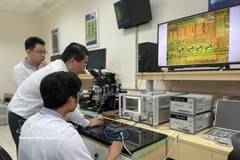
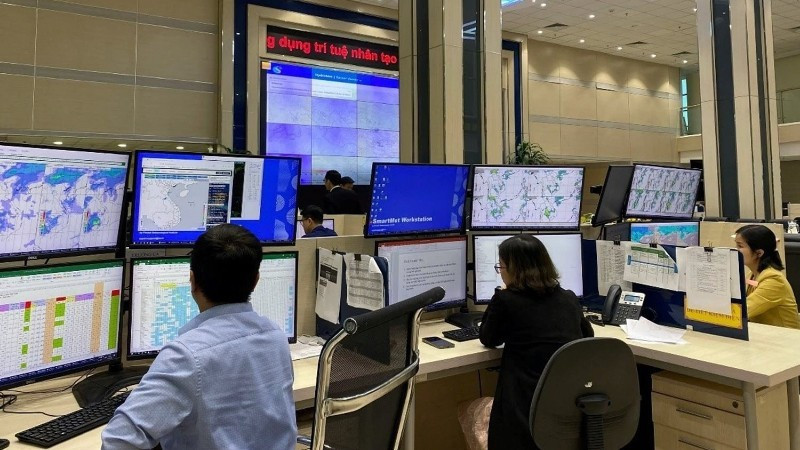
Forecasters analyse data on the smartmet system to serve the issuance of forecast bulletins and early warnings of natural disasters at the National Centre for Hydro-Meteorological Forecasting. (Photo: nhandan.vn)

Hanoi (VNA) – Artificial intelligence (AI) has emerged as a vital tool to enhance disaster prediction, reduce damage, and support timely response efforts.

Early warning is the most effective measure for mitigating damage caused by weather-related and hydrological disasters. Studies indicate that early alerts issued at least 24 hours in advance can reduce economic losses by approximately 30%.

As climate change continues to intensify, leading to more frequent and severe storms, heavy rains, floods, and other extreme weather events, accurate and prompt early warning has become more crucial than ever.

Vietnam's meteorological and hydrological sector has been actively integrating AI, big data, and digital transformation into its forecasting operations.

Since the beginning of this year, the National Centre for Hydro-Meteorological Forecasting (NHCF) under the Ministry of Agriculture and Environment has implemented AI in several stages of its forecasting.

Specifically, machine learning algorithms trained on radar data, satellite imagery, and automated observations help generate short-term rainfall forecasts with high detail and rapid response.

For storm recognition and intensity assessment over the East Sea, AI-powered systems analyse meteorological satellite images to identify cyclone centres, evaluate storm strength, and track development trends. These systems, still under refinement and expansion, are integrated into operational forecasting workflows to provide continuous weather monitoring. This technology enables authorities to issue early warnings and take proactive measures to safeguard lives and property.

Mai Van Khiem, Director of the National Centre for Hydro-Meteorological Forecasting, stated that during the current typhoon and flood seasons, the application of AI has led to higher forecasting accuracy compared to traditional methods. For example, the forecasted position of a cyclone's centre within a 24-hour window now has an error margin of about 90-110 km, aligning with regional standards. AI assists in probabilistic assessments and uncertainty analysis, supporting decision-making for disaster preparedness and response.

In heavy rainfall forecasting, models like the Weather Research and Forecasting (WRF) system and regional ensemble approaches provide satisfactory results for widespread rain events. However, short-duration, localised downpours, especially in complex terrains with interacting weather systems, are difficult to predict. Combined radar, satellite data, ensemble algorithms, and nowcasting techniques have improved storm and lightning alerts, allowing warnings to be issued 30 minutes to three hours in advance in critical areas.

Despite these advances, Vietnam’s forecasting capacity still lags behind countries like Japan, China, and the Republic of Korea, which have more mature observation systems and technological infrastructure. Limited budgets, underdeveloped technological infrastructure, and a shortage of high-skilled experts constrain further AI adoption. Current observation stations are sparse, and processing AI models requires high-performance computing chips at significant cost.

Given the escalating impacts of climate change and the rise of extreme weather events, the modernisation of meteorological and hydrological services is imperative. Developing a comprehensive, high-precision early warning system will act as the nation's first line of defence against natural disasters, protecting both citizens and economic stability.

Khiem emphasised that in the coming years, Vietnam’s meteorological sector must fully implement a comprehensive modernisation plan, focusing on enhancing forecasting and warning capacities to serve disaster mitigation and sustainable development. Central to this strategy is the realisation of Resolution No. 57-NQ/TW, promoting breakthroughs in science and technology, innovation, and digital transformation.

Developing a smart, multi-scale prediction system will not only improve weather forecasting reliability but also facilitate more effective early warnings for a variety of natural hazards. This effort includes strengthening the capacity to forecast extreme weather phenomena, establishing multi-hazard early warning systems, and training a skilled workforce, especially among young professionals.

Furthermore, there will be an increased focus on community outreach and awareness campaigns to highlight the vital role of meteorological and hydrological information in reducing disaster risk. International cooperation will also be intensified to access technical and technological support, as well as to share knowledge and training resources./.
source

See more

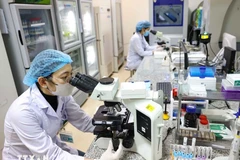
Doctors from Cho Ray Hospital (Ho Chi Minh City) and Vinh Long General Hospital (Vinh Long province) test the operation of a linear accelerator radiotherapy system for cancer treatment (Photo: VNA)

Vietnam sets orientations for applying nuclear energy across sectors

The plan aims to ensure the effective implementation of Decision No. 245/QD-TTg dated February 5, 2025, which approved the national master plan, while concretising objectives, orientations, solutions and resources for applying radiation and radioisotopes across sectors. It also assigns responsibilities to ministries, sectors and localities, and sets roadmaps and priorities for key programmes and projects.

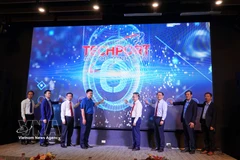
Prime Minister Pham Minh Chinh and delegates visit booths showcasing products at TechFest Vietnam 2025. Photo: VNA

Vietnam to become attractive destination for tech talent, innovative startups: PM

TechFest Vietnam 2025, held from December 12 to 14, is expected to attract more than 60,000 participants both in person and online, with the participation of over 20 corporations, 50 investment funds, more than 100 supporting organisations and incubators, and delegates from Southeast Asia, Northeast Asia, Central Asia, the Middle East, North America, and Europe.

Police offiers mornitor the traffic through AI camera (Photo: VNA)

Applying the Internet of Things in smart transport

The project aims to build a unified, safe and efficient IoT platform to support the management, operation and exploitation of smart transport systems under the Ministry of Construction, with data shared across ministries and localities.

Through long-term commitment, Viettel has brought millions of Burundians into the mobile era and become the first operator to roll out 5G in the country, Viettel Burundi CEO Phan Truong Son noted. (Illustrative photo: VNA)

Viettel secures three prestigious international awards

Viettel has won honours in the “People & Culture” and “Best Operator in a Growth Market” categories at the 2025 World Communication Awards (WCA), alongside the “Best Digital Transformation Project” at the 2025 Global Telecoms Awards (Glotel).

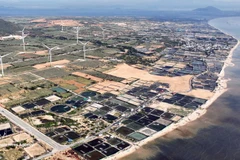
A view of the Can Gio sea-encroaching urban area project (Photo: VNA)

Green-tech push for Can Gio

Vietnam has the capacity, ambition and technological foundation to join the group of leading sustainable coastal urban nations in the coming decade, experts said at a dialogue on "advancing to the sea with ESG++ megacities: breakthroughs through green technology", held on December 9 in Hanoi by the Vietnam Institute for Real Estate Studies (VIRES).

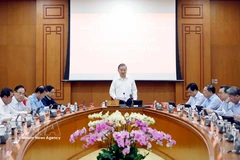
Minister of Science and Technology Nguyen Manh Hung speaks at the meeting (Photo: VNA)

Vietnam turns intellectual property into bankable assets in new law

About AI-generated content, the law draws a clear line: purely autonomous AI creations are not eligible for copyright or patent protection. Those who provide substantial creative input, such as ideas, curation, editing, or selection, qualify as authors or inventors.

Lieutenant General Nguyen Minh Chinh, NCA Vice Chairman, speaks at the launch ceremony of the southern branch of the National Cybersecurity Association. (Photo: VNA)

National Cybersecurity Association opens branch in HCM City

The southern branch aims to become a coordinating body for cybersecurity tasks, workforce development, awareness-raising and the strengthening of digital defence capabilities across the region, contributing to the safe and sustainable growth of Vietnam’s digital economy.

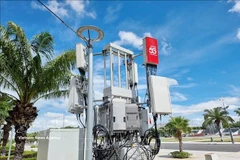
Viettel exceeds target of 20,000 new 5G stations by more than three weeks. (Illustrative photo: VNA)

Viettel exceeds target of 20,000 new 5G stations by more than three weeks

Viettel plans to continue scaling up its network from now until the end of 2025, with an additional 23,500 stations scheduled for installation, nearly quadruple the number rolled out in 2024. Once completed, Viettel will operate Vietnam’s largest 5G network, with 30,000 stations covering 90% of outdoor areas and 70% of indoor spaces nationwide, from major cities to rural regions.

In Vietnam, demand for infrastructure supporting AI, cloud computing, and digital services is rising at an unprecedented level. (Illustrative photo: VNA)

Vietnam emerges as new hub for data centres

Data centres have surged to become the second most preferred alternative asset class in the region. Vietnam is no exception to this trend as the demand for infrastructure supporting AI, cloud computing, and digital services has risen at an unprecedented level.